
 Business License
Bridge Protection Mesh for Road and Rail Crossings
A bridge over a live carriageway or a live railway is a structure where the thing below has priority, and every decision about the net follows from that.
The net is not there to protect the bridge. It is there so that nothing leaves the bridge and reaches the traffic, the track or the overhead line, and the cost of getting that wrong is measured in hours of closure rather than in a replacement panel.
This article covers what a road bridge mesh has to do, the electrification constraint that governs a rail crossing net, how highway bridge protection is arranged over a live carriageway, height and aperture, working in possession windows, fixing without lane closures, and two crossings where the constraint drove the design.
1. What a Road Bridge Mesh Has To Do
A road bridge mesh has two duties that are sometimes confused, and just one of them is about people.
The first is to stop a person on the bridge from reaching a fall, which is the same duty as on any other bridge and is met by height and aperture.
The second is to stop material from reaching the carriageway below, which is a different duty with a different failure mode. A tool that passes a hundred millimetre aperture will reach the road, and a hundred millimetre aperture is exactly what a fall prevention panel uses.
So a road bridge mesh over a live road is usually two nets: a barrier at the deck edge for people, and a catcher under the deck for objects. The second is the one that is forgotten, and it is the one that causes the closure.
2. Rail Crossing Net: The Electrification Constraint
A rail crossing net is governed by the overhead line before it is governed by anything else.
Most rail crossings are electrified, and the contact wire sits a short distance below the bridge soffit. A net hung under the deck reduces that clearance, and clearance to a live conductor is not a dimension that can be negotiated on site.
| Constraint | Effect on the net |
|---|---|
| Clearance to the contact wire | Rules out a deep under-deck net in many cases |
| Electrical bonding | Metal net and frame must be bonded to the structure earth |
| Possession windows | Installation in short closures, often at night |
| No plant near the line | Panels must be light enough to lift by hand |
Bonding is the item most often missed. A steel net under an electrified bridge is a conductor, and an unbonded conductor near a contact wire is a hazard in its own right. The net, the frame and the fixings are bonded to the structure earth, and the connection is tested rather than assumed.
Where clearance will not allow a net beneath the deck, the alternative is a net at the deck edge with a close-fitting mesh on the parapet face, which catches most material before it leaves the structure.
3. Highway Bridge Protection and the Live Carriageway
Highway bridge protection is a scheme rather than a product, because the carriageway below sets the working method as well as the specification.
A bridge over a motorway cannot be worked on from below during the day, and often cannot be worked on from below at all without a closure. That pushes the work to the deck, which pushes the net to a form that can be installed from above.
The form that suits is a panel carried on posts fixed to the deck edge, with the under-deck element reduced to a short return that closes the gap between deck and fascia. The return can be fitted from above with the panel tilted out, which avoids a closure entirely.
A full under-deck net remains the sounder solution for object retention. It is also the one that needs a closure, and the trade between the two is usually settled by the road authority rather than by the designer.
4. Height, Aperture and the Vehicle Envelope Under a Road Bridge Mesh
Height is set by the tallest vehicle that passes beneath, not by the tallest vehicle that uses the bridge.
A net that hangs below the soffit reduces the headroom for traffic on the road below, and headroom is a legal dimension with a signed clearance. A net projecting even two hundred millimetres below a soffit can put a signed height out of compliance.
That is why under-deck nets on road crossings are usually fixed tight to the soffit between beams rather than hung below them, and why the fixing detail is a cast-in or drilled anchor rather than a hanging bracket.
Aperture is then set by what has to be caught rather than by headroom. Fifty millimetres is the usual figure for a road crossing, and twenty-five is used where the material includes bolts or small fixings.
5. Rail Crossing Net and Possession Windows
A rail crossing net is installed in possession windows, and a window is measured in hours rather than in days.
The consequence is that the net has to arrive ready to lift. Panels are made to a size that two people can carry up a stair, which usually means no more than about two and a half metres by one and a half, and they are numbered to the position rather than to the order.
Fixing is designed for speed as well as for strength. A clamp that needs four bolts per post takes four times as long as one that needs one, and on a four-hour window that difference decides whether the job finishes.
Hebei Longen Wire Mesh Products numbers rail crossing net panels to the span and the side, and supplies them in the sequence they will be hung rather than in the sequence they were made. Hebei Longen Wire Mesh Products Co Ltd also supplies a setting-out sheet so that the first panel can be positioned without a survey.
6. Highway Bridge Protection Without a Lane Closure
Highway bridge protection that needs no closure is worth a premium, because a closure costs more than the net.
The method that avoids one is to work from a mobile platform on the hard shoulder, with the net passed up in sections and assembled on the deck. That is possible where the deck edge is reachable without entering a live lane.
Where the edge is not reachable, the work moves to a night closure, and the specification should then be written for a night installation: fewer components, larger panels, and fixings that do not need a torque wrench in the dark.
A third route is to fix the net to a demountable frame that is erected from the deck and never requires access below. It is the most expensive frame and the least disruptive installation, and it is chosen where the road below cannot be closed at all.
All three routes are worth costing on the same page, because a scheme that budgets for the net alone will be surprised by the cost of the closures. On a busy crossing the closures are usually the larger figure, and a design decision that removes one is worth more than a discount on the panels.
7. Road Bridge Mesh in Two Positions on One Structure
Road bridge mesh is often specified in two positions on the same structure, and the two are procured together for a reason.
The deck edge panel is a barrier with a known height and a known load, and its fixing is to a parapet or a post. The under-deck panel is a catcher with an area set by the structure, and its fixing is to a soffit.
Buying them together keeps the coating system consistent and the fixings compatible, which matters where the two meet at the fascia. It also puts one party in charge of the interface, which is where most of the arguments on a crossing scheme occur.
The interface is usually a short return panel between the deck edge and the fascia, and it is the piece that has to accommodate the tolerance in both structures. It is worth dimensioning it last, after the two main panels are fixed, rather than first.
What should not be bought together is the design of either. The barrier is a standard detail with a standard load, and the catcher is a structural element that has to be checked against the soffit it hangs from.
8. Two Crossings Where the Constraint Drove the Design
On a rail crossing, an under-deck net was designed and then found to leave too little clearance to the contact wire. The scheme was reworked as a deck-edge panel with a deep return, and the return was made in two pieces so that it could be passed through the parapet opening. The material that would have been caught below was caught at the fascia instead.
On a motorway crossing, the first scheme needed six night closures. Re-detailing the under-deck panels as shorter units fixed from above reduced that to two, and the panels were no heavier than the ones they replaced. The saving in closure cost was several times the cost of the net.
Longen Wire Mesh Products keeps a record of the panel weight per square metre on every crossing order, because the weight is what decides whether a window is feasible and it is the figure most often missing from a tender.
Longen also states the number of fixings per panel, since that figure sets the installation time more reliably than the area does. A panel of two square metres with twelve bolts takes longer than a panel of three square metres with four.
9. Frequently Asked Questions
9.1 Does a rail crossing net have to be bonded to earth?
Where it is metal and it sits near an electrified line, yes, and the bonding is part of the installation rather than an accessory. The net, the frame and the fixings are connected to the structure earth, and the connection is tested and recorded before the possession is handed back. An unbonded steel net under a contact wire is a conductor at an unknown potential, which is a worse condition than no net at all. The bonding detail should be on the drawing rather than left to the installer.
9.2 What headroom does an under-deck net need?
As little as the fixing allows, because any projection below the soffit reduces the signed clearance for the road or the track beneath. A net fixed tight to the soffit between beams adds nothing to the depth of the structure. A net hung below the beams adds its bracket depth plus its deflection, which on a long span can be a hundred millimetres or more. On a road with a signed height, that projection has to be checked rather than assumed.
9.3 Can a highway bridge protection scheme avoid lane closures entirely?
It can where the deck edge is reachable from a hard shoulder or from a platform that does not enter a live lane. The net is then passed up in sections and assembled on the deck, and the under-deck element is reduced to a return that can be fitted from above. Where the edge is not reachable, some closure is inevitable, and the design should then be aimed at reducing the number of closures rather than at eliminating them. Two closures with larger panels beat six with small ones.
9.4 How heavy is a panel that two people can lift?
About forty to sixty kilograms for a panel of two and a half by one and a half metres, depending on the wire and the coating. That is the practical limit for carrying up a stair and for lifting over a parapet, and it is the figure that sets the maximum panel size on a rail crossing. A heavier panel needs plant, and plant near a live line is a different approval route. Weight per square metre is worth stating on the drawing for that reason.
9.5 What coating suits a bridge over a salted motorway?
A heavy hot-dip galvanised coating with a powder coat over it where appearance matters, and stainless fixings in every case. The underside of a bridge over a salted road sees salt spray and does not dry, which is the condition that takes a light coating off in a few seasons. The fixings fail before the mesh does, because the coating is cut when they are installed. A scheme that specifies a good coating and ordinary fixings has specified the wrong half.
Recently Posted
-
Bridge Protection Mesh for Pedestrian and Landscape Bridges
November 5, 2026A pedestrian bridge is a light structure carrying heavy behaviour, and its parapet is usually the lightest part of it. That combin Read More
-
What Is Bridge Protection Mesh? Fall Prevention and Debris Control
November 5, 2026A bridge protection mesh is a wire or rope net fixed to a bridge structure to stop something leaving the deck, and what that somet
Read More -
How Hebei Longen Handles a Drone Protection Netting Project End to End
October 28, 2026A prison authority in Southeast Asia approved a drone net over two exercise yards, then discovered that the net could be delivered Read More
-
Inside Hebei Longen Wire Mesh Products: Rope Net Manufacturing in Anping County
October 28, 2026A buyer from Eastern Europe booked a factory visit before placing a first order, and asked to see the rope net bay rather than the Read More

Contact Us

Recommended Products
-
 Slope Protection System Rockfall Netting 2.0mm 3.0mm 4.0mm High Tensile Steel Wire Mesh Netting Rockfall BarriersUS$ 2 - 15MOQ: 1 Square Meter
-
Flexible Debris Flow Barrier Steel Rope Rockfall Barrier With Ring Diameter 350 mm China SupplierUS$ 5.9 - 40MOQ: 1 Square Meter
-
Custom Hexsteel Mesh for Refractory Linings Stainless Steel Wire Plain Weave Welded Cutting Welding Offered Made ChinaUS$ 9.20 - 45.00MOQ: 50 Square Meters
-
Double Twist Hexagonal Mesh Rockfall Netting Drapery System for for Rockfall Mitigation Slope Consolidation WorksUS$ 0.45MOQ: 100 Square Meters
-
China Factory Galvanized Steel Railway Side Slope Stabilization Net Woven Wire Mesh for Slope Protection Include Bending WeldingUS$ 15.00 - 20.00MOQ: 999 Square Meters
-
Galvanized Gabion Baskets for Retaining Wall Plain Weave Cutting Processing Service for Slope Stabilization-Free Sample OfferedUS$ 1.5 - 1.7MOQ: 1 Square Meter
-
Children's Playground Stainless Steel Rope Mesh Balcony Fence Inox Cable Net Build Guardrail Black Oxide Rope NettingUS$ 118.00MOQ: 100 Square Meters
-
Factory Direct Modern High Transparency Anti-Slip Stainless Steel Rope Mesh Stair Railing Woven Cable Netting Custom ProjectsUS$ 9.9 - 14.9MOQ: 1 Square Meter
-
Stainless Steel Rope Mesh for Backpack and Bag Anti Falling Dropring Mesh Inox Cable Net Anti-theft Black Oxide Rope NettingUS$ 118.00MOQ: 100 Square Meters
-
Heavy-Duty 4ftx5ft Drag Mat Factory With Chain Galvanized Steel Drag Mat for Tractor AttachmentUS$ 9.1 - 45MOQ: 1 Square Meter
-
High Altitude Anti Fall Woven Stainless Steel Wire Rope Net SS 304 316 316L Plain Weave Invisible Protective NetUS$ 9.9 - 14.9MOQ: 1 Square Meter
-
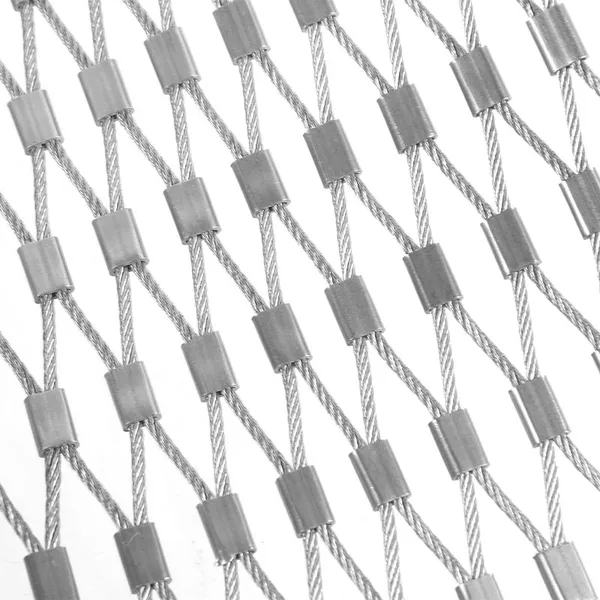
China Rope Mesh Manufacturer Customized SS316 Black Oxided Ferrule Type Rope MeshUS$ 5 - 20MOQ: 1 Square Meter
-
Baseball Field Dragging Lawn LevelingUS$ 59.00 - 66.00MOQ: 5 Pieces
-
316L Grade Stainless Steel Wire Mesh Sieves 200mm 300mm Screen Factory Price Sand Testing ScreenUS$ 4.7 - 15MOQ: 1 Piece
-
Outdoor Stainless Steel Cable Railing / Wire Rope Mesh / Wire Mesh Railings for BalconyUS$ 15.00 - 20.00MOQ: 100 Square Meters
-
Slope Protection System 65/3, High-tensile Steel Wire Mesh, Spike Plate, Rock Nail, Connection Clips T3 for Slope StabilityUS$ 1.80 - 3.00MOQ: 1 Square Meter
-
Pool Mesh Steeltex Paper-Backed Welded Wire Mesh Factory Price 12ga 16gaUS$ 40 - 70MOQ: 30 Rolls
-
G65 3 Rockfall Netting Rust Free Coated Slope Protection Net Galvanized High Tensile Wire Mesh Control Shallow LandslideUS$ 5.40 - 5.60MOQ: 1 Meter
-
Anti‑Drone Protection Steel Rope Net UAV Security Protection Fence Mesh Galvanized /Stainless Steel Customized ProductionUS$ 1.1 - 1.2MOQ: 100 Square Meters
-
Anti-Drone Netting High Tensile Strength Stainless Steel Woven Wire Rope Mesh Active Rockfall Barrier Systemn Factory SupplyUS$ 15.00 - 20.00MOQ: 999 Square Meters