Business License
What Is Bridge Protection Mesh? Fall Prevention and Debris Control
A bridge protection mesh is a wire or rope net fixed to a bridge structure to stop something leaving the deck, and what that something is decides everything about the specification.
On one bridge it is a person who has climbed onto a parapet. On another it is a hammer dropped from a maintenance platform onto a live carriageway below, and on a third it is a piece of concrete spalled from the underside of the deck.
This article sets out what the mesh is and where it sits, how bridge safety netting differs from a solid barrier, what a bridge edge net does at the deck perimeter, the three duties a net can be given, the materials that survive a bridge environment, and what the mesh cannot be expected to do.
1. What Bridge Protection Mesh Is and Where It Sits
A bridge protection mesh is a tensioned net, usually of galvanised steel wire or stainless rope, held in a frame or between anchors on the structure.
It sits in one of two positions, and the two are not interchangeable. The first is vertical at the deck perimeter, above the parapet or in place of an infill panel. The second is horizontal beneath the deck, spanning between girders or between the deck edge and a lower chord.
The vertical position works in bending and tension at its fixings. The horizontal position works almost entirely in tension across the span, and its fixings carry the whole of whatever lands on it.
Confusing the two is the most common error on a bridge scheme, because both are described in a schedule as protection mesh and both are drawn as a rectangle on a general arrangement.
2. Bridge Safety Netting Versus a Solid Barrier
Bridge safety netting is a porous barrier, and the porosity is the reason it is chosen over a solid panel in most cases.
A solid infill panel has to resist the whole wind load on its area, and that load is transferred into the parapet or the posts. A net with an open area above sixty percent lets a substantial part of the wind through, and the structure behind it sees a smaller force.
The difference matters on a long span, where the parapet may not have been designed for an infill added later. It matters more on a cable-stayed or suspension bridge, where the deck edge detail is part of a carefully balanced aerodynamic form.
The cost of that porosity is visibility. A net is seen through, so it does not screen a view, and a solid panel is chosen where screening is the point. That is a landscape decision rather than a structural one, and it should be made before the structural one.
3. Bridge Edge Net at the Deck Perimeter
A bridge edge net closes the gap between the parapet and the deck, or extends the effective height of the parapet where a person could otherwise climb or fall.
The usual arrangement is a net from the top of the parapet up to a height of about one and a half metres above the deck, carried on posts at intervals of two to three metres. The net is tensioned between the posts rather than between the parapet and the deck, so that a person leaning on it loads a post rather than a coping stone.
The lower edge is the detail that fails. A net that stops at the top of the parapet leaves the gap between the parapet and the deck open, and that gap is wide enough for a child and for most tools. Closing it requires the net to return down the inside face of the parapet to the deck surface.
That return is a separate panel in most schemes and it is the item most often missing from a quotation, because it does not appear in a photograph of the finished bridge.
4. The Three Duties a Bridge Protection Mesh Can Be Given
Three duties are asked of bridge protection mesh, and a net designed for one is not automatically suitable for another.
| Duty | Load case | Decides |
|---|---|---|
| Fall prevention | Person or crowd leaning | Height, aperture, post spacing |
| Debris control | Tool or material dropping | Aperture, energy absorption, under-deck position |
| Spall containment | Concrete fragment detaching | Anchor design, net close to the soffit |
Fall prevention is a static load case with a dynamic component, and the figures are well established. A net at one and a half metres with an aperture that a body cannot pass is the ordinary requirement, and the structure behind it takes a load of the order of a kilonewton per metre at the top rail.
Debris control is an energy case rather than a force case. A tool that falls two metres carries an energy that has to be absorbed over the distance the net deflects, and a tight net with a short deflection sees a much higher peak force than a slack one.
Spall containment is different again, because the fragment may weigh more than a person and may detach without warning from a surface the net is close to. It calls for a net held close to the soffit rather than a net hung at a distance.
5. Materials for a Bridge Edge Net in a Salt Environment
A bridge is a harder environment than a building, and the reason is salt rather than rain.
De-icing salt is spread on the deck and blown under it, so the underside of a bridge sees a chloride exposure that the topsides do not. A galvanised coating that would last twenty years on a building may show red rust at the fixings within half that time on a bridge over a salted road.
Hot-dip galvanising to a heavy coating weight is the baseline, and powder coating over it is the usual addition where appearance matters. Stainless steel is used at the fixings in any coastal or heavily salted location, because the fixing is where the coating is breached during installation.
Rope nets are used where the span is long and the net has to be light, and the rope is usually a galvanised steel wire rope rather than a synthetic. A synthetic rope has better corrosion resistance and a much lower stiffness, which changes the deflection and therefore the peak force.
6. What the Mesh Does Not Do
The boundary of a net's duty is worth stating, because a bridge scheme can acquire expectations that no net can meet.
A net does not stop a vehicle. It is not a vehicle restraint system, it is not a crash barrier, and it is not tested against a vehicle impact. A net on a bridge parapet is there for people and objects, and a scheme that expects more has specified the wrong product.
A net does not carry the weight of a person who falls onto it from height unless it has been designed for that case. A fall arrest application has a different load case and a different approval route, and a protection net is not a substitute.
A net also does not stop water or salt spray. It passes both, which is an advantage for drainage and a disadvantage for anything stored beneath it.
Longen Wire Mesh Products states those limits on the quotation rather than in a general brochure, because a scheme that reads them late has usually already fixed its parapet design. Longen would rather lose an enquiry at that point than supply a net that is asked to do a job it was never sized for.
7. Bridge Safety Netting in Two Positions: Deck and Under-Deck
Bridge safety netting at deck level and under-deck netting share a name and almost nothing else.
At deck level the net is a barrier, its height is set by a person, and its fixings work in tension and bending against a parapet that is usually able to take the load. Inspection is easy, and a damaged panel can be replaced from the deck with a small crane or a ladder.
Under-deck the net is a catcher, its area is set by the structure, and its fixings work in tension against a soffit that was not designed for a point load. Inspection requires access equipment, and a damaged panel may need a lane closure to replace.
The design life differs too. A deck-level net is exposed to weather and salt spray and is replaced on a coating cycle. An under-deck net sits in a sheltered but chloride-rich environment and often lasts longer, which is why the two are rarely specified with the same coating system.
8. Two Projects Where the Bridge Edge Net Duty Was Misread
On a footbridge over a road, a net was specified at the deck perimeter to stop objects being dropped. The aperture chosen was a hundred millimetres, which stops a body and passes a spanner. The net did what it was bought to do and the objects still reached the carriageway, so a second net was added below the deck at a fifty millimetre aperture.
On a rail overbridge the net was fixed to the coping stones rather than to the parapet posts. The coping was not designed for a point load at its edge, and two stones cracked within a season. Re-fixing to the posts through a bracket resolved it, and the panels were reused.
Hebei Longen Wire Mesh Products asks which duty the net is for before quoting, because the aperture and the fixing detail both follow from that answer. Hebei Longen Wire Mesh Products Co Ltd also asks what the net is fixed to, since a parapet post and a coping stone are the same line on a drawing and very different supports.
9. Frequently Asked Questions
9.1 Is bridge protection mesh the same as a fall arrest net?
No, and the difference is in the load case rather than the material. A protection net is a barrier that keeps a person from reaching a fall in the first place, and it is designed for a crowd leaning against it. A fall arrest net catches a person who has already fallen and has to absorb the energy of that fall, which is a much larger load applied to a much smaller area. The two are approved by different routes, and a protection net should never be offered as a fall arrest solution.
9.2 What aperture stops a tool from reaching the road below?
It depends on the smallest object that could be dropped, and on whether the object can pass edge-on. A spanner falls flat and a bolt falls any way up, so a fifty millimetre aperture holds most hand tools and a twenty-five millimetre aperture holds almost everything. Below that the net becomes a screen and the wind load rises sharply. The practical answer for a bridge over a live road is fifty millimetres under the deck, with a hundred millimetres at deck level where the purpose is people rather than tools.
9.3 Does the net increase the wind load on the bridge?
It increases the load on whatever it is fixed to, and it increases the load on the bridge as a whole by the drag on the net area. At sixty percent open area the added drag is a fraction of what a solid panel of the same size would produce, and that fraction is why nets are used on long spans. The figure to ask a supplier for is the open area and the wire diameter, from which the solidity ratio follows. A net quoted without those two figures cannot be checked against the structure.
9.4 How long does a galvanised bridge net last?
On a bridge over a salted road, expect the coating to reach the end of its life at the fixings before it does so on the net itself. The net is exposed and dries, while the fixing holds water and salt against bare steel where the coating was cut during installation. A heavy galvanised coating with stainless fixings is the combination that lasts, and the fixings are the item to inspect rather than the mesh. Replacement is usually driven by the fixings rather than by the wire.
9.5 Can the net be fixed to an existing parapet?
Usually yes, and the question is where on the parapet rather than whether. The top of the parapet is the convenient line and it is often the weakest, because a coping stone is bedded rather than anchored. Fixing to the posts, or through the parapet into the deck slab, puts the load where the structure can take it. A survey of the parapet detail, and a check on whether it is a structural element or a facing, is worth more than a measurement of its height.
Recently Posted
-
Bridge Protection Mesh for Road and Rail Crossings
November 5, 2026A bridge over a live carriageway or a live railway is a structure where the thing below has priority, and every decision about the Read More
-
Bridge Protection Mesh for Pedestrian and Landscape Bridges
November 5, 2026A pedestrian bridge is a light structure carrying heavy behaviour, and its parapet is usually the lightest part of it. That combin Read More
-
How Hebei Longen Handles a Drone Protection Netting Project End to End
October 28, 2026A prison authority in Southeast Asia approved a drone net over two exercise yards, then discovered that the net could be delivered Read More
-
Inside Hebei Longen Wire Mesh Products: Rope Net Manufacturing in Anping County
October 28, 2026A buyer from Eastern Europe booked a factory visit before placing a first order, and asked to see the rope net bay rather than the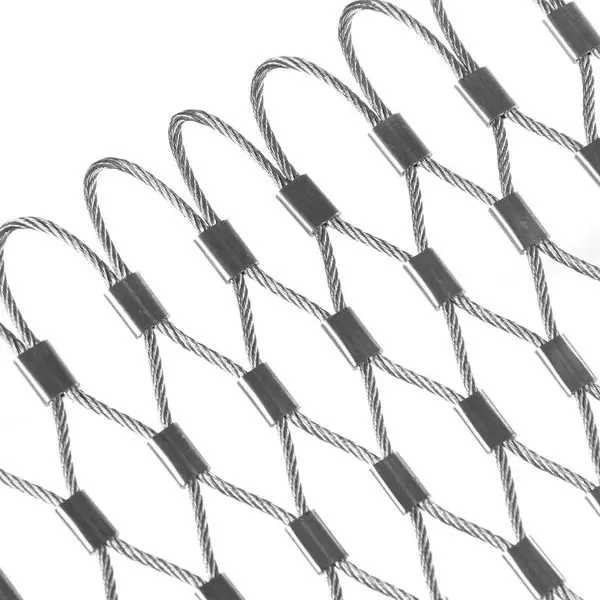 Read More

Contact Us

Recommended Products
-
 Slope Protection System Rockfall Netting 2.0mm 3.0mm 4.0mm High Tensile Steel Wire Mesh Netting Rockfall BarriersUS$ 2 - 15MOQ: 1 Square Meter
-
Flexible Debris Flow Barrier Steel Rope Rockfall Barrier With Ring Diameter 350 mm China SupplierUS$ 5.9 - 40MOQ: 1 Square Meter
-
Custom Hexsteel Mesh for Refractory Linings Stainless Steel Wire Plain Weave Welded Cutting Welding Offered Made ChinaUS$ 9.20 - 45.00MOQ: 50 Square Meters
-
Double Twist Hexagonal Mesh Rockfall Netting Drapery System for for Rockfall Mitigation Slope Consolidation WorksUS$ 0.45MOQ: 100 Square Meters
-
China Factory Galvanized Steel Railway Side Slope Stabilization Net Woven Wire Mesh for Slope Protection Include Bending WeldingUS$ 15.00 - 20.00MOQ: 999 Square Meters


-
Galvanized Gabion Baskets for Retaining Wall Plain Weave Cutting Processing Service for Slope Stabilization-Free Sample OfferedUS$ 1.5 - 1.7MOQ: 1 Square Meter
-
Children's Playground Stainless Steel Rope Mesh Balcony Fence Inox Cable Net Build Guardrail Black Oxide Rope NettingUS$ 118.00MOQ: 100 Square Meters
-
Factory Direct Modern High Transparency Anti-Slip Stainless Steel Rope Mesh Stair Railing Woven Cable Netting Custom ProjectsUS$ 9.9 - 14.9MOQ: 1 Square Meter
-
Stainless Steel Rope Mesh for Backpack and Bag Anti Falling Dropring Mesh Inox Cable Net Anti-theft Black Oxide Rope NettingUS$ 118.00MOQ: 100 Square Meters
-
Heavy-Duty 4ftx5ft Drag Mat Factory With Chain Galvanized Steel Drag Mat for Tractor AttachmentUS$ 9.1 - 45MOQ: 1 Square Meter


-
High Altitude Anti Fall Woven Stainless Steel Wire Rope Net SS 304 316 316L Plain Weave Invisible Protective NetUS$ 9.9 - 14.9MOQ: 1 Square Meter
-
China Rope Mesh Manufacturer Customized SS316 Black Oxided Ferrule Type Rope MeshUS$ 5 - 20MOQ: 1 Square Meter
-
Baseball Field Dragging Lawn LevelingUS$ 59.00 - 66.00MOQ: 5 Pieces
-
316L Grade Stainless Steel Wire Mesh Sieves 200mm 300mm Screen Factory Price Sand Testing ScreenUS$ 4.7 - 15MOQ: 1 Piece
-
Outdoor Stainless Steel Cable Railing / Wire Rope Mesh / Wire Mesh Railings for BalconyUS$ 15.00 - 20.00MOQ: 100 Square Meters


-
Slope Protection System 65/3, High-tensile Steel Wire Mesh, Spike Plate, Rock Nail, Connection Clips T3 for Slope StabilityUS$ 1.80 - 3.00MOQ: 1 Square Meter
-
Pool Mesh Steeltex Paper-Backed Welded Wire Mesh Factory Price 12ga 16gaUS$ 40 - 70MOQ: 30 Rolls
-
G65 3 Rockfall Netting Rust Free Coated Slope Protection Net Galvanized High Tensile Wire Mesh Control Shallow LandslideUS$ 5.40 - 5.60MOQ: 1 Meter
-
Anti‑Drone Protection Steel Rope Net UAV Security Protection Fence Mesh Galvanized /Stainless Steel Customized ProductionUS$ 1.1 - 1.2MOQ: 100 Square Meters
-
Anti-Drone Netting High Tensile Strength Stainless Steel Woven Wire Rope Mesh Active Rockfall Barrier Systemn Factory SupplyUS$ 15.00 - 20.00MOQ: 999 Square Meters