
 Business License
Blog Categories
Custom Sizes for Coal Mine Hydraulic Support Protection Mesh
Almost every face panel is made to a custom mining mesh size, and the reason is that no two faces present the same gap between two canopies.
The consequence is that the order is a drawing exercise rather than a catalogue selection, and a panel made to the wrong interpretation of a gap will fit the opening and be wrong at the bracket.
This article covers the three dimensions that define a panel, what actually varies between faces, how to read a mine net drawing, the tolerances worth paying for, how panels are set out along a face, and the template route for a mine that has no drawing to send.
1. Why Custom Mining Mesh Size Is Normal
A custom mining mesh size is the default rather than the exception, because the panel is defined by equipment rather than by a standard.
Canopy widths differ between support models, and so do canopy edge profiles. A support with a flush edge and one with a raised lip present different fixing surfaces for the same gap, and the bracket that suits one will not sit flat on the other.
Web width also varies along a face. A block that shortens its web at a disturbance needs shorter panels for that section, and a face that runs two web lengths needs two panel lengths on the same order.
So a supplier working from a stock size will either cut a panel down, which loses the edge termination, or supply a panel that overhangs. Both are visible on the face within a week.
2. The Three Dimensions That Define a Custom Mining Mesh Size
A panel is defined by width, drop and fixing pitch, and the three are not independent.
| Dimension | Measured between | Common range |
|---|---|---|
| Width | Canopy edge to canopy edge, at the fixing line | 1,200 to 2,400 mm |
| Drop | Fixing line down to the bottom edge | 800 to 1,400 mm |
| Fixing pitch | Hook to hook along the top edge | Two points, sometimes three |
Width is measured at the fixing line rather than at the widest point of the gap, because the panel hangs from the top and the gap below it is allowed to be wider.
Drop is measured from the fixing line rather than from the canopy underside, so that a change of hook length does not change the hanging height. That single convention removes most of the arguments about a panel that hangs too low.
Fixing pitch decides how the panel behaves between its hooks. A two-point panel of two metres wide will sag in the middle as it distorts, and a three-point panel of the same width will not, at the cost of a third bracket on every support.
A custom mining mesh size quoted with all three figures can be checked against a face in a single conversation. One quoted with width alone cannot, and it is the quotation that arrives with a width and a drop and no pitch that produces a panel which fits the opening and hangs badly.
3. Support Net Dimension: What Changes Between Faces
Support net dimension changes with the support model first and the roof condition second, and rarely with the seam thickness.
The support model fixes the canopy width and the edge profile, so a face that changes support model needs a new panel drawing even where the gap looks the same. That is the most common reason a panel from a finished face does not fit the next one.
Roof condition changes the drop rather than the width. A friable roof that produces small material needs a longer drop to catch it below the canopy, and a competent roof can use a shorter panel with a lighter frame.
The third variable is the hanging detail. A face that hangs from a bracket on the canopy side plate needs a panel narrower than one that hangs from a hook under the canopy edge, because the bracket occupies part of the gap.
A support net dimension quoted without the support model beside it is therefore an incomplete figure, and it is worth returning to the mine rather than filling it in from a similar face. Two models can present the same gap and need different panels, and the difference sits in the edge profile rather than in the dimension.
4. Reading a Mine Net Drawing
A mine net drawing carries five things, and an order that arrives without any of them will generate a query.
The first is the panel outline with the three dimensions marked to their datums rather than to each other, so that a change in one does not silently change the other two.
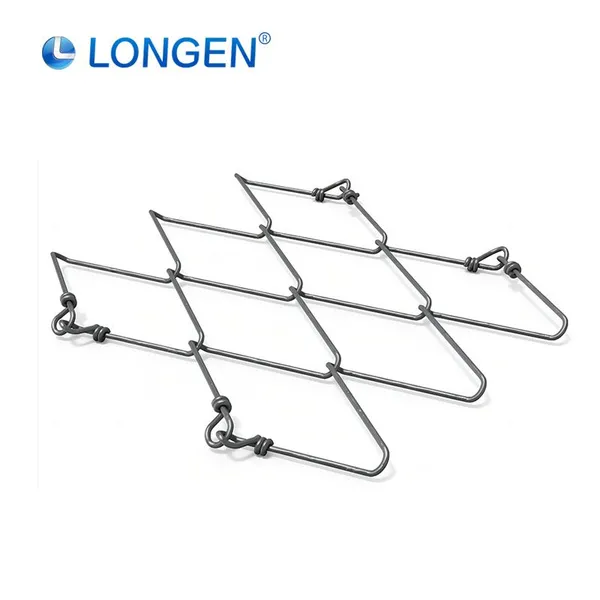
The second is the fixing detail, drawn at the hook rather than described in a note. The third is the rope, its diameter and its construction. The fourth is the aperture and the open area. The fifth is the termination at each edge, including whether the panel is bound or has a thimble at the corners.
A drawing that shows the outline and not the fixing detail is a shape rather than a specification, and it is the document on which most disputes turn.
5. Tolerances on a Support Net Dimension and What They Cost
Tolerance on a face panel is not a formality, because the panel has to fit a gap that is itself moving.
A width tolerance of plus or minus twenty millimetres suits most faces, and tightening it below ten millimetres adds cost without adding fit. That is because the support net dimension is measured in a gap that moves by more than the tolerance during a cycle.
The tolerance that matters is the fixing pitch, because an error there is an error at both hooks at once. A pitch that is ten millimetres out will hold one hook tight and leave the other with the free length wrong, and it will do it on every panel on the face.
Squareness is the third. A panel that is out of square by more than about fifteen millimetres over two metres will hang with one corner low, and that corner is where the bottom edge will wear through against the deck.
6. Panels Per Face and the Joint Line
Panels are set out along a face either joint to joint at the supports or overlapping behind the canopy, and the choice affects the dimension rather than the quantity.
A joint at each support means the panel width equals the gap plus the bracket allowance at each side, and the number of panels equals the number of supports minus one. It gives a clean line and it puts a joint where a person can reach it.
An overlap means each panel is wider than the gap and hangs behind its neighbour, which closes the joint but doubles the thickness at the overlap and can foul the canopy edge. It is used where the gap is irregular rather than uniform.
Whichever is chosen, the joint line should be stated on the drawing rather than left to the installation. A face that mixes the two has panels that fit individually and a line that does not close.
The joint line also sets the quantity, and a face of two hundred metres at a web of eight hundred millimetres needs a decision about whether the ends are closed by a half panel. That end panel is the one most often missing from an order, and it is the one that leaves a gap at the intake corner.
7. Ordering Without a Mine Net Drawing: The Template Route
A mine that has no drawing for a face can still order accurately, and the route is a measured template rather than a description.
The template is a strip of board or heavy card cut to the gap at the fixing line, with the two hook positions marked and the drop written on it. It is taken at three supports, at the intake end, the middle and the return, and the three are sent together.
The three-strip method catches the variation that a single measurement hides, and it lets a supplier see whether the face needs one panel size or two. It also settles the question of which side is the intake, which is the detail most often missing from a photograph.
Hebei Longen Wire Mesh Products accepts a dimensioned sketch with three hook positions as an order document, and Hebei Longen Wire Mesh Products Co Ltd will return a drawing for signature before anything is cut. Nothing is made from a sketch that has not been returned and signed.
Longen sends the returned drawing as a print as well as a file, because the copy that gets signed on a face is usually the one on paper. A signed print filed with the panel record is what a repeat order should be placed against.
8. Two Orders Where the Mine Net Drawing Was Wrong
On an order where the width was given as the gap between canopies at mid-height, the panels were two hundred millimetres too wide and would not hang. The gap at the fixing line was narrower than the gap below it, and the drawing had measured the part that looked like the opening rather than the part that carries the load.
On a second order the fixing pitch was taken from a drawing of the support rather than from the support. The drawing was for a different canopy variant, and the pitch was eighty millimetres out on every panel. The whole order was remade, and the cost of the error was in the drawing rather than in the works.
Longen Wire Mesh Products asks for a photograph of the canopy edge with a tape against it on any first order for a face, because a tape in a photograph has settled more queries than any drawing received.
9. Frequently Asked Questions
9.1 Can a custom mining mesh size be supplied from a photograph?
A photograph can confirm a detail and it cannot set a dimension, because there is nothing in it to scale against unless a tape is in the frame. A photograph with a tape held against the canopy edge and the hook positions is a useful order document, and it is still weaker than three measurements. The practical route is a dimensioned sketch with the three figures, a photograph for the detail, and a returned drawing for signature. That combination has proved enough for a first order on a face.
9.2 What is the usual lead time for a made-to-size panel order?
It depends on the rope and the coating rather than on the cutting, and it is quoted per order rather than from a table. The part that takes the time is the drawing return and the confirmation of the free length, which sit with the mine rather than with the works. A face that sends a sketch and signs the returned drawing within a week removes most of the delay from its own side. Orders that arrive with a signed drawing and a confirmed free length move most quickly.
9.3 Should the support net dimension include the bracket allowance?
It should, and the allowance should be stated rather than assumed. A panel dimensioned to the clear gap will be short by the thickness of both brackets, which shows as a panel that will not reach its second hook. The allowance is usually forty to eighty millimetres in total, depending on the bracket. Putting it on the drawing as a separate line makes it visible, and a visible allowance is one that gets checked rather than inherited from the last order.
9.4 How much variation in panel width can one face tolerate?
About fifty millimetres across a face before the joint line shows a step, and less where the panels are visible from the walkway. A face with more variation than that is better served by two panel sizes than by one size with a large tolerance. The variation is worth measuring at three points rather than estimated, because it usually follows the roof rather than the equipment, and a roof that steps will produce a face that steps with it. A face that has run two blocks without a step is unlikely to develop one, and a face that has just changed support model will.
9.5 Is a mine net drawing needed for a repeat order?
It is, and the drawing should be the one that was signed rather than the one that was quoted. A repeat order placed against a reference number alone will be made to whatever drawing sits under that number, which may have been revised after the first delivery. The check to make is that the free length on the drawing matches the figure in use on the face. Where the two differ, the face has moved on and the drawing has not, and the drawing should be revised before the order is placed.
Recently Posted
-
Coal Mine Hydraulic Support Protection Mesh: Inspection in Service
November 23, 2026A mining net inspection is not a search for damage. It is a check on whether four specific things have moved since the last walk,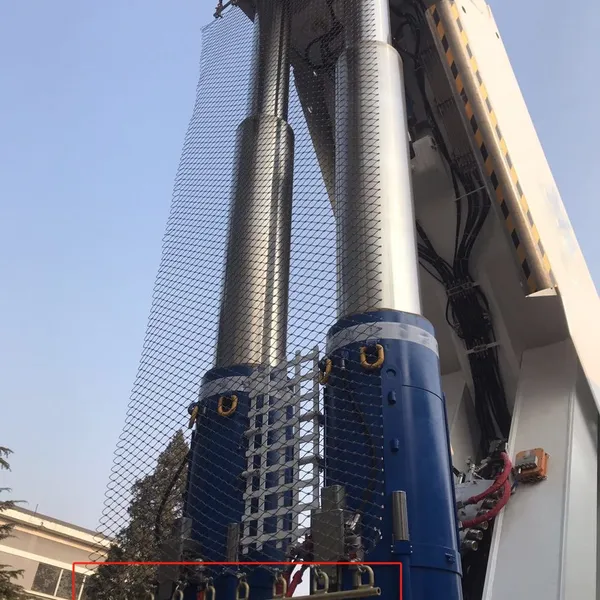 Read More
-
Coal Mine Hydraulic Support Protection Mesh: Ventilation and Water Flow
November 23, 2026A mesh that hangs across the air path of a working face is a filter whether or not it was designed as one, and the two things it f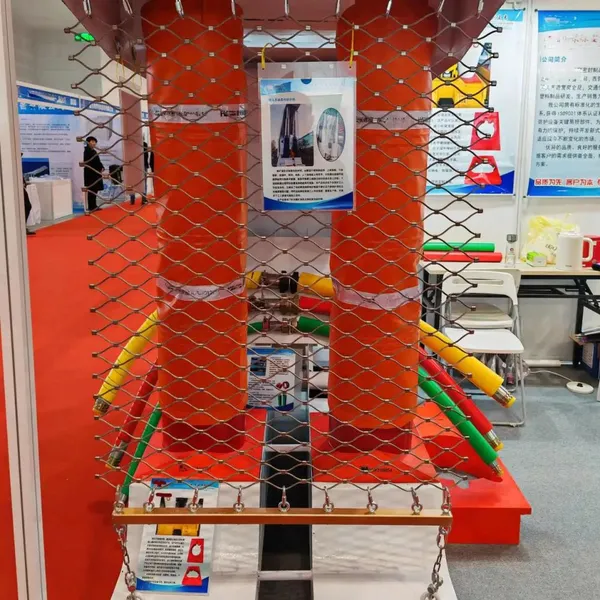 Read More
-
Coal Mine Hydraulic Support Protection Mesh Installation Between Supports
November 20, 2026A support net installation looks like hanging a panel on two hooks, and that impression is the reason most of them are done wrong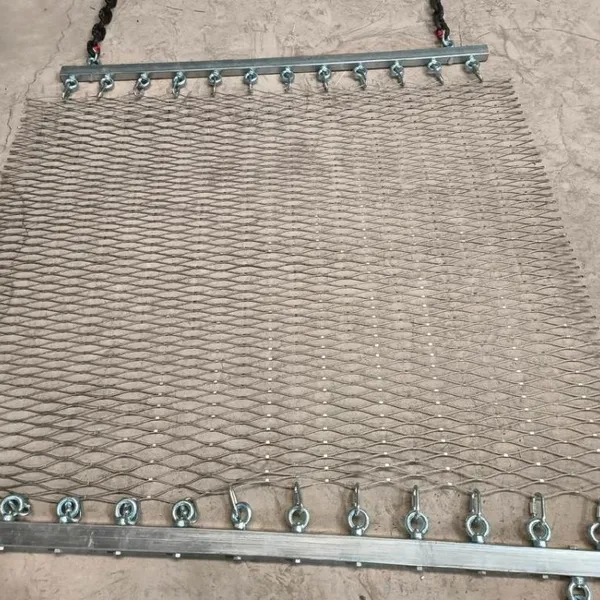 Read More
-
Coal Mine Hydraulic Support Protection Mesh: Aperture and Strength
November 20, 2026Aperture and strength are usually quoted as two numbers on the same line, and on a working face they are two different arguments. Read More

Contact Us

Recommended Products
-
 Slope Protection System Rockfall Netting 2.0mm 3.0mm 4.0mm High Tensile Steel Wire Mesh Netting Rockfall BarriersUS$ 2 - 15MOQ: 1 Square Meter
-
Flexible Debris Flow Barrier Steel Rope Rockfall Barrier With Ring Diameter 350 mm China SupplierUS$ 5.9 - 40MOQ: 1 Square Meter
-
Custom Hexsteel Mesh for Refractory Linings Stainless Steel Wire Plain Weave Welded Cutting Welding Offered Made ChinaUS$ 9.20 - 45.00MOQ: 50 Square Meters
-
Double Twist Hexagonal Mesh Rockfall Netting Drapery System for for Rockfall Mitigation Slope Consolidation WorksUS$ 0.45MOQ: 100 Square Meters
-
China Factory Galvanized Steel Railway Side Slope Stabilization Net Woven Wire Mesh for Slope Protection Include Bending WeldingUS$ 15.00 - 20.00MOQ: 999 Square Meters
-
Galvanized Gabion Baskets for Retaining Wall Plain Weave Cutting Processing Service for Slope Stabilization-Free Sample OfferedUS$ 1.5 - 1.7MOQ: 1 Square Meter
-
Children's Playground Stainless Steel Rope Mesh Balcony Fence Inox Cable Net Build Guardrail Black Oxide Rope NettingUS$ 2.8MOQ: 1 Square Meter
-
Factory Direct Modern High Transparency Anti-Slip Stainless Steel Rope Mesh Stair Railing Woven Cable Netting Custom ProjectsUS$ 9.9 - 14.9MOQ: 1 Square Meter
-
Stainless Steel Rope Mesh for Backpack and Bag Anti Falling Dropring Mesh Inox Cable Net Anti-theft Black Oxide Rope NettingUS$ 118.00MOQ: 100 Square Meters
-
Heavy-Duty 4ftx5ft Drag Mat Factory With Chain Galvanized Steel Drag Mat for Tractor AttachmentUS$ 9.1 - 45MOQ: 1 Square Meter
-
High Altitude Anti Fall Woven Stainless Steel Wire Rope Net SS 304 316 316L Plain Weave Invisible Protective NetUS$ 9.9 - 14.9MOQ: 1 Square Meter
-
China Rope Mesh Manufacturer Customized SS316 Black Oxided Ferrule Type Rope MeshUS$ 5 - 20MOQ: 1 Square Meter
-
Baseball Field Dragging Lawn LevelingUS$ 59.00 - 66.00MOQ: 5 Pieces
-
316L Grade Stainless Steel Wire Mesh Sieves 200mm 300mm Screen Factory Price Sand Testing ScreenUS$ 4.7 - 15MOQ: 1 Piece
-
Outdoor Stainless Steel Cable Railing / Wire Rope Mesh / Wire Mesh Railings for BalconyUS$ 15.00 - 20.00MOQ: 100 Square Meters
-
Slope Protection System 65/3, High-tensile Steel Wire Mesh, Spike Plate, Rock Nail, Connection Clips T3 for Slope StabilityUS$ 1.80 - 3.00MOQ: 1 Square Meter
-
Pool Mesh Steeltex Paper-Backed Welded Wire Mesh Factory Price 12ga 16gaUS$ 40 - 70MOQ: 30 Rolls
-
G65 3 Rockfall Netting Rust Free Coated Slope Protection Net Galvanized High Tensile Wire Mesh Control Shallow LandslideUS$ 5.40 - 5.60MOQ: 1 Meter
-
Anti‑Drone Protection Steel Rope Net UAV Security Protection Fence Mesh Galvanized /Stainless Steel Customized ProductionUS$ 1.1 - 1.2MOQ: 100 Square Meters
-
Anti-Drone Netting, Galvanized High Tensile Steel Wire Rope Mesh, UVA Protection Net, CE Factory Customized ProductionUS$ 1.00 - 2.00MOQ: 999 Square Meters