Business License
Blog Categories
Coal Mine Hydraulic Support Protection Mesh: Aperture and Strength
Aperture and strength are usually quoted as two numbers on the same line, and on a working face they are two different arguments.
The mining net aperture is decided by the material that has to be held. The support net strength is decided by the fixing, the cycle count and the consequences of a local failure, not by a single breaking load.
This article sets out how aperture is chosen against real material, why breaking load is a misleading figure for a face panel, how the shape of the falling piece matters as much as its size, and where the aperture stops being what the drawing says.
1. Mining Net Aperture: The Material It Has to Hold
Mining net aperture should be chosen from a sample of what actually falls on that face, and most faces have never had that sample taken.
The material that comes through the gap between two canopies is a mixture of coal, immediate roof and stone from the goaf side, and the mix changes along the face and between shifts.
A practical way to size the aperture is to collect what falls over a few shifts, screen it, and look at the size that represents the bulk rather than the largest lump.
The bulk is usually between twenty and eighty millimetres. The largest lump is usually several times that, and sizing for the largest lump produces a mesh so tight that it changes the ventilation.
So the aperture is chosen to hold the bulk and to slow the rest, and the occasional large piece is accepted as a load on the panel rather than as a pass-through.
A gangue blocking mesh is therefore never sized on a single sample, however large. The sample that matters is the one taken over several shifts at the same position on the face, because the material arriving at the middle of the face is not the material arriving at the ends.
2. Support Net Strength Is Not a Breaking Load
Support net strength is commonly quoted as the breaking load of a single rope, multiplied by the number of ropes across a panel, and that figure has little to do with what the panel does.
A panel is not loaded uniformly. A falling piece hits a few wires at one point, and the load spreads through the mesh as the panel distorts.
The load path then runs to the two fixed edges and into the brackets, so the capacity of the assembly is set by the bracket and the ferrule rather than by the middle of the net.
That is why a panel with a high calculated strength can fail at a hook under a load far below it, and a panel with a modest rope can survive a face if the fixing detail is right.
The useful strength figure for a face panel is the load at which the fixing detail begins to yield, measured on a sample assembly rather than calculated from the rope.
3. Gangue Blocking Mesh: Shape Matters as Much as Size
Gangue blocking mesh is judged on the shape of the piece as well as on its dimension, and the two are not interchangeable.
A block is roughly equiaxed and it is held by an aperture smaller than its smallest face. A flake is flat and wide, and it will pass an aperture that is larger than its thickness even when its length is several times that figure.
Roof strata that break into flakes are therefore the hard case for a given aperture, and the same mesh on a face that produces blocks will appear to work better.
The second shape effect is orientation. Material leaving the gap has usually rotated, so the aperture it meets is the projected opening rather than the nominal one, which is larger in one direction than the other.
That is an argument for a square or rhombic aperture rather than a long slot, because a slot presents a wide opening in one orientation.
| Aperture | Holds | Open area |
|---|---|---|
| 40 mm | Flakes and fines | Roughly 78 percent |
| 50 mm | Most flakes, small blocks | Roughly 82 percent |
| 60 mm | Blocks, larger flakes | Roughly 85 percent |
| 80 mm | Large blocks alone | Roughly 88 percent |
4. Mining Net Aperture, Open Area and Ventilation
Open area is what the ventilation sees, and it falls faster than the aperture suggests when the wire is thickened.
A fifty millimetre aperture with a four millimetre rope leaves roughly eighty-two percent open. The same aperture with a six millimetre rope leaves about seventy-seven.
On a face where the air has to pass along the walkway and through the goaf, that difference is measurable at the return end, and it is the reason a specification that tightens the aperture should check the ventilation figure at the same time.
The relationship is not linear, and it is worth calculating rather than assuming, because a small change in rope diameter can cost more open area than a large change in mining net aperture.
Longen Wire Mesh Products Co Ltd supplies the open area figure for each aperture and rope combination rather than leaving the buyer to derive it from a drawing.
5. Support Net Strength Under Cyclic Load
On a face, strength is a fatigue question, and fatigue is a different calculation from static capacity.
A panel is loaded lightly thousands of times by its own movement and heavily a few times by falling material. The light cycles do the damage at the bracket, and the heavy ones do the damage in the field.
The stress range at the bracket depends on the free length. A panel hung tight sees the full movement as strain; a panel with free length sees a fraction of it.
So the same panel can have a long life or a short one depending on a dimension that is not part of the strength specification at all.
The practical rule is that the free length and the bracket detail are part of the strength design, and a quotation that states a breaking load without them has answered half the question.
A panel with a hundred and forty millimetres of free length sees perhaps a third of the strain at the hook that the same panel sees when hung tight, which is a difference of several times in cycle life for no change of material.
Hebei Longen Wire Mesh Products states both figures on the drawing for that reason, so that a strength comparison between two quotations can be made on the assembly rather than on the rope.
Longen also keeps a record of the free length used on each face, which is how a support net strength claim can be checked against a panel that is already underground.
6. Where a Mining Net Aperture Opens at the Fixing
An aperture measured on a flat sample and an aperture measured on an installed panel are two different figures.
At a clamp, the wires either side of the fixing are held and the ones beyond can spread, so the first two apertures grow.
At a corner, two edges pull in different directions and the diamond opens diagonally, which is the largest increase on the panel.
At a cut edge, the last row of wires is unsupported and opens under load, and a panel cut to size on site has a cut edge where the drawing assumed a finished one.
All three are controlled by the same details: a finished edge rather than a cut one, a bracket that grips without crushing, and a first aperture checked after installation rather than in the workshop alone.
7. Choosing a Gangue Blocking Mesh for a Face
A gangue blocking mesh specification can be settled in four steps, and none of them requires a laboratory.
The first is to collect the material and screen it, which gives the size that has to be held.
The second is to check the open area against the ventilation, which sets the upper limit on wire diameter for the chosen aperture.
The third is to check the fixing detail on a sample, which sets the strength that can actually be delivered.
The fourth is to hang one panel in the worst place on the face for a month and look at it, which answers the questions the first three cannot. A gangue blocking mesh that survives that month without a broken wire at the hook is doing what it was bought to do, and one that does not has told you which figure to change.
Hebei Longen Wire Mesh Products Co Ltd will supply a single trial panel to that programme, because a month of real service is worth more than any calculation on a specification sheet. Hebei Longen Wire Mesh Products stands behind the result either way, and the trial panel is credited against the face order if it is confirmed.
8. Two Faces Where the Aperture Was the Argument
A face producing flat roof flakes was fitted with an eighty millimetre panel on the basis of the block size seen on an adjacent face. The flakes passed the aperture edge-on and the material caught per shift stayed under half a tonne. The panel was re-specified at fifty millimetres with the same rope diameter, which reduced the open area by about seven percent and increased the material caught to roughly two tonnes per shift. The ventilation reading at the return end did not change beyond the noise of the instrument.
A second face used a sixty millimetre aperture with a six millimetre rope. Reducing the rope to four millimetres at the same aperture recovered more open area than opening the aperture to eighty, and it cost less than the heavier panel it replaced.
9. Frequently Asked Questions
9.1 What aperture is standard on a working face?
Between forty and eighty millimetres, with the figure set by the material the roof produces rather than by a general rule. A face with a friable immediate roof settles near forty to fifty, and a face producing blocks can stay at sixty to eighty without losing material. The aperture is then checked against the ventilation, because a tight net with a heavy rope can cost more open area than the mine expects. Most specifications are settled after a trial panel rather than before it.
9.2 How is support net strength calculated?
From the fixing detail rather than from the rope, because that is where a face panel fails. A sample assembly is loaded to the point where the hook, the bracket or the ferrule yields, and that figure is the usable strength. A rope breaking load is a material property and it is not wrong, but quoting it as the panel strength ignores the two components that actually govern. The calculation should also state the free length used in the test, since the result depends on it.
9.3 Does a smaller aperture mean a stronger panel?
No, and it usually means a heavier one. A tighter aperture with the same rope adds wires and weight without adding capacity at the fixing, and it reduces open area. Strength comes from the rope, the joint and the bracket, and aperture is chosen for the material. The two figures are quoted together because they are bought together, not because one causes the other, and a face that needs both a tight aperture and more strength needs a different rope rather than a denser mesh.
9.4 Why does a flat flake pass a mesh that holds a block?
Because the opening the flake meets is its thickness rather than its length. A flake twenty millimetres thick and a hundred and twenty long will pass a fifty millimetre aperture if it arrives edge-on, which is the orientation it usually takes after falling through a narrow gap. A block of the same mass has no thin dimension, so it is held. That is why a face producing flakes needs a tighter aperture than the size of the material alone would suggest.
9.5 How is open area measured on a finished panel?
From the aperture and the rope diameter, calculated rather than measured, because a direct measurement on a flexible panel is not repeatable. The figure is the ratio of open area to total area and it falls with both a smaller aperture and a thicker rope. It is worth asking for the figure at the specification stage, since two panels with the same aperture and different ropes can differ by several percent. On a face where the ventilation is marginal, that difference is the one that matters.
Recently Posted
-
Coal Mine Hydraulic Support Protection Mesh: Stretch and Lift Behaviour
November 19, 2026A support lifting net is asked to do something no ordinary barrier does: it has to change its shape every time the steel it hangs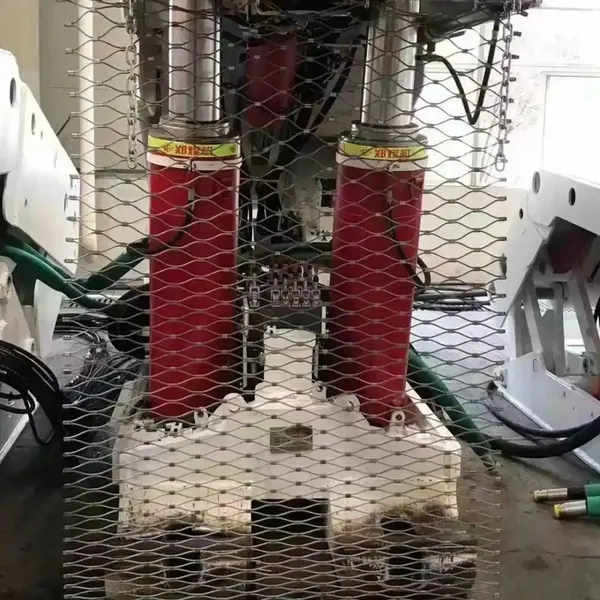 Read More
-
Coal Mine Hydraulic Support Protection Mesh and Working Face Safety
November 19, 2026Working face protection is a system rather than a product, and the mesh between the supports is one line of it. The other lines ar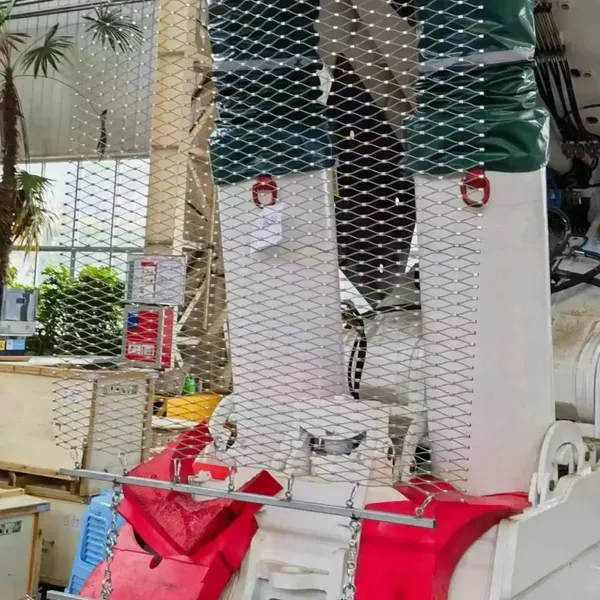 Read More
-
What Is Coal Mine Hydraulic Support Protection Mesh?
November 19, 2026A longwall face is a line of steel canopies holding up a roof that is trying to come down, and between every two canopies there is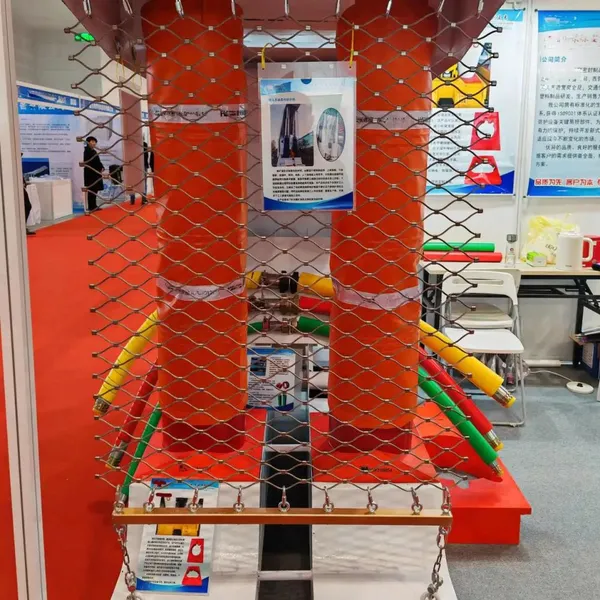 Read More
-
Specifying Black Oxide Stainless Steel Wire Rope Mesh: What to Send
November 18, 2026A dark net order fails for a small number of predictable reasons, and almost all of them are traceable to information that was not Read More

Contact Us

Recommended Products
-
 Slope Protection System Rockfall Netting 2.0mm 3.0mm 4.0mm High Tensile Steel Wire Mesh Netting Rockfall BarriersUS$ 2 - 15MOQ: 1 Square Meter
-
Flexible Debris Flow Barrier Steel Rope Rockfall Barrier With Ring Diameter 350 mm China SupplierUS$ 5.9 - 40MOQ: 1 Square Meter
-
Custom Hexsteel Mesh for Refractory Linings Stainless Steel Wire Plain Weave Welded Cutting Welding Offered Made ChinaUS$ 9.20 - 45.00MOQ: 50 Square Meters
-
Double Twist Hexagonal Mesh Rockfall Netting Drapery System for for Rockfall Mitigation Slope Consolidation WorksUS$ 0.45MOQ: 100 Square Meters
-
China Factory Galvanized Steel Railway Side Slope Stabilization Net Woven Wire Mesh for Slope Protection Include Bending WeldingUS$ 15.00 - 20.00MOQ: 999 Square Meters


-
Galvanized Gabion Baskets for Retaining Wall Plain Weave Cutting Processing Service for Slope Stabilization-Free Sample OfferedUS$ 1.5 - 1.7MOQ: 1 Square Meter
-
Children's Playground Stainless Steel Rope Mesh Balcony Fence Inox Cable Net Build Guardrail Black Oxide Rope NettingUS$ 2.8MOQ: 1 Square Meter
-
Factory Direct Modern High Transparency Anti-Slip Stainless Steel Rope Mesh Stair Railing Woven Cable Netting Custom ProjectsUS$ 9.9 - 14.9MOQ: 1 Square Meter
-
Stainless Steel Rope Mesh for Backpack and Bag Anti Falling Dropring Mesh Inox Cable Net Anti-theft Black Oxide Rope NettingUS$ 118.00MOQ: 100 Square Meters
-
Heavy-Duty 4ftx5ft Drag Mat Factory With Chain Galvanized Steel Drag Mat for Tractor AttachmentUS$ 9.1 - 45MOQ: 1 Square Meter


-
High Altitude Anti Fall Woven Stainless Steel Wire Rope Net SS 304 316 316L Plain Weave Invisible Protective NetUS$ 9.9 - 14.9MOQ: 1 Square Meter
-
China Rope Mesh Manufacturer Customized SS316 Black Oxided Ferrule Type Rope MeshUS$ 5 - 20MOQ: 1 Square Meter
-
Baseball Field Dragging Lawn LevelingUS$ 59.00 - 66.00MOQ: 5 Pieces
-
316L Grade Stainless Steel Wire Mesh Sieves 200mm 300mm Screen Factory Price Sand Testing ScreenUS$ 4.7 - 15MOQ: 1 Piece
-
Outdoor Stainless Steel Cable Railing / Wire Rope Mesh / Wire Mesh Railings for BalconyUS$ 15.00 - 20.00MOQ: 100 Square Meters


-
Slope Protection System 65/3, High-tensile Steel Wire Mesh, Spike Plate, Rock Nail, Connection Clips T3 for Slope StabilityUS$ 1.80 - 3.00MOQ: 1 Square Meter
-
Pool Mesh Steeltex Paper-Backed Welded Wire Mesh Factory Price 12ga 16gaUS$ 40 - 70MOQ: 30 Rolls
-
G65 3 Rockfall Netting Rust Free Coated Slope Protection Net Galvanized High Tensile Wire Mesh Control Shallow LandslideUS$ 5.40 - 5.60MOQ: 1 Meter
-
Anti‑Drone Protection Steel Rope Net UAV Security Protection Fence Mesh Galvanized /Stainless Steel Customized ProductionUS$ 1.1 - 1.2MOQ: 100 Square Meters
-
Anti-Drone Netting, Galvanized High Tensile Steel Wire Rope Mesh, UVA Protection Net, CE Factory Customized ProductionUS$ 1.00 - 2.00MOQ: 999 Square Meters