Business License
Blog Categories
Coal Mine Hydraulic Support Protection Mesh and Working Face Safety
Working face protection is a system rather than a product, and the mesh between the supports is one line of it.
The other lines are the canopy, the setting pressure, the walkway width, the ventilation and the sequence in which the supports are advanced. A barrier that is right for one of those and wrong for another will be modified on the face within a week.
This article sets out what the barrier contributes to working face safety, how it behaves through a web, the three events it addresses, where it sits during an advance, and the shift checks that keep it in service.
1. What Working Face Protection Means in Practice
Working face protection covers the people, the equipment and the services on a face that is moving forward several metres a day.
The hazards are not the ones a building designer would recognise. There is no single edge to guard; there is a roof that is being deliberately allowed to break behind the supports, and a line of steel that is being moved and re-set continuously.
The support canopy protects the person underneath it. It does nothing for the gap between two canopies, which is where a small fall can arrive at head height without warning.
The mesh closes that gap. It is a small part of the system by cost and by weight, and it addresses a hazard that is constant rather than occasional.
So the correct way to specify working face protection is to start from the events that actually injure people on that face, and then to check which of them the barrier can reduce.
2. The Coal Face Net Barrier and the Sequence of One Web
A coal face net barrier is configured around the web, which is the slice of coal the machine takes on one pass.
The machine cuts a web of roughly six hundred to a thousand millimetres, and the supports are then advanced into the space it leaves, one support at a time, from one end of the face to the other.
During that sequence every support is lowered, pushed forward and re-set, and each one is at a different stage from its neighbour at any moment.
The barrier therefore has to tolerate a gap that opens, closes and changes shape twice over in a single pass of the face.
That is why the panel is hung rather than fixed. A panel fixed at both edges would see the web as a tension load, and the bracket would be the first thing to fail.
3. Mining Net Safety: Three Events the Barrier Addresses
Mining net safety on a working face comes down to three events, and the barrier is relevant to all three in different ways.
The first is a small fall from the roof between two canopies. The material is typically under a hundred millimetres and it arrives without warning, at a height where a person is working and where a canopy cannot reach.
The second is material pushed off the canopy edge by the advance, or by the machine's spillage plate, which travels down the gap rather than onto the walkway.
The third is a dropped object: a tool, a pin, a spanner, a piece of hose coupling. These are heavier than roof flakes, they arrive from above the canopy, and they are the reason a barrier rated for fines alone is not enough on a maintenance shift.
| Event | Typical mass | Barrier response |
|---|---|---|
| Roof flake between canopies | Under 5 kg | Caught, panel deflects |
| Spillage from the advance | 5 to 30 kg | Caught, may need re-hang |
| Dropped tool | 1 to 10 kg | Caught, local damage |
None of the three is a roof fall. A barrier specified against a roof fall is a different product, and expecting the mesh to arrest one is the misunderstanding that leads to it being blamed after an incident.
4. Working Face Protection During the Support Advance
The advance is when the barrier is most exposed, and it is also when the people on the face are closest to it.
A support being advanced has its canopy lowered by roughly a hundred millimetres and moved forward by the web width. The panel on that support goes slack on one side and tight on the other, and the bracket sees a rotation rather than a pull.
If the panel has been hung with no free length, the rotation is taken as tension and the wire at the bracket begins to fatigue from the first web.
If the panel has been hung with too much free length, it fouls the walkway, catches on the conveyor or is walked on, and it is cut away within a few shifts.
Working face protection therefore depends on a free length that is specified rather than improvised, and on a bracket that lets the panel swing instead of clamping it.
Hebei Longen Wire Mesh Products Co Ltd states the free length on the panel drawing for that reason, expressed as a distance beyond each bracket at the mid-point of the support cycle.
5. Roof Condition and the Coal Face Net Barrier
The roof decides the aperture, and the roof changes along a face and between faces.
A competent immediate roof sheds occasional lumps and produces little fines, so a moderately open barrier is enough and it keeps the face bright.
A friable immediate roof produces a steady stream of small material, and the aperture has to close to hold it. The same face may also need a heavier rope, because the material arrives continuously rather than occasionally.
A roof that weights and breaks close behind the supports sends material from the goaf side, which arrives at an angle rather than vertically. That case needs the panel to be continuous past the rear of the canopy, which is a different hanging detail.
A coal face net barrier specified once for the life of a face will be wrong for part of it. Most mines review the specification when the roof condition changes, which is usually at a fault, a change of strata or a change of mining height.
6. Mining Net Safety at the Walkway and the Conveyor
Most of the time a person spends on a face is spent on the walkway, and mining net safety depends on that space staying clear.
The walkway runs between the supports and the conveyor, and it has a minimum width that is set by the mine's own rules. A panel that hangs into the walkway reduces that width and forces people to duck or to step around it.
The conveyor is the other constraint. A panel that hangs low enough to touch the chain or the flight bars will be destroyed, and a panel that is cut short to avoid the conveyor leaves the gap open at exactly the height of a person's legs.
The detail that resolves both is a panel that is fixed to the canopy edge and hangs to a fixed height above the conveyor, with the bottom edge stiffened so that it does not flap into the chain.
Longen Wire Mesh Products supplies a stiffened bottom edge as a standard option on face panels, and marks the hanging height on the drawing against the conveyor deck rather than against the floor.
Hebei Longen Wire Mesh Products keeps the two hanging details on separate drawings, one for the walkway side and one for the goaf side, because a panel that works on one will foul the other.
7. Mining Net Safety Records and Shift Checks
A barrier on a moving face has a service life measured in webs, and the record shows it going before a panel fails.
The shift check is a visual pass along the face: a panel hanging free at one bracket, a wire broken at a hook, a panel sitting on the conveyor, a panel missing altogether.
Those four are visible in a walk of the face and they cover most of what fails. A broken wire in the middle of a coal face net barrier is rarer and it is also less urgent, because the panel is still catching material.
The record should name the support number rather than the position, because position changes every web and a support number does not.
Hebei Longen Wire Mesh Products numbers panels and brackets to the support they belong to, so that a replacement can be made from a record rather than from a return visit to the face. Longen also supplies the numbering plate as a separate item, since a plate welded on after coating is the part that rusts first.
8. Two Faces Where the Barrier Was Re-specified
A face with a competent roof and a wide walkway had panels hung at full canopy width, and the walkway width fell below the mine's minimum within two webs because the panels swung inward during the advance. The re-specified panel was twelve percent narrower, fixed at the canopy edge and stiffened at the bottom, and the walkway stayed within tolerance for the rest of the face. The material caught per shift was unchanged.
A second face at a fault zone produced fines continuously and the existing sixty millimetre panels passed most of them. The aperture was closed to forty millimetres over a two hundred metre section and opened again once the face had passed the fault.
9. Frequently Asked Questions
9.1 Does the barrier replace a canopy or a forepole?
No, and it is not designed to. The canopy carries the roof at the support position and a forepole extends that protection forward, while the barrier catches what falls in the gap that neither of them covers at any point in the cycle. Fitting a barrier does not allow the canopy to be shortened or the setting pressure to be reduced. The three elements address different parts of the roof, and the mine's support design should treat them separately rather than substituting one for another.
9.2 How is a coal face net barrier checked during a shift?
By walking the face and looking at the brackets, the bottom edge and the conveyor line. A panel hanging free at one bracket, a wire broken at a hook, or a panel resting on the conveyor are the three conditions that lead to a failure, and all three are visible without any tool. Support numbers are recorded rather than positions, because a position changes every web. Anything that requires a ladder or a canopy top is a maintenance task rather than a shift check.
9.3 Can mining net safety be improved by adding more panels?
Up to a point, and the point is the gap rather than the total area. A second panel behind the first adds interception without adding stiffness at the bracket, which is where failures start, so it can be worth hanging on a face with a friable roof. Beyond that, more panels add weight to the same two brackets and shorten their life without closing an extra millimetre. The useful question is whether the gap is covered from canopy edge to the conveyor, not how many panels are on the face, and two well-hung panels beat four that are improvised.
9.4 What happens to the barrier when the face passes a fault?
It usually needs a change rather than a repair. A fault brings a change of strata, a change of mining height and often a change in the size of the material produced, and all three affect the aperture and the hanging height. Most mines review the panel specification when the face enters the fault zone and again when it leaves, and keep a small stock of the alternative aperture so that the change does not wait for a delivery. The brackets normally stay as they are.
9.5 Is the mesh inspected by the mine or by the supplier?
By the mine, on the mine's own schedule, because the barrier is part of the face and the face is inspected every shift by law in most coal producing regions. The supplier's role is to make the inspection possible: numbering the panels, stating the free length, and supplying replacements against a support number. A supplier who offers to inspect a working face is offering something the mine cannot delegate, and the offer is usually a sign that the scope has not been thought through.
Recently Posted
-
Coal Mine Hydraulic Support Protection Mesh: Stretch and Lift Behaviour
November 19, 2026A support lifting net is asked to do something no ordinary barrier does: it has to change its shape every time the steel it hangs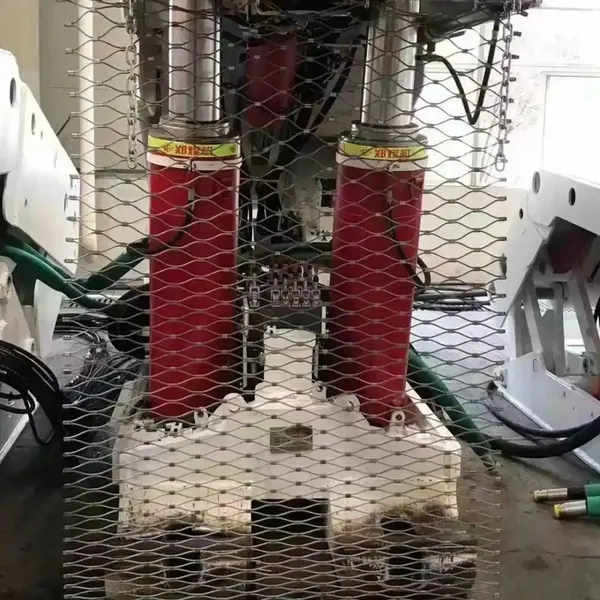 Read More
-
What Is Coal Mine Hydraulic Support Protection Mesh?
November 19, 2026A longwall face is a line of steel canopies holding up a roof that is trying to come down, and between every two canopies there is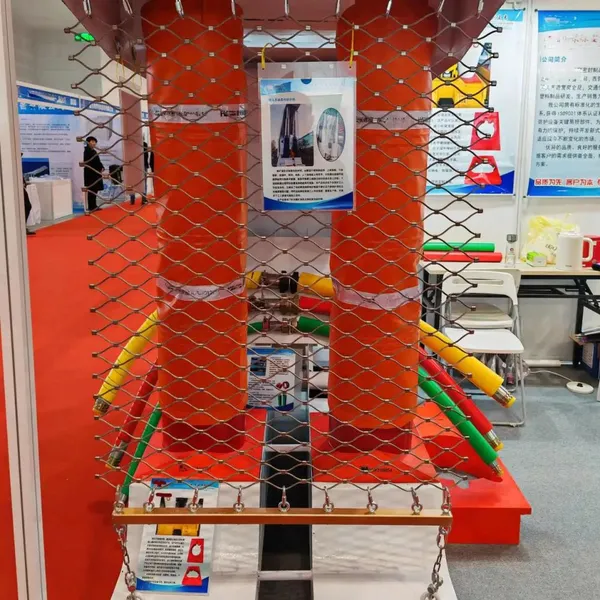 Read More
-
Specifying Black Oxide Stainless Steel Wire Rope Mesh: What to Send
November 18, 2026A dark net order fails for a small number of predictable reasons, and almost all of them are traceable to information that was not Read More
-
Cleaning and Handling Black Oxide Stainless Wire Rope Mesh
November 18, 2026Most of the damage done to a dark stainless net happens in two places, and neither of them is a defect in the panel. One is a buck Read More

Contact Us

Recommended Products
-
 Slope Protection System Rockfall Netting 2.0mm 3.0mm 4.0mm High Tensile Steel Wire Mesh Netting Rockfall BarriersUS$ 2 - 15MOQ: 1 Square Meter
-
Flexible Debris Flow Barrier Steel Rope Rockfall Barrier With Ring Diameter 350 mm China SupplierUS$ 5.9 - 40MOQ: 1 Square Meter
-
Custom Hexsteel Mesh for Refractory Linings Stainless Steel Wire Plain Weave Welded Cutting Welding Offered Made ChinaUS$ 9.20 - 45.00MOQ: 50 Square Meters
-
Double Twist Hexagonal Mesh Rockfall Netting Drapery System for for Rockfall Mitigation Slope Consolidation WorksUS$ 0.45MOQ: 100 Square Meters
-
China Factory Galvanized Steel Railway Side Slope Stabilization Net Woven Wire Mesh for Slope Protection Include Bending WeldingUS$ 15.00 - 20.00MOQ: 999 Square Meters


-
Galvanized Gabion Baskets for Retaining Wall Plain Weave Cutting Processing Service for Slope Stabilization-Free Sample OfferedUS$ 1.5 - 1.7MOQ: 1 Square Meter
-
Children's Playground Stainless Steel Rope Mesh Balcony Fence Inox Cable Net Build Guardrail Black Oxide Rope NettingUS$ 2.8MOQ: 1 Square Meter
-
Factory Direct Modern High Transparency Anti-Slip Stainless Steel Rope Mesh Stair Railing Woven Cable Netting Custom ProjectsUS$ 9.9 - 14.9MOQ: 1 Square Meter
-
Stainless Steel Rope Mesh for Backpack and Bag Anti Falling Dropring Mesh Inox Cable Net Anti-theft Black Oxide Rope NettingUS$ 118.00MOQ: 100 Square Meters
-
Heavy-Duty 4ftx5ft Drag Mat Factory With Chain Galvanized Steel Drag Mat for Tractor AttachmentUS$ 9.1 - 45MOQ: 1 Square Meter


-
High Altitude Anti Fall Woven Stainless Steel Wire Rope Net SS 304 316 316L Plain Weave Invisible Protective NetUS$ 9.9 - 14.9MOQ: 1 Square Meter
-
China Rope Mesh Manufacturer Customized SS316 Black Oxided Ferrule Type Rope MeshUS$ 5 - 20MOQ: 1 Square Meter
-
Baseball Field Dragging Lawn LevelingUS$ 59.00 - 66.00MOQ: 5 Pieces
-
316L Grade Stainless Steel Wire Mesh Sieves 200mm 300mm Screen Factory Price Sand Testing ScreenUS$ 4.7 - 15MOQ: 1 Piece
-
Outdoor Stainless Steel Cable Railing / Wire Rope Mesh / Wire Mesh Railings for BalconyUS$ 15.00 - 20.00MOQ: 100 Square Meters


-
Slope Protection System 65/3, High-tensile Steel Wire Mesh, Spike Plate, Rock Nail, Connection Clips T3 for Slope StabilityUS$ 1.80 - 3.00MOQ: 1 Square Meter
-
Pool Mesh Steeltex Paper-Backed Welded Wire Mesh Factory Price 12ga 16gaUS$ 40 - 70MOQ: 30 Rolls
-
G65 3 Rockfall Netting Rust Free Coated Slope Protection Net Galvanized High Tensile Wire Mesh Control Shallow LandslideUS$ 5.40 - 5.60MOQ: 1 Meter
-
Anti‑Drone Protection Steel Rope Net UAV Security Protection Fence Mesh Galvanized /Stainless Steel Customized ProductionUS$ 1.1 - 1.2MOQ: 100 Square Meters
-
Anti-Drone Netting, Galvanized High Tensile Steel Wire Rope Mesh, UVA Protection Net, CE Factory Customized ProductionUS$ 1.00 - 2.00MOQ: 999 Square Meters