
 Business License
Blog Categories
Coal Mine Hydraulic Support Protection Mesh: Ventilation and Water Flow
A mesh that hangs across the air path of a working face is a filter whether or not it was designed as one, and the two things it filters are dust and water.
Both arrive continuously, both reduce the open area over time, and both are ignored in most panel specifications because the drawing shows a mesh and not a flow.
This article explains what a permeable mining mesh passes and what it holds, how a mine airflow net behaves at the walkway, what pressure drop is worth measuring, why a water passage mesh blinds faster than a dry one, and the two faces where the water argument changed the specification.
1. Why a Face Needs Air To Move Through a Permeable Mining Mesh
A permeable mining mesh is specified because the space it occupies is part of the ventilation circuit, not because openness is a virtue in itself.
Air on a longwall face travels along the face roadway and through the working space, and it has to reach the area behind the supports as well. A solid barrier hung between two canopies would interrupt that path along the whole face.
The interruption is not dramatic in the way a blocked roadway is dramatic. It shows as a rise in methane at the return end, a rise in temperature at the middle of the face, and a layer of still air in the goaf edge that nobody can see.
So the panel is specified to be open, and the open area becomes a ventilation figure rather than a product feature. That is why a face that changes its panel specification should tell the ventilation engineer before the order rather than after the first week of production.
2. What Permeable Mining Mesh Actually Passes
Open area is the proportion of the panel that is not wire, and it is normally between sixty and seventy-five percent on a face panel.
What passes through that area is air, dust, water, and small material. What does not pass is the material the aperture was sized to catch, which is a separate decision from openness.
The two figures move against each other. A tighter aperture catches more, and if it is achieved by adding wires rather than by reducing the gap, it also reduces open area. A face that asks for both a tight aperture and a high open area is asking for a thinner rope, not a denser mesh.
That distinction is worth stating plainly, because a specification that lists open area and aperture without the rope diameter can be met in two ways that perform very differently.
3. Mine Airflow Net Behaviour at the Walkway
A mine airflow net is judged at the walkway, because that is where air has to reach a person rather than a sensor.
The panel hangs in a plane roughly parallel to the airflow along the face, which means most of the air passes along it rather than through it. The flow that does cross the panel is the part that ventilates the gap behind the supports and the goaf edge.
That crossing flow is low in volume and high in consequence. It is what keeps the goaf edge from accumulating gas, and it is the first thing lost when a panel blinds with dust or is hung with a solid skirt at the bottom.
The skirt is a regular cause. A rubber or steel skirt added to stop small material rolling under the panel will also stop the crossing flow, and the two effects are not usually weighed against each other at the time it is fitted.
4. Pressure Drop Across a Mine Airflow Net at the Face
Pressure drop across a panel is small, usually a few pascals, and it is worth measuring because the change over time is more informative than the figure itself.
| Condition | Open area | What it tells you |
|---|---|---|
| New panel | As supplied, 60 to 75 percent | Baseline for the face |
| Dust loaded, dry | Falls towards 45 percent | Cleaning interval is too long |
| Dust loaded, wet | Falls below 35 percent | Water and fines are cementing the mesh |
| Coating build-up at joints | Local, at ferrules | Repair coating has closed the gaps |
A reading that has halved over a month is telling you that the cleaning method is not working, not that the panel is worn out. A panel that is cleaned by washing from the walkway side recovers most of its open area; one that is cleaned by scraping recovers less and loses coating.
Where a face has no means of measuring pressure drop, the same information is available from a visual pass with a light behind the panel. If the light does not come through in a patch, that patch is closed.
The reading should be taken at the same three positions each time, one at the intake end, one at the middle of the face and one near the return. A face that blinds uniformly has a dust problem, and a face that blinds at one end has an airflow problem, which is a distinction worth having before anyone orders a new panel.
5. Water Passage Mesh and the Water That Arrives
A water passage mesh has to let water through without letting it stand, and standing water is the condition that turns dust into a plug.
Water on a face arrives from three directions: strata water from the roof, dust suppression spray, and water carried in with the coal from the previous transfer point. The first is continuous and variable, the second is continuous and known, and the third arrives in slugs.
All three carry fines. A mesh that passes clear water will hold a mixture of water and fines, because the fines lodge at the wire crossings and the water then has to pass through a layer rather than a gap.
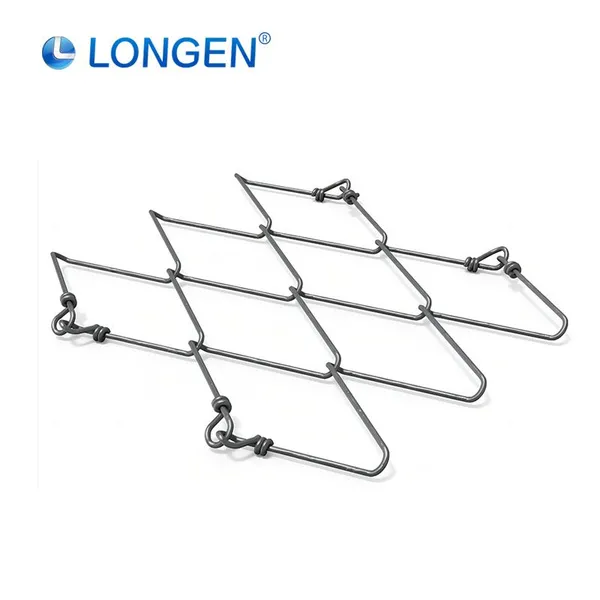
The design consequence is that the panel needs a drainage path rather than a drainage hole. A horizontal wire run with a ferrule above it forms a ledge, and a ledge holds water against the panel long after the flow has stopped.
A water passage mesh hung with its ferrules on the diagonal drains along the wire rather than over it, and the difference shows in the corners of the panel, which are the first places to blind. It costs nothing at the works and it is decided on the drawing rather than on the face.
6. Where a Mine Airflow Net Becomes a Barrier to Air
Blinding is the process by which an open panel becomes a closed one, and it happens in four recognisable ways.
The first is dry dust packing, which is reversible by washing. The second is wet dust cementing, which is partly reversible and usually leaves a residue in the corners of the aperture. The third is carbonate or sulphate scale, which is not reversible and has to be removed with the panel.
The fourth is coating repair. A panel that has been touched up in service with a brush-applied coating will have its aperture reduced at every repaired point, and a face that repairs often will blind its own mesh from the maintenance store.
Hebei Longen Wire Mesh Products supplies a thinned repair coating with a note on the maximum film thickness, because a repair that closes an aperture has traded a corrosion problem for a ventilation one.
Longen also lists the as-supplied open area on the packing list, so that a wash can be judged against a figure rather than against a memory of how the panel looked when new.
7. Open Area in a Permeable Mining Mesh: The Figure That Decides Both
Open area is calculated, not estimated, and the calculation is simple enough to do at the quotation stage.
For a woven or laid panel, open area falls as rope diameter rises and as aperture falls, and it falls faster with diameter than with aperture over the range used on a face. A ten percent increase in rope diameter can cost more open area than a ten percent reduction in aperture, which is counter-intuitive until it is calculated.
Where a face needs more strength and more open area at the same time, the answer is a different rope construction rather than a different aperture. A compacted or swaged rope carries more load for the same diameter, and the panel gains strength without losing flow.
Longen Wire Mesh Products states open area on the drawing alongside aperture and rope diameter, so that a comparison between two quotations is made on the same three figures rather than on one of them.
8. Two Faces Where the Water Passage Mesh Was the Argument
On a face with heavy strata water, panels blinded within three weeks and the return end showed a methane rise that was attributed to the roof. The panels were washed and recovered part of their open area, and a change from a horizontal wire run with ferrules above it to a run with the ferrules set on the diagonal kept the panels open for two months between washes.
On a second face the water was clean but the dust suppression spray was aimed at the panel rather than at the cutting drum. Redirecting the spray restored the open area without a change of panel, and the lesson was that the water was never the problem, merely its direction.
Hebei Longen Wire Mesh Products Co Ltd asks for the water condition on the enquiry sheet for that reason, and Longen will quote a drainage detail as a separate line where the face runs wet.
9. Frequently Asked Questions
9.1 Does a tighter aperture reduce airflow through the panel?
It reduces open area in the case where the tighter aperture is achieved by adding wires. A panel that keeps the same rope diameter and reduces the gap between wires will have less open area, because there is more wire in the same panel. A panel that reduces the gap and the diameter together can hold the same open area, at the cost of strength per wire. The practical route is to state the open area you need and let the aperture and diameter be chosen to meet it, rather than the other way round.
9.2 How often should a permeable mining mesh be cleaned?
At the interval that keeps open area above about half of its as-supplied figure, which on a dry face is usually monthly and on a wet face is usually fortnightly. The interval should be set from a measurement rather than from a calendar, because two faces with the same specification can blind at very different rates. A light behind the panel is enough to decide whether a wash is due. Waiting for a visible dust layer means the panel has already been closed for some weeks.
9.3 Can a solid skirt be added under a mine airflow net?
It can be added and it will stop material rolling under the panel, but it also stops the crossing flow that ventilates the gap behind the supports. Where a skirt is needed, it should be a short one, a hundred to a hundred and fifty millimetres deep, and it should be perforated rather than solid. The ventilation effect of a full-depth solid skirt is a closed lower panel, and it shows at the return end rather than at the skirt, which is why the connection is often missed.
9.4 What causes scale on a water passage mesh?
Dissolved solids in the strata water precipitating as the water evaporates or as the pressure drops across the panel. Carbonate and sulphate scale both form this way, and both are hard enough to resist washing. The scale grows at the wire crossings first, because that is where the water film is thinnest and where it sits longest. Once it has formed, the panel has to be replaced or descaled at the surface, and the useful response is to change the water rather than the panel.
9.5 Does open area change as the panel stretches?
Yes, and in a way that helps the airflow. Geometric distortion of a rope panel turns the apertures from rectangles into narrower parallelograms, so the open area rises slightly as the panel follows the supports. The rise is small, a few percent, and it is not a reason to specify a tighter panel. It does mean that a panel measured for open area at the works and again underground will not give the same figure, and that the as-supplied figure is the one to quote.
Recently Posted
-
Custom Sizes for Coal Mine Hydraulic Support Protection Mesh
November 23, 2026Almost every face panel is made to a custom mining mesh size, and the reason is that no two faces present the same gap between two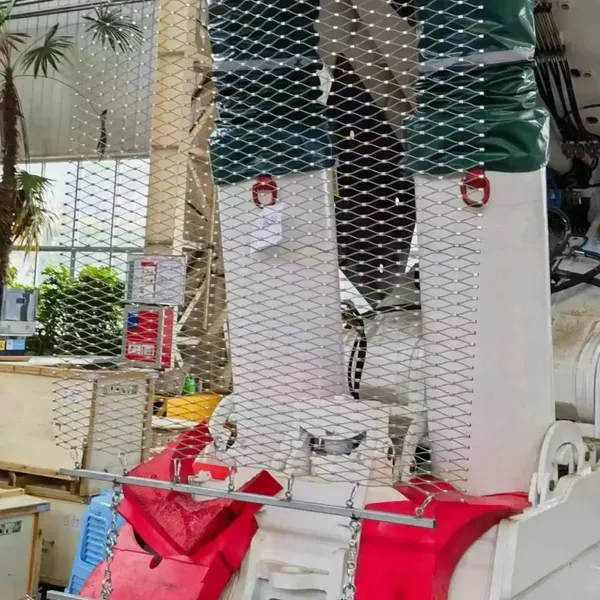 Read More
-
Coal Mine Hydraulic Support Protection Mesh: Inspection in Service
November 23, 2026A mining net inspection is not a search for damage. It is a check on whether four specific things have moved since the last walk,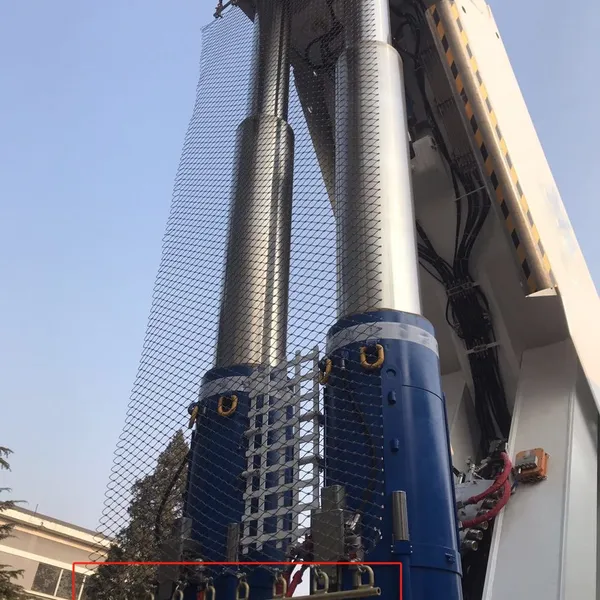 Read More
-
Coal Mine Hydraulic Support Protection Mesh Installation Between Supports
November 20, 2026A support net installation looks like hanging a panel on two hooks, and that impression is the reason most of them are done wrong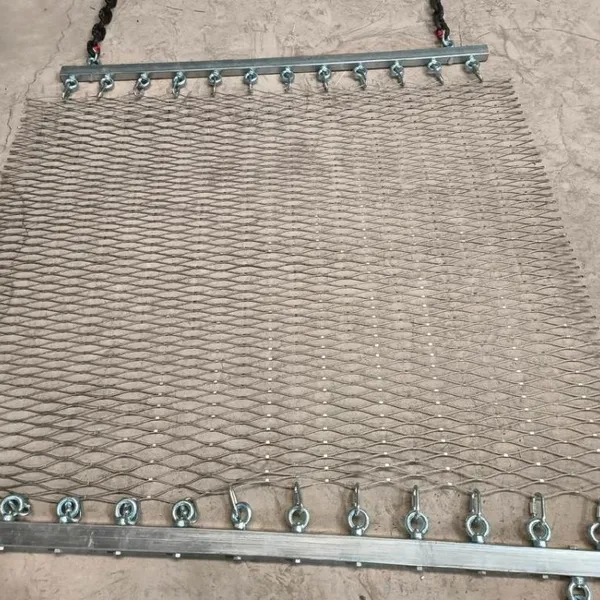 Read More
-
Coal Mine Hydraulic Support Protection Mesh: Aperture and Strength
November 20, 2026Aperture and strength are usually quoted as two numbers on the same line, and on a working face they are two different arguments. Read More

Contact Us

Recommended Products
-
 Slope Protection System Rockfall Netting 2.0mm 3.0mm 4.0mm High Tensile Steel Wire Mesh Netting Rockfall BarriersUS$ 2 - 15MOQ: 1 Square Meter
-
Flexible Debris Flow Barrier Steel Rope Rockfall Barrier With Ring Diameter 350 mm China SupplierUS$ 5.9 - 40MOQ: 1 Square Meter
-
Custom Hexsteel Mesh for Refractory Linings Stainless Steel Wire Plain Weave Welded Cutting Welding Offered Made ChinaUS$ 9.20 - 45.00MOQ: 50 Square Meters
-
Double Twist Hexagonal Mesh Rockfall Netting Drapery System for for Rockfall Mitigation Slope Consolidation WorksUS$ 0.45MOQ: 100 Square Meters
-
China Factory Galvanized Steel Railway Side Slope Stabilization Net Woven Wire Mesh for Slope Protection Include Bending WeldingUS$ 15.00 - 20.00MOQ: 999 Square Meters
-
Galvanized Gabion Baskets for Retaining Wall Plain Weave Cutting Processing Service for Slope Stabilization-Free Sample OfferedUS$ 1.5 - 1.7MOQ: 1 Square Meter
-
Children's Playground Stainless Steel Rope Mesh Balcony Fence Inox Cable Net Build Guardrail Black Oxide Rope NettingUS$ 2.8MOQ: 1 Square Meter
-
Factory Direct Modern High Transparency Anti-Slip Stainless Steel Rope Mesh Stair Railing Woven Cable Netting Custom ProjectsUS$ 9.9 - 14.9MOQ: 1 Square Meter
-
Stainless Steel Rope Mesh for Backpack and Bag Anti Falling Dropring Mesh Inox Cable Net Anti-theft Black Oxide Rope NettingUS$ 118.00MOQ: 100 Square Meters
-
Heavy-Duty 4ftx5ft Drag Mat Factory With Chain Galvanized Steel Drag Mat for Tractor AttachmentUS$ 9.1 - 45MOQ: 1 Square Meter
-
High Altitude Anti Fall Woven Stainless Steel Wire Rope Net SS 304 316 316L Plain Weave Invisible Protective NetUS$ 9.9 - 14.9MOQ: 1 Square Meter
-
China Rope Mesh Manufacturer Customized SS316 Black Oxided Ferrule Type Rope MeshUS$ 5 - 20MOQ: 1 Square Meter
-
Baseball Field Dragging Lawn LevelingUS$ 59.00 - 66.00MOQ: 5 Pieces
-
316L Grade Stainless Steel Wire Mesh Sieves 200mm 300mm Screen Factory Price Sand Testing ScreenUS$ 4.7 - 15MOQ: 1 Piece
-
Outdoor Stainless Steel Cable Railing / Wire Rope Mesh / Wire Mesh Railings for BalconyUS$ 15.00 - 20.00MOQ: 100 Square Meters
-
Slope Protection System 65/3, High-tensile Steel Wire Mesh, Spike Plate, Rock Nail, Connection Clips T3 for Slope StabilityUS$ 1.80 - 3.00MOQ: 1 Square Meter
-
Pool Mesh Steeltex Paper-Backed Welded Wire Mesh Factory Price 12ga 16gaUS$ 40 - 70MOQ: 30 Rolls
-
G65 3 Rockfall Netting Rust Free Coated Slope Protection Net Galvanized High Tensile Wire Mesh Control Shallow LandslideUS$ 5.40 - 5.60MOQ: 1 Meter
-
Anti‑Drone Protection Steel Rope Net UAV Security Protection Fence Mesh Galvanized /Stainless Steel Customized ProductionUS$ 1.1 - 1.2MOQ: 100 Square Meters
-
Anti-Drone Netting, Galvanized High Tensile Steel Wire Rope Mesh, UVA Protection Net, CE Factory Customized ProductionUS$ 1.00 - 2.00MOQ: 999 Square Meters