
 Business License
Blog Categories
Coal Mine Hydraulic Support Protection Mesh Material and Corrosion
Mining mesh corrosion is not a slow background process on a working face. A panel can go from bright to stained in a single shift, and from stained to broken at a bracket within a face.
The cause is a combination that few above-ground structures see together: air at close to saturation, dust that holds water against the steel, water carrying sulphates and chlorides, and a temperature that changes every time the ventilation shifts.
This article covers the humid mine net environment, the three corrosion cells on a single panel, why dust is a corrosion agent rather than a cosmetic problem, the material choice, and the inspection that catches it before a wire breaks.
1. Why Mining Mesh Corrosion Starts Early
Mining mesh corrosion starts early because the panel is never dry.
Air on a working face is close to saturated with water vapour, and it is warmed by the machinery and by the strata. Steel that is cooler than the air, which includes anything in the intake airway and anything near the goaf, collects condensation continuously.
A panel that is wet most of the time corrodes at a rate set by the water chemistry rather than by the hours of wetness. Mine water is not rain; it carries dissolved solids from the strata and from the dust suppression system.
So the design life of a face panel is measured in months, and the material has to be chosen against that life rather than against a building standard of decades.
Specifying a twenty-year coating system for a panel that will be replaced at the end of a face is money spent on the wrong problem.
2. The Humid Mine Net Environment
A humid mine net works in four conditions at once, and each of them attacks a different part of the assembly.
Condensation attacks the whole surface evenly, and it is the least damaging of the four because it is dilute.
Spray water attacks the lower part of the panel, where the dust suppression sprays reach it, and it carries the fines that were on the roof into the mesh.
Roof water attacks in localised runs, arriving through a fracture and landing on one part of the face. That water is the most aggressive, because it has picked up sulphates on the way through the strata.
The fourth is the standing water in the goaf side, which is stagnant, warm and loaded with fines. A panel that hangs into that zone corrodes at a different rate from the same panel on the walkway side.
A humid mine net therefore has a wet side and a dry side even within one face, and the specification that suits the walkway may not suit the goaf.
3. Three Mining Mesh Corrosion Cells on One Panel
Mining mesh corrosion concentrates in three places, and each is a different mechanism.
The first is the crevice. Where the panel passes over a hook, under a keeper or through a bracket, there is a gap that holds water and excludes oxygen. That geometry is the classic crevice cell, and it corrodes faster than the open surface beside it.
The second is the dissimilar metal joint. A stainless panel on a galvanised bracket, or a galvanised panel on a stainless hook, creates a galvanic pair with the mine water as the electrolyte. The less noble metal goes first, which is usually the bracket rather than the panel.
The third is the cut end and the ferrule. A swaged ferrule has a crevice at each end and a cold worked surface that is less corrosion resistant than the rope it holds.
All three are at the edge of the panel, which is also where the mechanical load is highest. Corrosion and fatigue therefore act at the same point, and that is why a panel fails at the fixing rather than in the middle.
| Cell | Mechanism | Visible sign |
|---|---|---|
| Crevice at hook | Oxygen starvation | Dark staining under the bracket |
| Dissimilar metals | Galvanic pair | White or red deposit at the joint |
| Ferrule end | Crevice plus cold work | Rust bleed along the rope |
4. Dust Resistant Cable Net: Why Dust Holds Water
A dust resistant cable net is not a net that repels dust. It is a net whose geometry does not give dust a place to sit.
Coal dust and rock dust are both fine and both hygroscopic. A layer on a wire absorbs water from the air and holds it against the surface long after the air has dried, which turns a damp wire into a permanently wet one.
The layer also excludes oxygen at the contact points, which is the same crevice mechanism in miniature, repeated along every wire of the panel.
A dust resistant cable net is therefore judged on how it sheds rather than on how it looks when new, and a panel that arrives clean can still trap dust at the first horizontal run.
Geometry is the control. A horizontal wire collects a ridge of dust along its top; a wire inclined even slightly sheds most of it. An open aperture passes dust through rather than trapping it, and a smooth rope surface releases it more readily than a strand with deep valleys between wires.
That is why a dust resistant cable net on a face tends to be specified with a more open aperture and a compacted rope rather than a finer mesh with a heavier wire.
5. Mining Mesh Corrosion at the Bracket and the Ferrule
The bracket is where corrosion and fatigue meet, and it is worth designing as a corrosion detail rather than as a fixing.
A bracket that holds water will corrode from the inside of the contact surface, which is not visible until the panel is lifted off. A bracket with a drainage path and a open profile dries between shifts.
The material of the bracket should match the panel or be more noble than it, never less. A galvanised hook on a stainless panel will lose its zinc and then its steel, and the panel will drop rather than break.
The ferrule is the other point. A swaged joint has two crevices and a cold worked zone, and on a face with aggressive water it will show rust bleed before the rope shows anything at all.
Hebei Longen Wire Mesh Products Co Ltd supplies the bracket in the same material family as the panel for that reason, and states the pairing on the drawing so that a site does not substitute a galvanised hook for a stainless one. Longen treats a substituted bracket as a design change rather than a site decision, because the substitute is the part that fails.
6. Material Choice for a Humid Mine Net
The material choice is narrower than it looks, because a face panel has to be flexible as well as corrosion resistant.
Hot dip galvanised steel wire is the least expensive option and it is adequate for a short face in a well ventilated seam with good water quality. Its zinc is consumed faster in acidic water, and the consumption is not uniform.
Stainless 304 is the general choice for a face with moderate water quality. It resists the condensate and most spray water, and it work hardens in a way that suits a cycled panel.
Stainless 316 is used where the water carries chlorides, which on a mine usually means a seam with saline strata or a face that is washed with water from a brackish source. The molybdenum addition is what makes the difference, and it is worth the cost where pitting appears on 304.
Coated stainless is a compromise that rarely pays on a face. The coating is damaged at the bracket within a few webs, and the damage becomes a crevice that the coating was meant to prevent.
7. Mining Mesh Corrosion Inspection and Replacement
Inspection for corrosion is a visual pass with one measurement, and both are done at the bracket.
The visual pass looks for three things: rust bleed at a ferrule, a white or red deposit at a dissimilar joint, and dark staining under a hook. Any of the three means the panel should be lifted off and looked at, not assessed in place.
The measurement is the wire diameter at the worst point, taken with a gauge against the diameter as supplied. A loss of about ten percent is the point at which the panel's strength has fallen enough to matter on a cycled duty.
Replacement is by panel rather than by wire, because a panel with one wasted wire at a bracket has the same corrosion elsewhere and will fail again at the next hook along.
Longen Wire Mesh Products supplies the as-supplied diameter on the packing list so that a gauge reading underground can be compared with something other than memory.
Hebei Longen Wire Mesh Products also stamps the heat number on the packing list, so that a corrosion query on a dust resistant cable net can be traced to the wire it was made from rather than to a batch on a shelf.
8. Two Faces Where the Material Was Changed
A face with saline roof water had 304 panels that showed pitting at the brackets within two months, and the pits were through the wire within four. The replacement was 316 with a matching stainless bracket, and the same inspection at the end of the face found staining but no pitting. The cost increase was roughly a third on the panel and nothing on the bracket, which had been the part failing.
A second face with good water quality and a short life used galvanised panels and replaced them at the end of the face rather than inspecting for corrosion. The zinc was about half consumed at that point, which is the correct use of a galvanised panel.
9. Frequently Asked Questions
9.1 Is stainless always the right choice on a working face?
No, and a short face with good water quality is often better served by galvanised steel at a fraction of the cost. Stainless earns its price where the water carries chlorides, where the face life is long enough for pitting to matter, or where the panel has to survive more than one face. The decision should be made against the water chemistry and the intended life rather than against a general preference. A galvanised panel replaced at the end of a face is a rational choice, not a compromise.
9.2 Why does the bracket corrode before the panel?
Because it is usually the less noble of the two metals and it holds water in a crevice. A galvanised bracket under a stainless panel becomes the anode in a galvanic pair, and the mine water is a good enough electrolyte to drive the reaction. The bracket also has the geometry that traps water and excludes oxygen. Matching the materials, or making the bracket the more noble of the two, removes most of the problem at very little cost, and it is the first change to make on a face that keeps losing brackets.
9.3 Does a coating help on a humid mine net?
It helps until it is damaged, and on a face it is damaged early. A powder coat or a plastic sleeve is breached at the first bracket, and the breach becomes a crevice that holds water against bare steel. The coating also adds fuel in a confined space, which is a separate question the mine will ask. Where a coating is required for identification or for a specific approval, it should be thin and it should be inspected at the same points as the panel, which is where a dust resistant cable net always fails first.
9.4 How is corrosion measured underground?
By wire diameter at the worst point, taken with a gauge and compared with the as-supplied figure rather than with a neighbouring wire. A ten percent loss is a practical replacement threshold for a cycled panel. The visual signs are faster: rust bleed at a ferrule, a deposit at a dissimilar joint, dark staining under a hook. Those three point to the place to measure, and measuring every wire on every panel is not realistic on a production face, so the visual pass decides where the gauge goes.
9.5 What water quality should be reported with an enquiry?
Whatever the mine already tests for: pH, sulphate, chloride and total dissolved solids are the four that change a material choice. A single sample from the roof water and one from the spray system is enough to separate a 304 face from a 316 face. Where no analysis exists, the history of the seam is the next most useful guide, and a small trial panel hung for a month in the worst place on the face answers the question at a low cost.
Recently Posted
-
Coal Mine Hydraulic Support Protection Mesh Installation Between Supports
November 20, 2026A support net installation looks like hanging a panel on two hooks, and that impression is the reason most of them are done wrong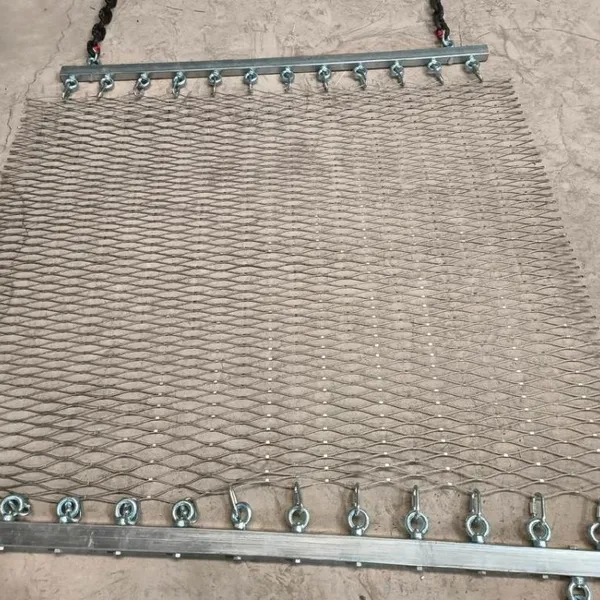 Read More
-
Coal Mine Hydraulic Support Protection Mesh: Aperture and Strength
November 20, 2026Aperture and strength are usually quoted as two numbers on the same line, and on a working face they are two different arguments.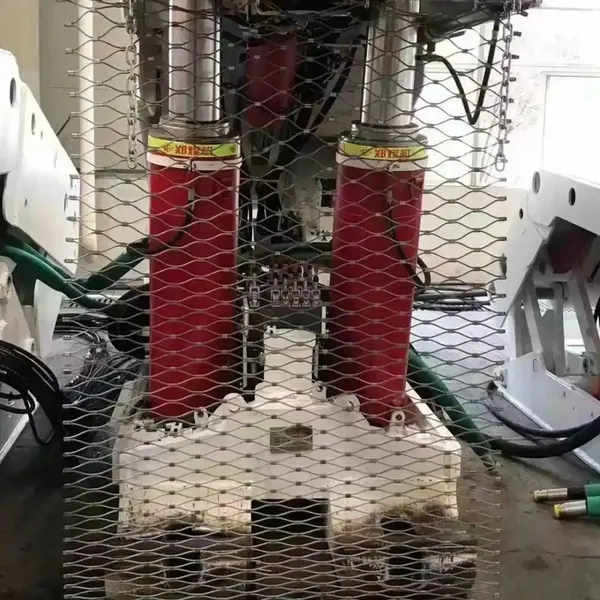 Read More
-
Coal Mine Hydraulic Support Protection Mesh: Stretch and Lift Behaviour
November 19, 2026A support lifting net is asked to do something no ordinary barrier does: it has to change its shape every time the steel it hangs
Read More -
Coal Mine Hydraulic Support Protection Mesh and Working Face Safety
November 19, 2026Working face protection is a system rather than a product, and the mesh between the supports is one line of it. The other lines ar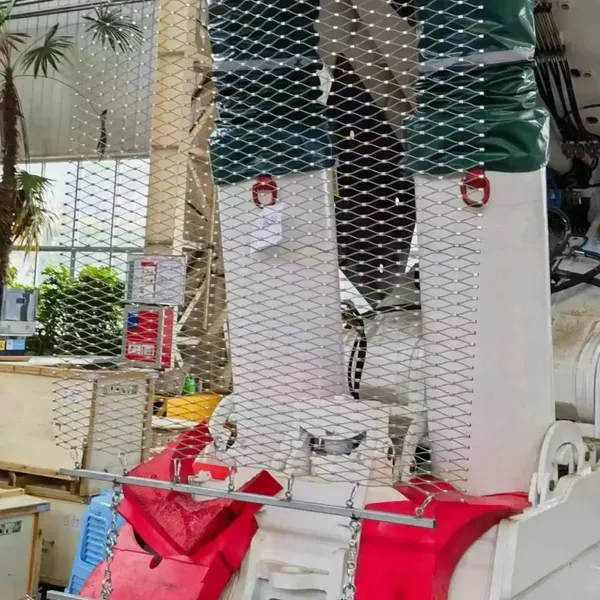 Read More

Contact Us

Recommended Products
-
 Slope Protection System Rockfall Netting 2.0mm 3.0mm 4.0mm High Tensile Steel Wire Mesh Netting Rockfall BarriersUS$ 2 - 15MOQ: 1 Square Meter
-
Flexible Debris Flow Barrier Steel Rope Rockfall Barrier With Ring Diameter 350 mm China SupplierUS$ 5.9 - 40MOQ: 1 Square Meter
-
Custom Hexsteel Mesh for Refractory Linings Stainless Steel Wire Plain Weave Welded Cutting Welding Offered Made ChinaUS$ 9.20 - 45.00MOQ: 50 Square Meters
-
Double Twist Hexagonal Mesh Rockfall Netting Drapery System for for Rockfall Mitigation Slope Consolidation WorksUS$ 0.45MOQ: 100 Square Meters
-
China Factory Galvanized Steel Railway Side Slope Stabilization Net Woven Wire Mesh for Slope Protection Include Bending WeldingUS$ 15.00 - 20.00MOQ: 999 Square Meters
-
Galvanized Gabion Baskets for Retaining Wall Plain Weave Cutting Processing Service for Slope Stabilization-Free Sample OfferedUS$ 1.5 - 1.7MOQ: 1 Square Meter
-
Children's Playground Stainless Steel Rope Mesh Balcony Fence Inox Cable Net Build Guardrail Black Oxide Rope NettingUS$ 2.8MOQ: 1 Square Meter
-
Factory Direct Modern High Transparency Anti-Slip Stainless Steel Rope Mesh Stair Railing Woven Cable Netting Custom ProjectsUS$ 9.9 - 14.9MOQ: 1 Square Meter
-
Stainless Steel Rope Mesh for Backpack and Bag Anti Falling Dropring Mesh Inox Cable Net Anti-theft Black Oxide Rope NettingUS$ 118.00MOQ: 100 Square Meters
-
Heavy-Duty 4ftx5ft Drag Mat Factory With Chain Galvanized Steel Drag Mat for Tractor AttachmentUS$ 9.1 - 45MOQ: 1 Square Meter
-
High Altitude Anti Fall Woven Stainless Steel Wire Rope Net SS 304 316 316L Plain Weave Invisible Protective NetUS$ 9.9 - 14.9MOQ: 1 Square Meter
-
China Rope Mesh Manufacturer Customized SS316 Black Oxided Ferrule Type Rope MeshUS$ 5 - 20MOQ: 1 Square Meter
-
Baseball Field Dragging Lawn LevelingUS$ 59.00 - 66.00MOQ: 5 Pieces
-
316L Grade Stainless Steel Wire Mesh Sieves 200mm 300mm Screen Factory Price Sand Testing ScreenUS$ 4.7 - 15MOQ: 1 Piece
-
Outdoor Stainless Steel Cable Railing / Wire Rope Mesh / Wire Mesh Railings for BalconyUS$ 15.00 - 20.00MOQ: 100 Square Meters
-
Slope Protection System 65/3, High-tensile Steel Wire Mesh, Spike Plate, Rock Nail, Connection Clips T3 for Slope StabilityUS$ 1.80 - 3.00MOQ: 1 Square Meter
-
Pool Mesh Steeltex Paper-Backed Welded Wire Mesh Factory Price 12ga 16gaUS$ 40 - 70MOQ: 30 Rolls
-
G65 3 Rockfall Netting Rust Free Coated Slope Protection Net Galvanized High Tensile Wire Mesh Control Shallow LandslideUS$ 5.40 - 5.60MOQ: 1 Meter
-
Anti‑Drone Protection Steel Rope Net UAV Security Protection Fence Mesh Galvanized /Stainless Steel Customized ProductionUS$ 1.1 - 1.2MOQ: 100 Square Meters
-
Anti-Drone Netting, Galvanized High Tensile Steel Wire Rope Mesh, UVA Protection Net, CE Factory Customized ProductionUS$ 1.00 - 2.00MOQ: 999 Square Meters