Business License
How Stainless Steel Wire Rope Net Is Tested: Tensile, Salt Spray and Aperture Checks
A contractor in the Gulf received 800 square metres of rope net for a hotel facade and asked for the test documents before installation. The supplier sent a mill certificate for the wire rod and nothing else. The contractor accepted it, installed the net, and spent the following two years answering questions about rust marks at the ferrules that no document could explain.
Testing a rope net is not one test. The rope, the joint, the panel and the surface all need separate evidence, and a mill certificate covers just the first of those four.
This guide sets out what a rope net tensile strength test actually measures, what a salt spray corrosion test mesh result does and does not prove, how rope mesh aperture inspection is carried out on a production panel, and how to write the requirement into an order so the documents arrive with the goods.
1. Why a Rope Net Tensile Strength Test Uses a Panel Not a Rope
A rope net tensile strength test is a panel test, because a panel fails at its joints rather than in the middle of a rope. A 2 mm rope rated at 3.2 kN does not produce a 3.2 kN panel when it is crossed by 2,500 ferrules.
The sample is a panel of at least 1 m by 1 m, clamped on four edges and pulled until a rope or a joint fails. The peak load and the failure location are both recorded, and the location is the more informative of the two figures.
A failure in the rope suggests the strand or grade is below specification. A failure at a ferrule suggests the pressing tool was worn or the sleeve was the wrong size, and that distinction decides whether a batch is reworked or rejected.
Results typically land between 60 and 75 percent of the single rope figure, which is why a panel test is the single number worth quoting to a structural engineer.
The rig itself changes the result. A sample held in flat grips slips before the panel fails, while a rig with pins through the end apertures loads the mesh as it is loaded in service. Ask which arrangement was used before comparing two suppliers, because a 15 percent difference between reports is often a difference in jigs rather than in product.
2. Salt Spray Corrosion Test Mesh: Hours, Standards and Reality
A salt spray corrosion test mesh result is a comparative figure rather than a life prediction. The test runs at 35 degrees Celsius in a 5 percent sodium chloride fog, following either the ASTM B117 or the ISO 9227 method, and it reports the hours before the first visible corrosion product.
Type 304 panels commonly show first rust points between 72 and 120 hours, while type 316 panels run 300 to 500 hours. The ranking matches field experience, and the numbers do not translate into years, because a real facade dries out between wetting events.
What the test does prove is that the alloy and the surface treatment are what the order states. A panel that pits at 48 hours is not 316, whatever the certificate says, and that single result justifies the cost of the test on a large order.
Sample preparation matters as much as duration. A panel tested straight off the press carries press lubricant, while the same panel degreased and passivated behaves differently, so the report should state the surface condition as well as the hours.
3. Rope Mesh Aperture Inspection: Three Points Per Panel
Rope mesh aperture inspection is quick, and it catches the fault that samples miss. Three measurements per panel, taken diagonally across the sheet, are enough to detect a worn jig that is drifting through a production run.
The measurement is taken between rope centres on a pressed panel, using a steel rule or a caliper with the jaws on the outside of the two ropes. A tolerance of plus or minus 2 mm on a 60 mm aperture is realistic for pressed work and plus or minus 3 mm for a large knotted panel.
Record the three figures rather than a pass or fail. A trend across a batch shows a tool wearing, while a single value shows nothing, and the trend is what a factory needs in order to change the tool before the tolerance is breached.
Inspection also covers the ferrule marks. Every crossing should carry a press witness mark, and a panel with unmarked crossings is either unfinished or pressed with a tool that did not close.
4. A Test Schedule for Rope Net Tensile Strength Test Work
Testing belongs at three stages rather than at the end. The table below sets out what is checked at each stage, which is the same structure used for incoming wire, in-process work and outgoing panels.
| Stage | Check | Sample | Acceptance |
|---|---|---|---|
| Incoming wire | Grade and chemistry | Mill certificate plus spot test | Alloy matches order |
| Incoming wire | Diameter | 3 readings per coil | plus or minus 0.03 mm |
| In-process | Ferrule press mark | Visual, all crossings | Mark present on each |
| In-process | Aperture | 3 points per panel | plus or minus 2 mm |
| Finished panel | Tensile | 1 panel per 500 m² | Above design load with factor |
| Finished panel | Salt spray | 1 sample per order | Hours stated in order |
The sampling rates are a practical compromise. Testing every panel is uneconomic, and testing none is how a batch of under-pressed ferrules reaches a facade.
5. Salt Spray Corrosion Test Mesh Results and What They Mean
A salt spray corrosion test mesh report with 400 hours on a type 316 panel tells a buyer that the alloy and the surface are correct. It does not tell them the panel will last 15 years, and treating the two as equivalent leads to disappointment on a coastal site.
The more useful reading is comparative. Test the same panel construction in 304 and 316, and the ratio between the two figures tells a designer how much margin the upgrade buys on that particular exposure.
Where a project has a specific chloride environment, an on-site exposure trial is worth more than any cabinet. A 300 mm sample fixed at the real location for six months shows how the surface behaves in the actual wetting and drying cycle, and it costs the price of a courier label.
Both results belong in the handover file. A building owner who has the cabinet result and the exposure photograph can judge a complaint in a season, rather than commissioning a metallurgical report to answer a question that a sample would have settled.
6. Rope Mesh Aperture Inspection Tools and Tolerances
Rope mesh aperture inspection needs a steel rule, a caliper and a flat table, and it needs a definition of what is being measured. Centres, clear opening and pitch are three different numbers, and a report that does not say which one was used cannot be compared with another.
A 300 mm steel rule with 1 mm graduations is adequate for a 60 mm aperture, while a digital caliper is better below 30 mm where the rule's own thickness affects the reading. A flat table matters because a panel measured while hanging reads differently from one measured on a bench.
Temperature has a small effect. Stainless expands by roughly 16 microns per metre per degree, which is 0.5 mm across a 3 m panel over a 30 degree swing, and that figure is inside the tolerance rather than a reason to correct for it.
Rejection criteria belong on the same sheet. A panel with a single aperture 6 mm over size is usually accepted, while a panel where the drift is systematic is replaced, and the difference between the two cases is the trend across the three readings rather than any one figure. Longen applies that rule at the press rather than at dispatch.
Longen records the three readings per panel on the inspection sheet that travels with the shipment, so a client can compare the delivered aperture with the specification without unpacking every panel.
7. Records and Traceability for Rope Mesh Aperture Inspection
Traceability connects a delivered panel to a heat of steel, and it works through three numbers: the mill heat number, the production batch number and the panel number on the schedule.
The mill certificate provides the first, the factory log the second and the schedule the third. Without the middle number a client can prove the steel was correct and still be unable to say which panels used it.
Longen Wire Mesh Products keeps those records for five years after dispatch, which covers the period in which most warranty questions arrive. Longen also puts the panel number on a stainless tag wired to each bundle, so the site team can match a bundle to a drawing before opening it.
Photographs complete the file. Two images per batch, one of the press marks and one of a measured aperture, cost nothing and answer most of the questions that arrive in the first year.
8. Writing Rope Net Tensile Strength Test Requirements Into the Order
Test requirements should be written as acceptance criteria rather than as activities. "Salt spray tested" tells a buyer nothing, while "no corrosion product before 300 hours to ISO 9227 on a degreased sample" is a criterion a factory can meet or miss.
State the sampling rate as well. One test per order is normal for salt spray, while one tensile test per 500 square metres is a reasonable rate for a project with a structural engineer reviewing the results.
Decide who pays for a failure. A clause that requires the supplier to retest at their cost after a failed result changes the way a batch is checked before dispatch, and it costs nothing to include at order stage.
Hebei Longen Wire Mesh Products Co Ltd returns a test plan with each quotation, listing the checks, the sampling rates and the documents that will travel with the shipment. A client can then compare two quotations on the same test basis rather than on price alone.
9. Frequently Asked Questions
9.1 How long should a rope net tensile strength test sample be?
A sample of at least 1 m by 1 m is the usual minimum, clamped on all four edges and pulled to failure. Smaller samples report a higher figure because fewer crossings share the load, and a 300 mm sample can read 15 to 20 percent above the value a full panel would give. The test rig also matters, since a sample held in flat grips slips before the panel fails. Specify the sample size and the grip arrangement in the order so the result can be compared with another supplier.
9.2 How many hours of salt spray corrosion test mesh results are enough?
For architectural work, 300 hours to ISO 9227 on a degreased sample is a reasonable acceptance figure for type 316, and 96 hours for type 304 panels. Those figures separate a correct alloy from a substituted one without extending the order by weeks. Longer durations describe a marine grade more closely, yet they cost time and rarely change a purchasing decision, because the grade and the surface treatment decide the outcome more than the extra hours do, and a grade certificate plus a passivation record carry as much weight as the cabinet result.
9.3 What tolerance is normal for rope mesh aperture inspection?
Plus or minus 2 mm on a 60 mm aperture is normal for a pressed panel, and plus or minus 3 mm for a large knotted panel where the knots are set by hand. Below 30 mm apertures the tolerance tightens because the same absolute error is a larger proportion of the opening. Measure between rope centres and state the convention on the report, since a clear opening measurement on the same panel reads about 2 mm smaller and invites a pointless dispute about a panel that was made correctly.
9.4 Can a client witness testing before shipment?
Yes, and it is worth asking for on any order above 500 square metres. A witness visit covers the panel pull test, three aperture readings on a finished panel and a check of the press marks, and it takes about half a day. Arrange it before production ends rather than after, because a witness who arrives when the panels are packed can inspect photographs and little else. Third party inspection is the practical alternative where travel is impractical, and it costs a fraction of a failed installation.
Recently Posted
-
Drone Protection Netting for Stadiums and Open Air Event Venues
October 26, 2026A 40,000 seat stadium in Southern Europe added drone netting above one stand after a pitch invasion by a small quadcopter during a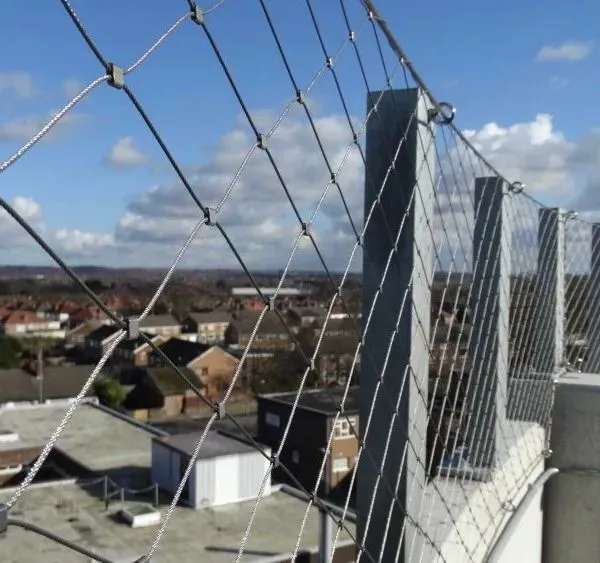 Read More
-
Drone Protection Netting for Data Centers and Critical Facilities
October 26, 2026A colocation provider in Western Europe added drone detection to a campus of three data halls after a tenant asked for it in a con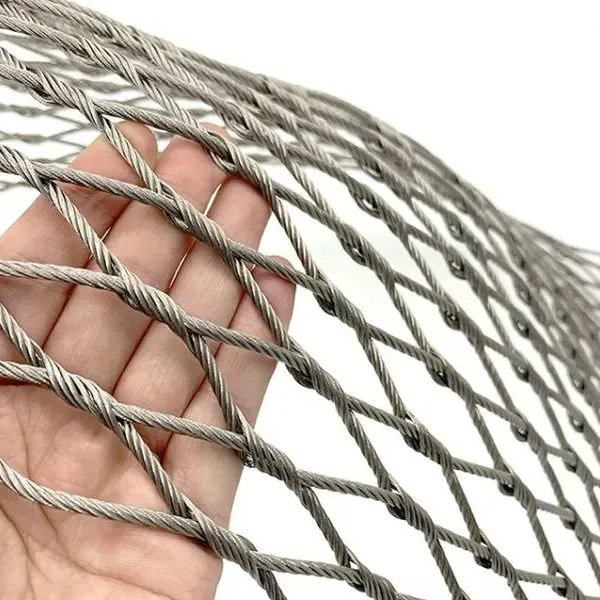 Read More
-
Zoo and Aviary Enclosures in Stainless Steel Cable Net: Design Notes
October 23, 2026A bird park in Northern Europe rebuilt its walk-through aviary with a stainless net at 60 mm aperture, chosen because the mesh loo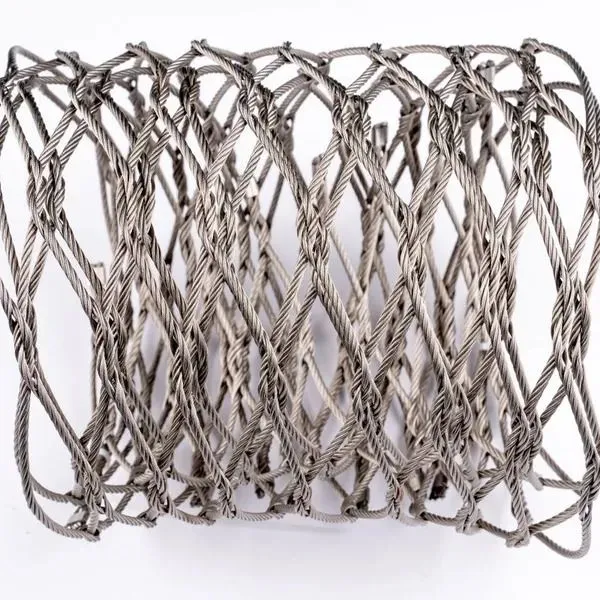 Read More
-
Stainless Steel Wire Rope Net for Balcony and Staircase Fall Protection
October 23, 2026A residential refurbishment in a European city replaced 46 balconies of solid panel infill with glazed balustrades, and the client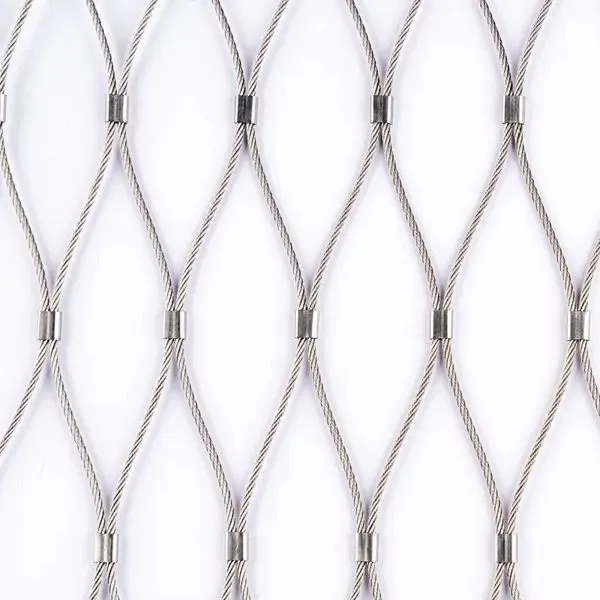 Read More

Contact Us

Recommended Products
-
 Slope Protection System Rockfall Netting 2.0mm 3.0mm 4.0mm High Tensile Steel Wire Mesh Netting Rockfall BarriersUS$ 2 - 15MOQ: 1 Square Meter
-
Flexible Debris Flow Barrier Steel Rope Rockfall Barrier With Ring Diameter 350 mm China SupplierUS$ 5.9 - 40MOQ: 1 Square Meter
-
Custom Hexsteel Mesh for Refractory Linings Stainless Steel Wire Plain Weave Welded Cutting Welding Offered Made ChinaUS$ 9.20 - 45.00MOQ: 50 Square Meters
-
Double Twist Hexagonal Mesh Rockfall Netting Drapery System for for Rockfall Mitigation Slope Consolidation WorksUS$ 0.45MOQ: 100 Square Meters
-
China Factory Galvanized Steel Railway Side Slope Stabilization Net Woven Wire Mesh for Slope Protection Include Bending WeldingUS$ 15.00 - 20.00MOQ: 999 Square Meters


-
Galvanized Gabion Baskets for Retaining Wall Plain Weave Cutting Processing Service for Slope Stabilization-Free Sample OfferedUS$ 1.5 - 1.7MOQ: 1 Square Meter
-
Children's Playground Stainless Steel Rope Mesh Balcony Fence Inox Cable Net Build Guardrail Black Oxide Rope NettingUS$ 118.00MOQ: 100 Square Meters
-
Factory Direct Modern High Transparency Anti-Slip Stainless Steel Rope Mesh Stair Railing Woven Cable Netting Custom ProjectsUS$ 9.9 - 14.9MOQ: 1 Square Meter
-
Stainless Steel Rope Mesh for Backpack and Bag Anti Falling Dropring Mesh Inox Cable Net Anti-theft Black Oxide Rope NettingUS$ 118.00MOQ: 100 Square Meters
-
Heavy-Duty 4ftx5ft Drag Mat Factory With Chain Galvanized Steel Drag Mat for Tractor AttachmentUS$ 9.1 - 45MOQ: 1 Square Meter


-
High Altitude Anti Fall Woven Stainless Steel Wire Rope Net SS 304 316 316L Plain Weave Invisible Protective NetUS$ 9.9 - 14.9MOQ: 1 Square Meter
-
China Rope Mesh Manufacturer Customized SS316 Black Oxided Ferrule Type Rope MeshUS$ 5 - 20MOQ: 1 Square Meter
-
Baseball Field Dragging Lawn LevelingUS$ 59.00 - 66.00MOQ: 5 Pieces
-
316L Grade Stainless Steel Wire Mesh Sieves 200mm 300mm Screen Factory Price Sand Testing ScreenUS$ 4.7 - 15MOQ: 1 Piece
-
Outdoor Stainless Steel Cable Railing / Wire Rope Mesh / Wire Mesh Railings for BalconyUS$ 15.00 - 20.00MOQ: 100 Square Meters


-
Slope Protection System 65/3, High-tensile Steel Wire Mesh, Spike Plate, Rock Nail, Connection Clips T3 for Slope StabilityUS$ 1.80 - 3.00MOQ: 1 Square Meter
-
Pool Mesh Steeltex Paper-Backed Welded Wire Mesh Factory Price 12ga 16gaUS$ 40 - 70MOQ: 30 Rolls
-
G65 3 Rockfall Netting Rust Free Coated Slope Protection Net Galvanized High Tensile Wire Mesh Control Shallow LandslideUS$ 5.40 - 5.60MOQ: 1 Meter
-
Anti‑Drone Protection Steel Rope Net UAV Security Protection Fence Mesh Galvanized /Stainless Steel Customized ProductionUS$ 1.1 - 1.2MOQ: 100 Square Meters
-
Anti-Drone Netting High Tensile Strength Stainless Steel Woven Wire Rope Mesh Active Rockfall Barrier Systemn Factory SupplyUS$ 15.00 - 20.00MOQ: 999 Square Meters