Business License
Zoo and Aviary Enclosures in Stainless Steel Cable Net: Design Notes
A bird park in Northern Europe rebuilt its walk-through aviary with a stainless net at 60 mm aperture, chosen because the mesh looked light and the price was competitive. The enclosure held the larger birds well enough. It also let four small passerines out through the roof within the first fortnight, and the keepers spent a month recapturing them while the aviary stayed closed to visitors.
Zoo enclosure rope mesh is judged by a different standard from architectural netting. The aperture has to hold the smallest animal rather than the largest, the frame has to survive an animal leaning on it, and the surface has to remain safe for an animal that may spend years in contact with it.
These design notes cover the aperture and rope choices by species group, the framing and tensioning methods that hold up in animal use, and the details that keepers raise when they are consulted early rather than after commissioning.
1. What Zoo Enclosure Rope Mesh Has to Do Differently
Zoo enclosure rope mesh carries a load that changes direction. An animal pushes, leans, climbs and occasionally hangs from the mesh, so the design case is a repeated dynamic load rather than a single wind pressure.
The surface has to be safe as well as strong. Ferrules are pressed flat and edges are returned away from the animal side, because a sharp sleeve end at eye height is a welfare issue rather than a cosmetic one.
Visibility drives the aperture choice as much as containment does. Visitors want to see the animal, so the mesh should be as open as the smallest animal allows, and a 40 mm aperture in 2 mm rope is often the compromise between holding a small primate and letting the enclosure read clearly.
Longevity expectations are higher than on a building. An enclosure is replaced rarely, and a life of 20 years or more in a humid, planted environment is the normal brief, which pushes the grade towards type 316 rather than 304.
2. Aviary Stainless Cable Net: Aperture, Height and Welfare
An aviary stainless cable net holds birds, and birds are measured by body width rather than by wingspan. A 40 mm aperture retains most small passerines, while 25 mm is needed for the smallest finches and hummingbirds.
Height changes the structural requirement more than the aperture. A walk-through aviary at 3 m to 4 m can be framed with posts at 4 m centres, while a free flight aviary at 12 m needs a cable truss or a steel portal, because a post tall enough to span that height becomes a visual intrusion.
Welfare details belong in the brief. Birds strike the roof more than the walls, so a roof panel with slight give deflects a bird back into the enclosure rather than injuring it, and a fully rigid roof is the harsher choice.
Double entry doors are standard on a walk-through aviary, and the vestibule is usually netted as well. A single door opening to the outside is where most escapes begin, and the cost of a second frame is small beside a closure.
3. Animal Habitat Rope Netting for Primates and Large Mammals
Animal habitat rope netting for primates carries the highest dynamic load in a zoo. A chimpanzee can deliver a sustained pull of several hundred newtons and a sudden shock load well above that, so the rope rises to 3.0 mm or 4.0 mm and the aperture to 50 mm.
Large mammals lean rather than climb. A hoofstock enclosure uses 80 mm to 100 mm aperture in 3.0 mm rope, with a frame designed for a horizontal push at 1.1 m height, which is where a shoulder meets the mesh.
Big cats need a roof as well as walls. A climbing species will test the top panel, and the roof mesh normally matches the wall specification rather than dropping to a lighter gauge, because the roof is where an escape would begin.
Where an animal can reach the frame, the frame has to be outside the mesh rather than inside. Posts set within the enclosure become climbing structures and wear points, and a frame on the outside keeps the animal side of the net clean and simple.
Where an animal can reach the mesh at ground level, add a rub rail. Animal habitat rope netting worn through along the bottom rope is the most common repair in any collection, and a stainless flat bar at 1.0 m height takes the abrasion instead of the rope. Longen supplies that rail as an optional line.
4. A Zoo Enclosure Rope Mesh Aperture Table by Species Group
The table below sets aperture and rope against species groups, using sizes that correspond to common practice in European and North American collections. Local animal welfare requirements take precedence over any table.
| Species group | Aperture | Rope diameter | Typical height | Roof required |
|---|---|---|---|---|
| Small birds, finches | 25–30 mm | 1.5 mm | 3–6 m | Yes |
| Parrots, large birds | 40–50 mm | 2.0 mm | 6–12 m | Yes |
| Small primates | 40–50 mm | 2.5 mm | 4–6 m | Yes |
| Great apes | 50 mm | 4.0 mm | 6–8 m | Yes |
| Big cats | 60–80 mm | 3.0 mm | 4–6 m | Yes |
| Hoofstock | 80–100 mm | 3.0 mm | 2.5–4 m | No |
Read the table as a starting point for a conversation with the keepers rather than as a specification. A collection that breeds a particularly small species will tighten the aperture by 5 mm to 10 mm, and that adjustment is cheaper before the panels are pressed.
5. Aviary Stainless Cable Net Framing and Tensioning
Framing for an aviary stainless cable net is usually a steel tube portal with an 8 mm stainless rod around each panel edge. The rod distributes the panel load into the portal, and it also gives the net a clean line at the corner where a visitor looks first.
Tension is set at the perimeter rather than in the field of the panel. A turnbuckle at each corner draws the edge rod up, and the mesh settles into a flat plane with a 5 mm to 10 mm deflection under hand pressure.
Wind is the governing load on a free flight aviary. A 12 m high structure presents a large sail area, and the portal spacing follows from the wind pressure rather than from the panel width, which is why an aviary frame is often heavier than the mesh it carries.
Foundations are modest but not optional. A portal at 4 m centres on a 12 m aviary takes an uplift of roughly 8 kN at each base in exposed locations, and a pad of 0.8 m by 0.8 m by 0.5 m is the usual minimum.
Access for keepers is part of the aviary stainless cable net design rather than an afterthought. A service door at 2.1 m by 0.9 m, a netted vestibule behind it and a walkway along one wall add about 6 percent to the package and remove most of the daily conflict between staff and net panels.
6. Animal Habitat Rope Netting in Coastal and Tropical Zoos
Coastal collections face chloride, and animal habitat rope netting in a seaside zoo should be type 316 throughout. Type 304 panels within 3 km of the sea typically show staining at the ferrules within two years, which reads as neglect in a public collection.
Tropical collections face humidity and biological growth rather than salt. A net that stays damp in shade develops a film of algae within a season, and a slightly steeper roof panel helps the surface dry between rain events.
Both climates raise the cleaning question. A wash down twice a year is the usual regime, and it has to be scheduled around the animals rather than around the maintenance team, which in practice means a closure slot of two to three days.
Bird droppings are the harder problem. Acidic deposits sit in the aperture and hold moisture against the rope, and a monthly rinse of the roof panels in a large aviary prevents the localised pitting that appears under a favourite perch.
7. Inspection, Repair and Animal Contact
Inspection on a zoo enclosure rope mesh installation is a keeper task as much as a maintenance one. Keepers see the mesh every day and notice a slack panel or a bent ferrule before an inspection sheet would, so the defect reporting route should run through them.
Repair has to be possible without dismantling the enclosure. A ferruled panel is repaired by replacing one rope run between two sleeves with a field press, and a zoo that holds a box of spare sleeves and 20 m of matching rope can close a defect in an afternoon.
Animal contact sets the standard for the repair itself. A repaired crossing must be as smooth as the original, and any new ferrule end is filed and returned away from the animal side before the panel goes back into service.
Longen Wire Mesh Products supplies zoo packages with 3 percent spare panels and a small spares kit, because a collection cannot wait four weeks for a shipment while an enclosure sits out of service. Longen also keeps the panel schedule on file, so a replacement panel matches one delivered several years earlier.
8. Specifying Zoo Enclosure Rope Mesh With the Keepers
Start the specification with a meeting rather than a drawing. Keepers know which animal tests the mesh, where it climbs, and which corner has already been repaired twice, and those three facts change the specification more than any catalogue.
Then fix the smallest animal and work outward. Aperture follows from the smallest body that must not pass, height follows from the species behaviour, and rope follows from the load that species delivers rather than from the enclosure size.
Finally, design the entry sequence and the repair access together. A gate that is easy to net and a panel that is easy to replace are the two features a curator values most after the first year of operation.
Hebei Longen Wire Mesh Products Co Ltd quotes zoo work as a package of panels, edge rods, tensioners and spares, with the aperture and grade recorded against each enclosure on the drawing. That record is what allows a second phase to match the first, even when it is ordered a few seasons later.
9. Frequently Asked Questions
9.1 What aperture does zoo enclosure rope mesh need for small birds?
Aperture follows the body width of the smallest bird in the collection rather than the average of the group. For finches and small passerines, 25 mm to 30 mm in 1.5 mm rope is the working range, while parrots and larger birds are held by 40 mm to 50 mm. Measure the smallest bird across the shoulders and subtract 20 percent for margin. A collection that mixes species should specify for the smallest, since a single escape costs more than the tighter mesh across a whole enclosure.
9.2 Is an aviary stainless cable net suitable for a coastal zoo?
It is, and the grade rather than the pattern decides the outcome. Type 316 rope with molybdenum in the alloy resists salt air for 15 years or more in most coastal settings, while type 304 in the same air will stain at the ferrules within two or three years. Specify 316 throughout, including the edge rods and the ferrules, and plan an annual rinse of the roof panels where droppings collect. A mixed package with 304 fittings undoes the benefit of 316 mesh, and fittings are where suppliers economise.
9.3 How much load can animal habitat rope netting take from a large primate?
A great ape can deliver a sustained pull of roughly 400 N and a shock load of two to three times that figure when it drops onto the mesh. A 4.0 mm rope at 50 mm aperture carries a panel rating near 10 kN, which covers that load with a factor of 3.0 when the load is shared across several ropes. The frame and the anchor are then designed for the same case, because a panel that holds while its post bends has not contained the animal.
9.4 How are zoo net panels repaired when an animal damages one?
Repair happens in place with a field press and spare sleeves, replacing the affected rope run between two crossings rather than the whole panel. A zoo should hold 3 percent spare panels and 20 m of matching rope so the work can be done in a single closure. Any new ferrule end is filed smooth and turned away from the animal side. Where damage covers more than a square metre, replacing the panel is usually quicker than a repair and restores the original rating.
Recently Posted
-
Stainless Steel Wire Rope Net for Balcony and Staircase Fall Protection
October 23, 2026A residential refurbishment in a European city replaced 46 balconies of solid panel infill with glazed balustrades, and the client Read More
-
Drone Protection Netting Specifications: Mesh Size, Breaking Load and Coverage
October 23, 2026A conference venue in the Middle East ordered drone netting across an open courtyard for a three day event. The supplier quoted 1, Read More
-
Stainless Steel Wire Rope Net Mesh Opening and Wire Diameter Sizing
October 22, 2026An atrium net in a northern office building was specified at 80 mm aperture in 1.5 mm rope, chosen because the sample looked light Read More
-
Sourcing Drone Protection Netting: A Buyer Checklist for Custom Projects
October 22, 2026A logistics operator in the Middle East ordered drone protection netting for two warehouse roofs on the strength of a single photo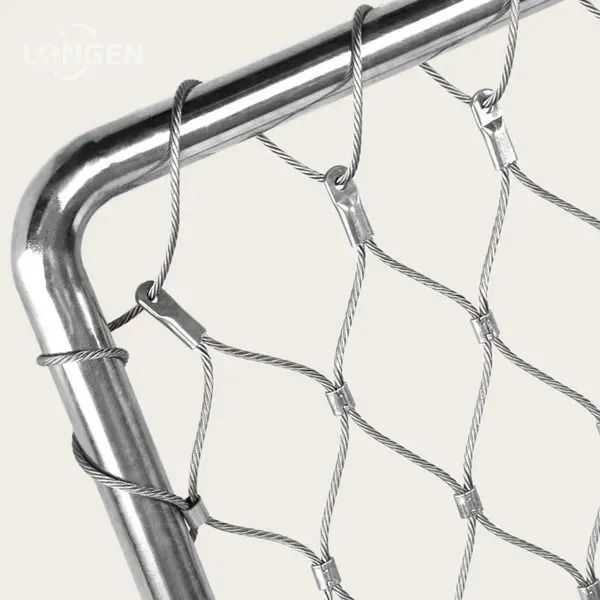 Read More

Contact Us

Recommended Products
-
 Slope Protection System Rockfall Netting 2.0mm 3.0mm 4.0mm High Tensile Steel Wire Mesh Netting Rockfall BarriersUS$ 2 - 15MOQ: 1 Square Meter
-
Flexible Debris Flow Barrier Steel Rope Rockfall Barrier With Ring Diameter 350 mm China SupplierUS$ 5.9 - 40MOQ: 1 Square Meter
-
Custom Hexsteel Mesh for Refractory Linings Stainless Steel Wire Plain Weave Welded Cutting Welding Offered Made ChinaUS$ 9.20 - 45.00MOQ: 50 Square Meters
-
Double Twist Hexagonal Mesh Rockfall Netting Drapery System for for Rockfall Mitigation Slope Consolidation WorksUS$ 0.45MOQ: 100 Square Meters
-
China Factory Galvanized Steel Railway Side Slope Stabilization Net Woven Wire Mesh for Slope Protection Include Bending WeldingUS$ 15.00 - 20.00MOQ: 999 Square Meters


-
Galvanized Gabion Baskets for Retaining Wall Plain Weave Cutting Processing Service for Slope Stabilization-Free Sample OfferedUS$ 1.5 - 1.7MOQ: 1 Square Meter
-
Children's Playground Stainless Steel Rope Mesh Balcony Fence Inox Cable Net Build Guardrail Black Oxide Rope NettingUS$ 118.00MOQ: 100 Square Meters
-
Factory Direct Modern High Transparency Anti-Slip Stainless Steel Rope Mesh Stair Railing Woven Cable Netting Custom ProjectsUS$ 9.9 - 14.9MOQ: 1 Square Meter
-
Stainless Steel Rope Mesh for Backpack and Bag Anti Falling Dropring Mesh Inox Cable Net Anti-theft Black Oxide Rope NettingUS$ 118.00MOQ: 100 Square Meters
-
Heavy-Duty 4ftx5ft Drag Mat Factory With Chain Galvanized Steel Drag Mat for Tractor AttachmentUS$ 9.1 - 45MOQ: 1 Square Meter


-
High Altitude Anti Fall Woven Stainless Steel Wire Rope Net SS 304 316 316L Plain Weave Invisible Protective NetUS$ 9.9 - 14.9MOQ: 1 Square Meter
-
China Rope Mesh Manufacturer Customized SS316 Black Oxided Ferrule Type Rope MeshUS$ 5 - 20MOQ: 1 Square Meter
-
Baseball Field Dragging Lawn LevelingUS$ 59.00 - 66.00MOQ: 5 Pieces
-
316L Grade Stainless Steel Wire Mesh Sieves 200mm 300mm Screen Factory Price Sand Testing ScreenUS$ 4.7 - 15MOQ: 1 Piece
-
Outdoor Stainless Steel Cable Railing / Wire Rope Mesh / Wire Mesh Railings for BalconyUS$ 15.00 - 20.00MOQ: 100 Square Meters


-
Slope Protection System 65/3, High-tensile Steel Wire Mesh, Spike Plate, Rock Nail, Connection Clips T3 for Slope StabilityUS$ 1.80 - 3.00MOQ: 1 Square Meter
-
Pool Mesh Steeltex Paper-Backed Welded Wire Mesh Factory Price 12ga 16gaUS$ 40 - 70MOQ: 30 Rolls
-
G65 3 Rockfall Netting Rust Free Coated Slope Protection Net Galvanized High Tensile Wire Mesh Control Shallow LandslideUS$ 5.40 - 5.60MOQ: 1 Meter
-
Anti‑Drone Protection Steel Rope Net UAV Security Protection Fence Mesh Galvanized /Stainless Steel Customized ProductionUS$ 1.1 - 1.2MOQ: 100 Square Meters
-
Anti-Drone Netting High Tensile Strength Stainless Steel Woven Wire Rope Mesh Active Rockfall Barrier Systemn Factory SupplyUS$ 15.00 - 20.00MOQ: 999 Square Meters