Business License
Stainless Steel Wire Rope Net for Balcony and Staircase Fall Protection
A residential refurbishment in a European city replaced 46 balconies of solid panel infill with glazed balustrades, and the client asked for a discreet net across each opening to satisfy a fall protection requirement. The net was specified at 100 mm aperture in 1.5 mm rope to keep the sight line clear. The building control officer rejected it within a week, because a 100 mm aperture admits a child's head.
Balcony rope net fall protection is a safety product before it is a design product. The aperture, the rope, the fixing and the anchor all have to satisfy a measurable duty, and appearance decisions come after those four are settled rather than before.
This guide works through the three common settings, a balcony infill, a staircase void and a high level opening, and sets out the numbers that decide each one.
1. Why Balcony Rope Net Fall Protection Needs a Calculated Design
Balcony rope net fall protection carries a person, not a package. A body leaning on the mesh delivers a point load of 0.5 kN to 1.0 kN, and a falling body delivers several times that figure in a fraction of a second.
The design case is usually the leaning load rather than the fall. A person resting against a balcony infill applies a sustained force for minutes, and a panel that deflects too far under that force reads as unsafe even when it holds.
Deflection is therefore part of the specification. A 2.4 m high panel at 2 mm rope and 50 mm aperture deflects 15 mm to 25 mm under a 0.5 kN hand load, which is acceptable, while a 1.5 mm rope at 100 mm aperture deflects three times as much and feels like a fishing net.
Anchor design follows from those two cases. Each balcony needs a fixing at 400 mm to 600 mm centres around the perimeter, and the anchor has to be rated for the panel reaction with a factor of 3.0 rather than for the net weight.
2. Staircase Rope Mesh Railing: Infill, Handrail and Fixing
A staircase rope mesh railing can serve two roles: a barrier on its own where a handrail is not required, or an infill below a handrail that provides the primary grip. The distinction changes the rope diameter and the fixing pattern.
As a barrier, the mesh runs from floor to 1.1 m and needs 40 mm to 50 mm aperture with a 2.5 mm rope, because it must stop a body rather than a limb. As an infill under a handrail, 60 mm aperture and 2.0 mm rope are usually enough, since the handrail carries the leaning load.
The fixing detail matters on stairs more than on balconies, because the geometry is never square. A panel that follows a flight of steps has a raking top edge and a level bottom edge, and the frame has to be fabricated to the rake rather than cut on site.
Stair voids also concentrate load. A panel spanning a 3 m void between flights gathers the leaning load from the whole opening, and the anchor at the top of the flight sees roughly twice the load of a mid run anchor.
3. High Rise Opening Safety Net: Wind, Access and Anchorage
A high rise opening safety net faces a wind load that a balcony infill never sees. A net across a light well at 20 m above ground can be exposed to 0.8 kN per square metre, and the load rises with height rather than staying constant.
Access decides the panel size. A net that has to be installed from a cradle is limited by what two people can handle, typically 3 m by 3 m or 3 m by 4 m, while a net installed from a scaffold deck can be built in 6 m panels.
Panel orientation matters at height. A high rise opening safety net is usually built with the long side horizontal, so the seams run parallel to the slab edges and the load travels into the structure rather than into a vertical joint between panels.
Anchorage is the governing structural question on tall buildings. Fixings into a concrete slab edge are straightforward, while fixings into a masonry parapet are not, and a 2.5 kN anchor load at 500 mm centres can exceed what a single skin of brick will take.
Where the substrate is weak, the net is usually carried on a steel frame fixed to the structure at wider centres. That frame costs 20 to 30 percent of the net value and avoids 200 individual anchors into a material that cannot accept them.
4. Balcony Rope Net Fall Protection Against the 100 mm Sphere Test
Many jurisdictions test a barrier with a 100 mm sphere, and some use a 75 mm figure for openings a child can reach. The test is applied to the clear opening rather than to the nominal aperture, so a 100 mm aperture in 2 mm rope already fails at 98 mm.
The safe response is to work well inside the limit rather than at it. A 60 mm aperture gives a 58 mm clear opening in 2 mm rope, which passes a 75 mm test with 17 mm to spare and never depends on the tolerance of the pressing tool or on how the panel was measured.
Where the project wants a more open look, a 75 mm aperture in 2.5 mm rope passes a 100 mm sphere test and reads as considerably lighter than 60 mm at the same rope. The trade is material cost rather than compliance.
Record the aperture convention on the drawing. A dispute about a failed inspection usually traces back to a supplier quoting centres and a designer reading clear opening, and a single line on the sheet prevents it.
5. Staircase Rope Mesh Railing in Public and Private Buildings
Public buildings impose a higher duty than private ones. A staircase rope mesh railing in a school or a station has to resist deliberate loading, climbing attempts and the abrasion of constant use, which pushes the rope to 3.0 mm.
Private dwellings allow a lighter specification. A 2.0 mm rope at 50 mm aperture is common in apartments, where the mesh is decorative as much as protective and the loading is incidental rather than deliberate.
A staircase rope mesh railing on a cantilevered stair needs one more check. The mesh adds roughly 2 kg per square metre to the balustrade, and on a cantilever that load sits at the far end of the span, where it has the greatest effect on deflection.
Both cases share a fixing rule: the mesh should not be the sole thing holding the handrail. Where a handrail sits on top of the mesh, the rail posts carry the load and the mesh fills the gap, rather than the mesh acting as a structural member.
Cost differences between the two duties are modest. Moving from 2.0 mm to 3.0 mm rope adds 35 to 45 percent to the mesh cost, and on a staircase that is usually a small part of the overall balustrade budget.
6. High Rise Opening Safety Net on Atriums and Light Wells
Atriums and light wells are the case where a high rise opening safety net does structural work. A net across a six storey void can catch a person, a tool or a piece of cladding, and the design load reflects the worst of those rather than the average.
Horizontal nets need a catenary rather than a flat plane. A net stretched flat across a 10 m opening sags toward the middle under its own weight and looks slack, while the same net installed with a 5 percent catenary reads as a deliberate curve.
Light wells add a fire consideration. A net across a shaft can obstruct smoke movement, and some codes require it to be non-combustible, which stainless rope satisfies without any treatment or coating.
Recovery access belongs in the design. A panel that catches a person has to be reachable by a rescue team, which usually means a demountable panel at one edge rather than a permanent opening in the middle of the span.
7. Inspection and Maintenance Across All Three Cases
Inspection starts with the anchors, not the mesh. A visual check of every fixing at 12 month intervals catches the loosening that appears after the first thermal cycle, and a torque check on 10 percent of the anchors confirms the rest.
The mesh itself needs a ferrule check. Every crossing carries a press mark, and a missing mark on a load bearing panel is a defect rather than a cosmetic issue, since a slip of 2 mm in an aperture can open a gap in a 50 mm grid.
Cleaning is a wash down with fresh water twice a year, plus a passivation step where site dust has settled on the surface during construction. A panel that shows tea staining in a coastal city usually needs a grade review rather than more cleaning.
Records close the loop. A simple log of each inspection, with photographs of any anchor that was re-torqued, is worth more than a longer report, because it shows a building manager the difference between normal movement and a fixing that is working loose on a balcony rope net fall protection installation.
Longen supplies a maintenance sheet with each balcony and staircase package, listing the anchor torque, the inspection interval and the three defects that justify replacing a panel rather than re-tensioning it.
8. Specifying Balcony Rope Net Fall Protection on a Live Project
Start with the test the building authority applies, then choose an aperture that passes it with margin. That single decision removes most of the risk of rejection, and it is the one item a client cannot change after the panels are pressed.
Next, fix the rope from the duty rather than from the look. A 2.0 mm rope suits a private balcony, while a 2.5 mm or 3.0 mm rope suits a public stair or a high level opening where the load is concentrated.
Then design the frame and the anchors together, and confirm the substrate with a pull test on site rather than from a table. Longen Wire Mesh Products asks for a photograph of the fixing substrate with every enquiry, because the anchor detail decides whether a package is straightforward or needs a frame.
Hebei Longen Wire Mesh Products Co Ltd quotes the panel, the frame and the fixings as three lines, so a client can see where the cost sits. Longen also states the aperture convention and the test it satisfies on the drawing, which is what an inspector asks for first.
9. Frequently Asked Questions
9.1 What aperture does balcony rope net fall protection need?
It depends on the test the local authority applies, and most jurisdictions use either a 100 mm or a 75 mm sphere at the balcony edge. For a 100 mm test, a 75 mm aperture in 2.5 mm rope gives a clear opening near 73 mm and passes with margin. For a 75 mm test, a 60 mm aperture in 2.0 mm rope is the usual answer. Choose an aperture that leaves at least 10 mm of margin below the test dimension, so tool tolerance never becomes a compliance question.
9.2 Can staircase rope mesh railing replace a handrail?
In some buildings it can, and in most it cannot, so check the code before designing the balustrade. A mesh barrier resists a falling body, yet it does not offer the continuous grip that a handrail provides, and accessible routes normally require a graspable rail at 900 mm to 1,000 mm. The common arrangement is a mesh infill below a handrail on posts, with the posts carrying the leaning load while the mesh closes the gap to the stair edge on every flight.
9.3 How is a high rise opening safety net anchored on a masonry parapet?
Usually through a steel frame rather than directly, because a single skin of brick will not take a 2.5 kN anchor at 500 mm centres. The frame spreads the load into the structure at 1.5 m to 2 m intervals, which is within the capacity of a properly detailed parapet. Confirm the arrangement with a pull test on three anchors before production, and allow for the frame in the budget rather than treating it as a site extra once the panels are made and the first bay is up.
9.4 How often should a stainless rope net be inspected after installation?
Twice in the first year and annually after that is a practical regime for a balcony or staircase installation. The first visit at one month catches the settling that follows the initial thermal cycle, the second at twelve months confirms the anchors, and the annual visits cover ferrule marks, local damage and cleaning. After any storm with wind above the design figure, add an inspection within a week rather than waiting for the next scheduled visit, which may be months away.
Recently Posted
-
Zoo and Aviary Enclosures in Stainless Steel Cable Net: Design Notes
October 23, 2026A bird park in Northern Europe rebuilt its walk-through aviary with a stainless net at 60 mm aperture, chosen because the mesh loo Read More
-
Drone Protection Netting Specifications: Mesh Size, Breaking Load and Coverage
October 23, 2026A conference venue in the Middle East ordered drone netting across an open courtyard for a three day event. The supplier quoted 1, Read More
-
Stainless Steel Wire Rope Net Mesh Opening and Wire Diameter Sizing
October 22, 2026An atrium net in a northern office building was specified at 80 mm aperture in 1.5 mm rope, chosen because the sample looked light Read More
-
Sourcing Drone Protection Netting: A Buyer Checklist for Custom Projects
October 22, 2026A logistics operator in the Middle East ordered drone protection netting for two warehouse roofs on the strength of a single photo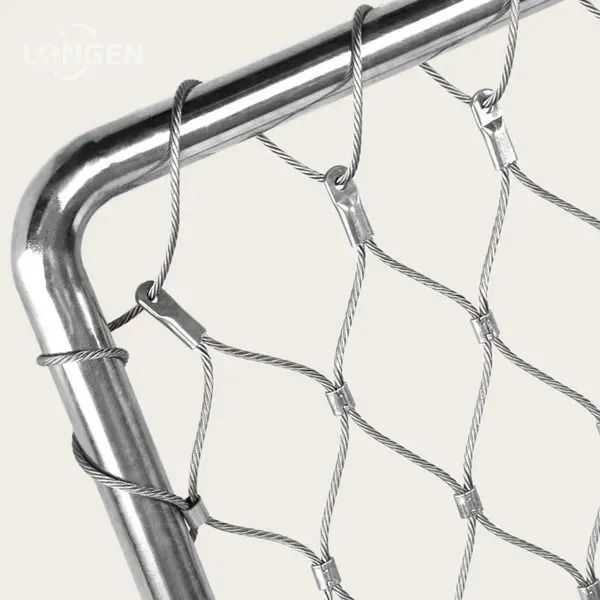 Read More

Contact Us

Recommended Products
-
 Slope Protection System Rockfall Netting 2.0mm 3.0mm 4.0mm High Tensile Steel Wire Mesh Netting Rockfall BarriersUS$ 2 - 15MOQ: 1 Square Meter
-
Flexible Debris Flow Barrier Steel Rope Rockfall Barrier With Ring Diameter 350 mm China SupplierUS$ 5.9 - 40MOQ: 1 Square Meter
-
Custom Hexsteel Mesh for Refractory Linings Stainless Steel Wire Plain Weave Welded Cutting Welding Offered Made ChinaUS$ 9.20 - 45.00MOQ: 50 Square Meters
-
Double Twist Hexagonal Mesh Rockfall Netting Drapery System for for Rockfall Mitigation Slope Consolidation WorksUS$ 0.45MOQ: 100 Square Meters
-
China Factory Galvanized Steel Railway Side Slope Stabilization Net Woven Wire Mesh for Slope Protection Include Bending WeldingUS$ 15.00 - 20.00MOQ: 999 Square Meters


-
Galvanized Gabion Baskets for Retaining Wall Plain Weave Cutting Processing Service for Slope Stabilization-Free Sample OfferedUS$ 1.5 - 1.7MOQ: 1 Square Meter
-
Children's Playground Stainless Steel Rope Mesh Balcony Fence Inox Cable Net Build Guardrail Black Oxide Rope NettingUS$ 118.00MOQ: 100 Square Meters
-
Factory Direct Modern High Transparency Anti-Slip Stainless Steel Rope Mesh Stair Railing Woven Cable Netting Custom ProjectsUS$ 9.9 - 14.9MOQ: 1 Square Meter
-
Stainless Steel Rope Mesh for Backpack and Bag Anti Falling Dropring Mesh Inox Cable Net Anti-theft Black Oxide Rope NettingUS$ 118.00MOQ: 100 Square Meters
-
Heavy-Duty 4ftx5ft Drag Mat Factory With Chain Galvanized Steel Drag Mat for Tractor AttachmentUS$ 9.1 - 45MOQ: 1 Square Meter


-
High Altitude Anti Fall Woven Stainless Steel Wire Rope Net SS 304 316 316L Plain Weave Invisible Protective NetUS$ 9.9 - 14.9MOQ: 1 Square Meter
-
China Rope Mesh Manufacturer Customized SS316 Black Oxided Ferrule Type Rope MeshUS$ 5 - 20MOQ: 1 Square Meter
-
Baseball Field Dragging Lawn LevelingUS$ 59.00 - 66.00MOQ: 5 Pieces
-
316L Grade Stainless Steel Wire Mesh Sieves 200mm 300mm Screen Factory Price Sand Testing ScreenUS$ 4.7 - 15MOQ: 1 Piece
-
Outdoor Stainless Steel Cable Railing / Wire Rope Mesh / Wire Mesh Railings for BalconyUS$ 15.00 - 20.00MOQ: 100 Square Meters


-
Slope Protection System 65/3, High-tensile Steel Wire Mesh, Spike Plate, Rock Nail, Connection Clips T3 for Slope StabilityUS$ 1.80 - 3.00MOQ: 1 Square Meter
-
Pool Mesh Steeltex Paper-Backed Welded Wire Mesh Factory Price 12ga 16gaUS$ 40 - 70MOQ: 30 Rolls
-
G65 3 Rockfall Netting Rust Free Coated Slope Protection Net Galvanized High Tensile Wire Mesh Control Shallow LandslideUS$ 5.40 - 5.60MOQ: 1 Meter
-
Anti‑Drone Protection Steel Rope Net UAV Security Protection Fence Mesh Galvanized /Stainless Steel Customized ProductionUS$ 1.1 - 1.2MOQ: 100 Square Meters
-
Anti-Drone Netting High Tensile Strength Stainless Steel Woven Wire Rope Mesh Active Rockfall Barrier Systemn Factory SupplyUS$ 15.00 - 20.00MOQ: 999 Square Meters