Business License
Building Safety Protection Mesh in Schools and Kindergartens
A school is not a tall house with more children in it. A guard that one child leans against occasionally is leaned against by several hundred children every day, at predictable times, in a hurry, with a bag on one shoulder and a phone in one hand.
That change of use alters three things at once: the number of load cycles the panel sees, the range of behaviour the panel has to resist, and the sightlines the staff depend on to supervise the space. A specification copied from a residential project answers none of the three.
This article deals with school safety netting by location, kindergarten protection mesh by height and climbability, and the child safe net question that depends on the age of the children rather than on the height of the building.
1. Why School Safety Netting Faces a Different Load History
School safety netting is usually specified against a single design event, and that is the first mistake. A residential guard is designed for one person falling against it once. A school guard is designed for a hundred children pressing against it at the same time, every morning and every afternoon, for fifteen years.
The load per child is small. The number of cycles is not. A panel that passes a static test at the design load can still be loose at every fixing after two terms, because a static test says nothing about what repeated low-energy impact does to a tensioned net and its anchors.
There is a second behaviour that no code figure captures: deliberate testing. Children push, kick, hang, swing and tie things to whatever is in front of them. A guard that yields visibly under that treatment invites more of it, and a guard that does not invite any is a guard that has been designed with a stiffer border and a shorter anchor spacing than a residential panel.
The practical response is a fixing schedule with more points at closer centres, and a tension check written into the handover document and repeated after the first term. Both are cheap at installation and expensive to add later.
2. Where School Safety Netting Is Actually Required
Most school projects describe the requirement as a single line, and the line usually covers one location out of five. The five behave differently, and each has a governing concern that a generic note will not address.
| Location | Main risk | What governs the panel |
|---|---|---|
| Stair and corridor voids | A child climbing or falling over a rail | Height above the finished floor and climbability |
| Upper floor windows | A child leaning through an openable sash | Restrictor travel and the aperture of the infill |
| Double height halls and atriums | Objects thrown or dropped from a gallery | Aperture for object retention |
| Roof plant and service areas | Access to machinery | Panel height and the absence of footholds |
| Covered play and canopy edges | Impact from a ball or a running child | Energy absorption and the return to the structure |
A corridor void and a double height hall can be protected by the same product, and they should not be protected by the same specification. The corridor needs a climb-resistant guard at a defined height. The hall needs a fine aperture that stops a shoe or a bottle, and it needs that aperture at every level, including the level above head height.
Longen Wire Mesh Products asks for a location schedule rather than a total area, because the five rows above produce four different panels and one shared border detail.
3. Kindergarten Protection Mesh: Height, Aperture and Climbability
Kindergarten protection mesh has to answer a question that adult guards never face: the panel itself is a climbing frame. A diamond mesh with a horizontal top rail and a bottom rail is a ladder with two rungs, and a four year old will find it in a morning.
The height rule that applies to adults is therefore a starting point rather than an answer. A guard at the conventional height protects against a fall. It does not prevent a climb, and once a child is at the top of the panel the fall is from a higher point than the floor the guard was designed for.
The aperture has to satisfy two rules that pull in opposite directions. The opening must be small enough that a torso cannot pass, and large enough that a head cannot be trapped. A diamond pattern can fail the second rule while passing the first, which is why the aperture figure on a kindergarten project should be quoted together with the shape and the orientation of the mesh.
Climbability is managed by geometry rather than by material, and it is the part of a kindergarten protection mesh that is decided on site rather than in the workshop. Keep the bottom of the panel clear of every foothold, including sills, radiators, benches, planters and stacked play equipment. Slope the top of the panel inward where the layout allows, and use a smooth capping that gives a hand nothing to grip. A panel that offers no first foothold is a panel that is not climbed.
4. Child Safe Net and the Age Range Problem
A child safe net for a nursery and a child safe net for a secondary school are different products, and the difference is not the colour. It is the body dimension the design is checked against, and the behaviour the panel is expected to resist.
For children under three, the governing risks are passage through a gap and entrapment in one. The panel needs a small aperture, a bottom edge closed to the floor, and no gap at a junction that a torso can enter but a head cannot leave.
For children of primary age, the risks shift to climbing and to deliberate interference. The panel needs a height that cannot be scaled from any adjacent object, a fixing that cannot be undone by hand, and a tension that does not slacken when the panel is used as a swing.
For older pupils, the risk returns to weight and to impact, and the design question becomes the same as an adult guard with a higher cycle count. A single specification across an all-age school is therefore a compromise, and it is better written as three clauses for three building areas than as one figure for the site.
5. Supervision Sightlines and the Child Safe Net Trade-Off
A net that protects a void can also hide it, and staff supervision depends on seeing across the space rather than into it. This is the constraint that schools raise after the panel is installed, and it is decided at specification.
Three levers control it. The first is openness, which is set by the ratio of wire diameter to aperture: a coarse pattern with a fine rope reads as a haze from a distance and as a grid from close range. The second is colour, and a light tone against a light wall dissolves at the distance a teacher stands.
The third is position. A panel set back from the rail line allows a sightline to pass over or beside it, and the same panel fixed on the rail line blocks that sightline completely. On a corridor void this is often the difference between a workable guard and a screen that staff ask to have removed.
Hebei Longen Wire Mesh Products supplies sample panels for a sightline check before a school order is released, because the effect at three metres and at fifteen metres is not the same, and the drawing cannot show either.
6. The Dismissal Surge: Where School Safety Netting Wears First
Every school has two moments a day when the guard is loaded by a crowd rather than by an individual, and both of them load the bottom of the panel first. Bags swing into it, feet kick it, and cleaning machines are pushed against it.
The bottom edge is where most damage appears. A gap between the panel and the floor collects litter, traps a foot and admits a small child's leg. A closed edge with no movement allowance cracks at the first settlement of the slab.
The detail that works is a bottom edge fixed to a kerb or a channel rather than to the floor finish, with a movement allowance taken up in the fixing rather than in the mesh. It costs one extra component per panel and it removes the failure that produces the call-back.
A bottom rail also changes climbability, because a horizontal rail at ankle height is a step. Where a rail is used, it should be a flat section close to the floor rather than a round bar standing clear of it.
7. Fixing Kindergarten Protection Mesh Without Damaging the Fabric
A kindergarten protection mesh fixing and a school panel fixing come off the same drawing, and the building they go into is rarely uniform. A concrete frame with infill panels, a brick wall from an earlier phase and a lightweight roof structure can all appear on the same elevation, and each takes a different fixing.
Four options cover most cases. A cast-in channel is the cleanest where the slab is being poured, and a chemical anchor into a concrete soffit is the standard for an existing frame.
A clamp to an existing steel member avoids penetration altogether. A self-supporting frame that stands on the floor and braces back to the structure needs no fixing into the fabric at all, which is the answer on a building where drilling is restricted.
The choice is usually made by the structural engineer rather than the supplier, and it should be made before the panel sizes are fixed. A frame that stands on the floor has to be designed around the panel division, not adapted to it afterwards.
Hebei Longen Wire Mesh Products Co Ltd supplies the panel, the border and the tensioning detail, and states the load at each fixing point so that the engineer can size the anchor to the substrate that is actually there.
8. Sequencing a Child Safe Net Installation Around the School Year
A school project has a calendar that a commercial project does not, and the calendar decides more of a child safe net delivery than the drawing does. A school safety netting order released in the wrong week sits in a store until the next break, whatever the workshop did.
Survey work is easiest in a holiday and least disruptive in a holiday, and both compete for the same weeks. The practical sequence is to survey in a short break, fabricate during the term, and install in the long break, with a mock-up panel installed early enough to be seen by the staff who will use the space.
Installation in a live school is possible where the work is confined to one elevation and the access route is separated from the pupils. It needs a daily clean-down, a fixed delivery window and a store that can be locked, and those three requirements are worth writing into the order rather than leaving to the site meeting.
Handover should include a tagged panel plan, a tension record and two spare panels of each size. A school will damage a panel within a term, and a spare panel that matches the batch is the difference between a repair and a mismatch that stays visible for years. Longen stamps the batch reference on every border tag so that a later replacement can be traced to the rope and the finish it was made from.
9. Frequently Asked Questions
9.1 Is a taller guard the answer to climbing?
Not on its own, and a taller panel can make the situation worse by raising the point from which a child falls. The effective measures are the removal of footholds, a top detail that offers no grip, and a layout in which no adjacent object provides a step. Height helps when it is combined with those three, and it is the least effective of the four when it is used alone. A panel at the standard height with all three measures in place resists climbing better than a taller panel with none of them.
9.2 What aperture suits a kindergarten?
It depends on the age band and on the shape of the mesh, and the figure should never be quoted without both. The opening has to be small enough to stop a torso passing and large enough to release a head, and a diamond pattern satisfies those two conditions over a narrower range than a square one. A supplier who quotes a single dimension without the shape has given half an answer. Ask for the two limits as a pair, and for the shape that was tested against them.
9.3 Can the mesh be fitted without drilling into the building?
Yes, where a self-supporting frame is acceptable. The frame stands on the floor, braces back to the structure at a few points, and carries the panels within its own posts. It costs more than a direct fix and it removes the need for dozens of penetrations in a facade that may be protected. It also allows the whole assembly to be removed and reinstated around later building work, at the cost of depth, because the frame stands clear of the wall and takes floor space that a direct fix does not.
9.4 How often should a school guard be checked?
At handover, after the first term, and then on the school's own maintenance cycle, with a visual check each term and a tension check each year. The first-term check is the important one, because it catches the settlement and the anchor movement that installation cannot reveal. A guard that is checked at handover and never again is a guard whose condition is unknown rather than one that is known to be sound. Record the tension figure at handover so that later readings have something to be compared with.
Recently Posted
-
Black Oxide Stainless Steel Wire Rope Mesh for Zoo and Aviary Exhibits
November 16, 2026An exhibit is judged by what a visitor can see through it, and a net is the one element that stands between the visitor and everyt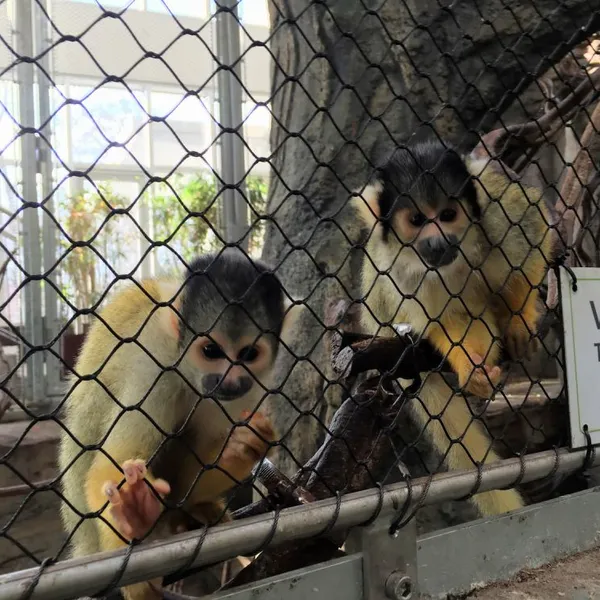 Read More
-
Black Oxide Stainless Steel Wire Rope Mesh vs Painted or Coated Mesh
November 16, 2026Three products are sold as a black rope net, and they differ in a way that a photograph cannot show. One is chemically darkened st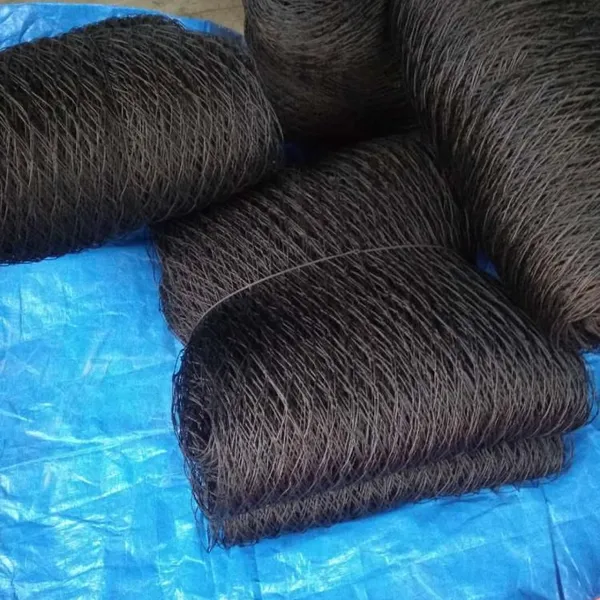 Read More
-
How the Black Oxide Layer Is Formed on Stainless Wire Rope
November 16, 2026Blackening a stainless rope is a surface chemistry problem wrapped in a mechanical one. The chemistry is a conversion of the alloy Read More
-
What Is Black Oxide Stainless Steel Wire Rope Mesh?
November 13, 2026A black oxide rope mesh is a stainless steel rope net whose wire has been chemically darkened before the mesh is assembled. The ro
Read More

Contact Us

Recommended Products
-
 Slope Protection System Rockfall Netting 2.0mm 3.0mm 4.0mm High Tensile Steel Wire Mesh Netting Rockfall BarriersUS$ 2 - 15MOQ: 1 Square Meter
-
Flexible Debris Flow Barrier Steel Rope Rockfall Barrier With Ring Diameter 350 mm China SupplierUS$ 5.9 - 40MOQ: 1 Square Meter
-
Custom Hexsteel Mesh for Refractory Linings Stainless Steel Wire Plain Weave Welded Cutting Welding Offered Made ChinaUS$ 9.20 - 45.00MOQ: 50 Square Meters
-
Double Twist Hexagonal Mesh Rockfall Netting Drapery System for for Rockfall Mitigation Slope Consolidation WorksUS$ 0.45MOQ: 100 Square Meters
-
China Factory Galvanized Steel Railway Side Slope Stabilization Net Woven Wire Mesh for Slope Protection Include Bending WeldingUS$ 15.00 - 20.00MOQ: 999 Square Meters


-
Galvanized Gabion Baskets for Retaining Wall Plain Weave Cutting Processing Service for Slope Stabilization-Free Sample OfferedUS$ 1.5 - 1.7MOQ: 1 Square Meter
-
Children's Playground Stainless Steel Rope Mesh Balcony Fence Inox Cable Net Build Guardrail Black Oxide Rope NettingUS$ 118.00MOQ: 100 Square Meters
-
Factory Direct Modern High Transparency Anti-Slip Stainless Steel Rope Mesh Stair Railing Woven Cable Netting Custom ProjectsUS$ 9.9 - 14.9MOQ: 1 Square Meter
-
Stainless Steel Rope Mesh for Backpack and Bag Anti Falling Dropring Mesh Inox Cable Net Anti-theft Black Oxide Rope NettingUS$ 118.00MOQ: 100 Square Meters
-
Heavy-Duty 4ftx5ft Drag Mat Factory With Chain Galvanized Steel Drag Mat for Tractor AttachmentUS$ 9.1 - 45MOQ: 1 Square Meter


-
High Altitude Anti Fall Woven Stainless Steel Wire Rope Net SS 304 316 316L Plain Weave Invisible Protective NetUS$ 9.9 - 14.9MOQ: 1 Square Meter
-
China Rope Mesh Manufacturer Customized SS316 Black Oxided Ferrule Type Rope MeshUS$ 5 - 20MOQ: 1 Square Meter
-
Baseball Field Dragging Lawn LevelingUS$ 59.00 - 66.00MOQ: 5 Pieces
-
316L Grade Stainless Steel Wire Mesh Sieves 200mm 300mm Screen Factory Price Sand Testing ScreenUS$ 4.7 - 15MOQ: 1 Piece
-
Outdoor Stainless Steel Cable Railing / Wire Rope Mesh / Wire Mesh Railings for BalconyUS$ 15.00 - 20.00MOQ: 100 Square Meters


-
Slope Protection System 65/3, High-tensile Steel Wire Mesh, Spike Plate, Rock Nail, Connection Clips T3 for Slope StabilityUS$ 1.80 - 3.00MOQ: 1 Square Meter
-
Pool Mesh Steeltex Paper-Backed Welded Wire Mesh Factory Price 12ga 16gaUS$ 40 - 70MOQ: 30 Rolls
-
G65 3 Rockfall Netting Rust Free Coated Slope Protection Net Galvanized High Tensile Wire Mesh Control Shallow LandslideUS$ 5.40 - 5.60MOQ: 1 Meter
-
Anti‑Drone Protection Steel Rope Net UAV Security Protection Fence Mesh Galvanized /Stainless Steel Customized ProductionUS$ 1.1 - 1.2MOQ: 100 Square Meters
-
Anti-Drone Netting, Galvanized High Tensile Steel Wire Rope Mesh, UVA Protection Net, CE Factory Customized ProductionUS$ 1.00 - 2.00MOQ: 999 Square Meters