Business License
How the Black Oxide Layer Is Formed on Stainless Wire Rope
Blackening a stainless rope is a surface chemistry problem wrapped in a mechanical one. The chemistry is a conversion of the alloy at the surface, and the mechanics are that a rope is not a flat plate: it is dozens of wires in contact, with gaps between them that hold liquid and resist rinsing.
Most of the difficulty in black oxide formation sits in those gaps. A sheet blackens evenly because every part of it sees the same bath, and a rope blackens unevenly unless the bath reaches the core and the rinse removes what the bath left behind.
This article works through the process from preparation to adhesion testing, and it explains which of the stages a buyer can usefully ask about. It is written for someone specifying a finish rather than for someone operating a bath.
1. Black Oxide Formation: Starting With a Clean Surface
Black oxide formation on stainless steel begins with a surface that has no oil, no drawing lubricant and no free iron.
Rope arrives with lubricant from the stranding process, and that lubricant sits in the valleys between strands where a wipe cannot reach it. Degreasing therefore has to be a soak rather than a wipe, usually alkaline and usually warm, followed by a water rinse that is thorough enough to pass a water-break test.
The water-break test is the simplest control in the whole process. Water poured over a clean stainless surface stays as a continuous film, and water poured over a greasy one pulls into droplets. If the film breaks, the bath will produce a patchy colour and no amount of immersion time will fix it.
Pickling follows where the wire has scale or a heat tint from drawing. A pickled surface blackens more evenly and takes a deeper tone, and it also removes the free iron that would otherwise become a rust spot inside the finished panel.
2. Black Oxide Formation: What the Bath Does
The bath converts the surface rather than coating it. The stainless alloy at the surface reacts, and the reaction product is dark and chromium-rich, which is why the colour survives handling better than a dye would.
The thickness of that product is small, measured in fractions of a micron. It is not a film that can be measured with a paint gauge, and a supplier who quotes a thickness in tens of microns is describing a different process.
Commercial baths fall into two families, and a buyer in a regulated market should know which one is being used. Some systems rely on an oxidising salt chemistry that includes chromium in a form now restricted in several jurisdictions, and others are formulated without it. The appearance from the two can be similar and the compliance position is not.
Bath concentration and temperature are controlled within narrow bands, and both drift as panels pass through. A works running a long campaign titrates and tops up rather than relying on a calendar, and the titration record is the document that explains a colour drift three months later.
3. Stainless Oxidation Process: Temperature and Time
The stainless oxidation process used for architectural mesh runs near room temperature, which is one of its advantages over heat-based blackening. There is no scale to remove afterwards and no distortion of a fine wire.
The stainless oxidation process is timed by the alloy and the surface condition rather than by the colour wanted. A panel is not left in longer to make it darker, because the layer stops growing once the surface has converted; leaving it in produces a smut rather than a deeper black.
Temperature control matters more than most operators expect. A bath that is a few degrees warm reacts faster at the top of a basket than at the bottom, and the difference shows as a gradient across a large panel.
The process is therefore a compromise between evenness and throughput. A works that blackens small batches can afford to keep the bath slow and even, and a works running large baskets has to agitate and to check the top and bottom of each basket against a coupon.
4. Stainless Oxidation Process: Reaching the Core of a Rope
A rope is a capillary. Liquid enters the gaps between strands and stays there, and the stainless oxidation process has to wet the core for the colour to be the same inside as outside.
Wetting is helped by agitation and by keeping the lay of the rope open during immersion. It is hindered by tight ferrules already pressed onto the rope, since a ferrule closes the gap and traps air.
That single fact drives a production sequence. Panels are blackened as rope or as loose mesh before the borders are fitted, and a ferrule is either blackened separately or specified in a matching finish. A panel blackened after assembly will have bright rope emerging from dark ferrules as soon as the rope relaxes.
Rinsing is the second half of the same stainless oxidation process, and it is the half that a works is most tempted to shorten. Hebei Longen Wire Mesh Products runs three rinse stages with a clear water finish for that reason, and the third stage is where most of the residue at a panel end is removed. Bath residue left in the core continues to react slowly, and it shows up weeks later as a bloom or a sticky deposit at the end of a panel. Warm water, several stages and a final rinse that runs clear are what keep a rope from bleeding.
5. Oxide Layer Adhesion: Why It Does Not Peel
Oxide layer adhesion is often misunderstood because the word layer suggests something sitting on top. There is no interface to fail in the way a paint interface fails, because the conversion product grows out of the alloy rather than being deposited onto it.
What can fail is cohesion inside the converted zone, and oxide layer adhesion therefore depends on a surface that was clean before the bath rather than on anything added after it. A patch that was greasy converts weakly, and a weakly converted patch wears through in a few wipes.
The practical consequence is that adhesion is a process outcome rather than a product property. Two panels from the same works can differ if one went through a bath at the end of a campaign and the other at the start.
Abrasion resistance is a separate matter. The layer resists rubbing against a soft material well and against a hard abrasive poorly, and no blackening process makes a stainless wire resistant to a grinding wheel.
6. Oxide Layer Adhesion: How It Is Tested
Oxide layer adhesion has no single industry test, and the tests that exist are comparative rather than absolute. That is worth knowing before a specification asks for a pass mark that nobody can define.
| Test | What it shows | Limitation |
|---|---|---|
| Tape pull | Loose smut or unreacted deposit | Passes even when colour is thin |
| Rub with white cloth | Transfer of residue | Depends on pressure applied |
| Bend over a mandrel | Cracking at a tight radius | Rope cannot be tested this way |
| Salt spray | Corrosion resistance of the assembly | Does not measure colour |
| Colour against a master | Batch consistency | Needs a retained master sample |
Judged that way, oxide layer adhesion is a property of the process record rather than of a single test result. The retained master is the most useful instrument in that table. A physical sample kept from the first approved batch, stored away from light, settles a colour argument in a minute where a description cannot.
Longen keeps a master sample for each finish and grade it runs, and references it on the inspection sheet rather than describing the colour in words.
7. Failure Modes in Black Oxide Formation and What Causes Them
Four failure modes account for almost every complaint about a black finish, and each one points back to a stage in the process.
Patchiness is the first failure of black oxide formation, and it is nearly always preparation. Oil, a fingerprint or a spot of scale leaves an area that converts weakly, and the patch is visible as a lighter region with a soft edge.
The second is residue bleed, which is rinsing. Bath left in the core creeps out over days and leaves a bloom at a panel end or under a ferrule.
The third is a colour gradient across a panel, which is bath uniformity. It appears on large panels rather than small ones, and it is the reason a works checks the top and bottom of a basket.
The fourth is a bright edge where a panel was cut after blackening, which is the commonest visible defect on a delivered panel. It is not a failure of the finish but of the sequence, and the answer is to cut before blackening or to dress the edge afterwards.
8. Controls a Buyer Can Ask For on Oxide Layer Adhesion
A buyer does not need to audit a bath to get a consistent finish, and four questions cover most of the risk. Each one is about black oxide formation rather than about the rope, which is where the colour is actually decided.
The first is the sequence: is the rope blackened before or after the mesh is assembled, and are the ferrules blackened in the same campaign. The answer tells a buyer whether to expect bright edges.
The second is the rinse: how many stages, and whether the final rinse is checked. A supplier who can describe the rinse stages has usually thought about bleed, and a supplier who cannot has usually not.
The third is the master sample. A buyer should ask for one, keep it, and compare later deliveries against it rather than against a memory.
The fourth is the chemistry family, asked as a compliance question rather than a technical one. Longen Wire Mesh Products states the chemistry family used for a project on request, because buyers in some markets have to declare it and buyers in others simply want to know. Longen also keeps the bath record for each campaign, which is the practical way to answer a colour question about a delivery made two seasons earlier.
9. Frequently Asked Questions
9.1 Is the process hot or cold?
The process used for architectural and enclosure rope mesh is a low temperature one, typically close to ambient with mild warming, and it is chosen because a fine wire cannot tolerate the heat of a traditional blackening salt bath. The consequence is a very thin conversion layer and no scale, which is why a panel comes out ready to rinse rather than ready to descale. A hot process exists for heavier sections and produces a different, thicker layer that would be too coarse for a one millimetre wire.
9.2 Does the layer grow with longer immersion?
No, and that is a common misunderstanding. The reaction converts the available surface and then stops, so a longer immersion does not produce a darker result. What it does produce is a smut, which is a loose deposit that wipes off and leaves a dull patch underneath. A supplier who offers a deeper colour by leaving panels in longer is describing a process that will fail a rub test, and depth comes from preparation and alloy rather than from time.
9.3 Why does a blackened rope sometimes show bright strands?
There are two causes and they look different. A bright strand in the middle of a panel usually means the rope was not fully wet during immersion, so the core did not convert, and the strand becomes visible as the rope relaxes in service. A bright edge along a border usually means the mesh was cut after blackening. The first is a process fault and the second is a sequence fault, and a photograph of the defect is enough for a supplier to say which.
9.4 Can the process be applied to an already installed net?
No, at least not by immersion, which is what the process requires. A chemical blackening solution can be brushed onto an installed net as a touch-up, and it will darken a bright patch visibly, but the result is uneven and it does not reach the core of a rope. For a small repair that is acceptable, and for a whole panel it is not. A panel that has lost its finish across a large area is a panel to replace rather than to treat on site.
Recently Posted
-
Black Oxide Stainless Steel Wire Rope Mesh for Zoo and Aviary Exhibits
November 16, 2026An exhibit is judged by what a visitor can see through it, and a net is the one element that stands between the visitor and everyt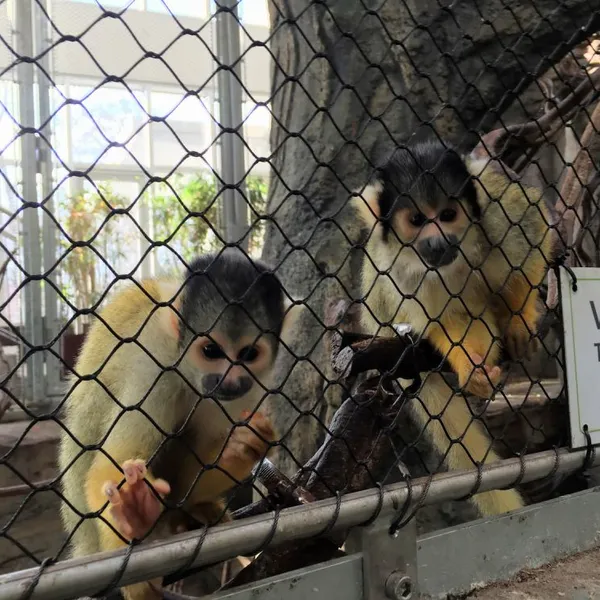 Read More
-
Black Oxide Stainless Steel Wire Rope Mesh vs Painted or Coated Mesh
November 16, 2026Three products are sold as a black rope net, and they differ in a way that a photograph cannot show. One is chemically darkened st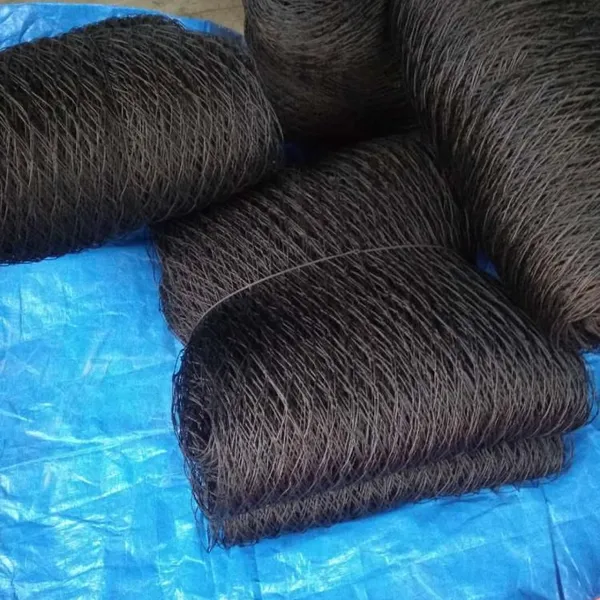 Read More
-
What Is Black Oxide Stainless Steel Wire Rope Mesh?
November 13, 2026A black oxide rope mesh is a stainless steel rope net whose wire has been chemically darkened before the mesh is assembled. The ro
Read More -
How Longen Delivers Building Safety Protection Mesh Projects
November 13, 2026A building safety project does not fail at the loom. It fails in the gap between a drawing that shows a dimension and a site that Read More

Contact Us

Recommended Products
-
 Slope Protection System Rockfall Netting 2.0mm 3.0mm 4.0mm High Tensile Steel Wire Mesh Netting Rockfall BarriersUS$ 2 - 15MOQ: 1 Square Meter
-
Flexible Debris Flow Barrier Steel Rope Rockfall Barrier With Ring Diameter 350 mm China SupplierUS$ 5.9 - 40MOQ: 1 Square Meter
-
Custom Hexsteel Mesh for Refractory Linings Stainless Steel Wire Plain Weave Welded Cutting Welding Offered Made ChinaUS$ 9.20 - 45.00MOQ: 50 Square Meters
-
Double Twist Hexagonal Mesh Rockfall Netting Drapery System for for Rockfall Mitigation Slope Consolidation WorksUS$ 0.45MOQ: 100 Square Meters
-
China Factory Galvanized Steel Railway Side Slope Stabilization Net Woven Wire Mesh for Slope Protection Include Bending WeldingUS$ 15.00 - 20.00MOQ: 999 Square Meters


-
Galvanized Gabion Baskets for Retaining Wall Plain Weave Cutting Processing Service for Slope Stabilization-Free Sample OfferedUS$ 1.5 - 1.7MOQ: 1 Square Meter
-
Children's Playground Stainless Steel Rope Mesh Balcony Fence Inox Cable Net Build Guardrail Black Oxide Rope NettingUS$ 118.00MOQ: 100 Square Meters
-
Factory Direct Modern High Transparency Anti-Slip Stainless Steel Rope Mesh Stair Railing Woven Cable Netting Custom ProjectsUS$ 9.9 - 14.9MOQ: 1 Square Meter
-
Stainless Steel Rope Mesh for Backpack and Bag Anti Falling Dropring Mesh Inox Cable Net Anti-theft Black Oxide Rope NettingUS$ 118.00MOQ: 100 Square Meters
-
Heavy-Duty 4ftx5ft Drag Mat Factory With Chain Galvanized Steel Drag Mat for Tractor AttachmentUS$ 9.1 - 45MOQ: 1 Square Meter


-
High Altitude Anti Fall Woven Stainless Steel Wire Rope Net SS 304 316 316L Plain Weave Invisible Protective NetUS$ 9.9 - 14.9MOQ: 1 Square Meter
-
China Rope Mesh Manufacturer Customized SS316 Black Oxided Ferrule Type Rope MeshUS$ 5 - 20MOQ: 1 Square Meter
-
Baseball Field Dragging Lawn LevelingUS$ 59.00 - 66.00MOQ: 5 Pieces
-
316L Grade Stainless Steel Wire Mesh Sieves 200mm 300mm Screen Factory Price Sand Testing ScreenUS$ 4.7 - 15MOQ: 1 Piece
-
Outdoor Stainless Steel Cable Railing / Wire Rope Mesh / Wire Mesh Railings for BalconyUS$ 15.00 - 20.00MOQ: 100 Square Meters


-
Slope Protection System 65/3, High-tensile Steel Wire Mesh, Spike Plate, Rock Nail, Connection Clips T3 for Slope StabilityUS$ 1.80 - 3.00MOQ: 1 Square Meter
-
Pool Mesh Steeltex Paper-Backed Welded Wire Mesh Factory Price 12ga 16gaUS$ 40 - 70MOQ: 30 Rolls
-
G65 3 Rockfall Netting Rust Free Coated Slope Protection Net Galvanized High Tensile Wire Mesh Control Shallow LandslideUS$ 5.40 - 5.60MOQ: 1 Meter
-
Anti‑Drone Protection Steel Rope Net UAV Security Protection Fence Mesh Galvanized /Stainless Steel Customized ProductionUS$ 1.1 - 1.2MOQ: 100 Square Meters
-
Anti-Drone Netting, Galvanized High Tensile Steel Wire Rope Mesh, UVA Protection Net, CE Factory Customized ProductionUS$ 1.00 - 2.00MOQ: 999 Square Meters