Business License
How Longen Supplies Bridge Protection Mesh to Project Schedules
A bridge project is run against a programme, and a net that arrives a fortnight late can hold a deck opening that costs more per day than the net costs in total.
Hebei Longen Wire Mesh Products Co Ltd works from Anping in Hebei, has made wire and rope net panels since the middle of the last decade, and supplies bridge protection mesh against construction programmes rather than against a stock list.
This article sets out what a bridge mesh supplier has to deliver before the works start, how bridge net fabrication runs from drawing to panel, where a net order sits in a programme, project net delivery and marking, the submittals that matter, what the company does not do, and three projects that changed the way it works.
1. What a Bridge Mesh Supplier Has To Deliver Before the Works
A bridge mesh supplier is judged on the documents it produces before anything is cut, because those documents are what the site builds to.
| Deliverable | Purpose |
|---|---|
| Setting-out drawing | Panel positions, post centres, joint lines |
| Panel drawing | Dimensions to datums, aperture, wire, coating |
| Fixing detail | Bracket, anchor class, what it fixes into |
| Coating record | System and thickness, per batch |
| Packing list | Panel number, span, side, sequence |
The setting-out drawing is the one that reveals a problem while it is still a drawing. A post centre that does not divide into the span, or a joint that lands on a stay collar, shows up there rather than on site.
Hebei Longen Wire Mesh Products sends the setting-out drawing before the panel drawings, so that the two are reviewed in the right order. Hebei Longen Wire Mesh Products Co Ltd will not release panels for fabrication until the setting-out is signed.
2. Bridge Net Fabrication: From Drawing to Panel
Bridge net fabrication runs through five stages, and the sequence is what keeps a panel square to the bridge rather than square to a jig.
Rope or wire arrives with a heat number, and the number is recorded against the order before cutting. Panels are then laid out on a jig built to the fixing pitch of that project, which is the single most useful piece of tooling in the works.
Swaging follows, with a calibrated press and a die checked at the start of each shift. A ferrule set at the low end of its tolerance holds on the bench and walks on a bridge, and the difference does not appear until a season of movement has passed.
Coating is applied after assembly so that every cut end and every ferrule is covered. A panel coated before assembly has bare wire at the joints, and the joint is where a bridge corrodes first.
Longen Wire Mesh Products numbers each panel to its span and side before packing, and Longen photographs the finished bundle against the packing list. That photograph has settled more delivery queries than any other record the company keeps.
3. Where Bridge Net Fabrication Sits in the Programme
Bridge net fabrication is a short activity inside a long programme, and its position is usually decided by access rather than by manufacturing.
A parapet panel can be installed once the parapet is complete and before the waterproofing, because the fixings go into the parapet and the traffic below is not yet live. An under-deck panel usually waits for the deck to be stressed and for the formwork to be struck.
That means the same order can have two delivery dates, and a supplier who is told one date will deliver half the order at the wrong time. The schedule should be given as two dates with two panel groups.
A third group is often the fascia returns, which cannot be dimensioned until the deck edge is built. Those are made last and they are the group that holds an opening, so they are worth flagging at order stage rather than discovering at week forty.
Bridge net fabrication for the third group cannot start until a survey is done, and a survey needs access to the deck edge. On a project where the edge is reachable from a platform and nowhere else, the survey has a lead time of its own and it should be in the programme beside the fabrication.
4. Project Net Delivery: Packing, Marking and Sequence
Project net delivery is judged at the gate, and the judgement is about sequence rather than about condition.
Panels are packed flat in bundles, strapped, with the bundle number matching the packing list and the span range written on the outside. Coated panels are interleaved so that they do not rub in transit, which is the damage most often found on arrival.
Bundles are loaded in the reverse order of installation, so that the first panel needed comes off first. That is a small thing at the works and it saves an hour of unloading at a site with nowhere to stack.
Delivery is from Tianjin or Qingdao depending on the destination and the sailing, and documents are sent ahead of the vessel rather than with the cargo. A site waiting for a file while the panels sit at a port is a delay that costs nothing to avoid.
Project net delivery also has a weight limit at the receiving end, and a bundle of ten panels can be more than a site crane is rated for at that radius. Splitting a bundle costs a little packing and it removes a handling problem that a site will otherwise solve by opening the bundle in the air.
5. Submittals From a Bridge Mesh Supplier That Matter
Four documents do most of the work over the life of a bridge net, and all four are produced as a matter of routine.
The panel drawing is the first. It is the document an inspector uses years later to check what was supplied, and it is worth more than any certificate if it carries the free length, the aperture and the coating.
The coating record is the second, with a thickness reading at three points on each panel. A thickness that is not measured is a thickness that is not there, and a record that stays in the works cannot be audited.
The third is the termination test on a sample from each shift, loaded to a figure above the working load and inspected for movement. The fourth is the packing list, which is what turns a bundle into a panel with an address.
Hebei Longen Wire Mesh Products Co Ltd keeps all four with the order file and sends them with the delivery documents where a project quality system asks for them. Longen will also supply them in a single indexed file at the end of an order, which is what a handover usually needs.
6. What Longen Does Not Do
The boundary is worth stating as plainly as the scope, because a bridge project has many parties and a supplier that implies more than it does creates a gap rather than filling one.
The company does not design the parapet, the post or the anchor into the structure. It details a fixing and states the load it imposes, and the structural check of that load stays with the bridge engineer.
The company does not install, and it does not certify a bridge against a regulation. It supplies panels, drawings and records, and it will say so when an enquiry asks for a certificate for the structure.
The company also does not carry out rope access or provide access equipment. Where an inspection needs a person below the deck, that is a separate contract and it should be let early rather than discovered at the first inspection.
7. Project Net Delivery Support After Handover
Site support is a small part of the service and it is the part that is remembered, because it happens when something has gone wrong.
A panel that arrives damaged is replaced rather than repaired, and the replacement is made to the same drawing so that it fits without adjustment. A query about a fixing is answered from the drawing rather than from a description.
Where a site finds that a dimension does not match the structure, Longen will rework a panel rather than argue about the survey, provided the discrepancy is reported before the panel is installed. After installation the options narrow considerably.
Longen Wire Mesh Products keeps the setting-out drawing on file for repeat orders, and Longen will send a copy on request rather than asking a site to describe the bridge again. A repeat order made against a superseded drawing is the failure that this record is meant to prevent.
8. Three Projects and What They Taught a Bridge Mesh Supplier
On a crossing where the fascia returns were ordered with the main panels, the returns were made to a dimension that did not exist until the deck edge was built. They were remade, and the company now holds the returns as a separate group with their own date.
On a project where the site asked for a single delivery date, half the panels arrived before the parapet was ready and were stored on the ground for six weeks. One bundle was damaged by site traffic, and the company now asks for two dates rather than one.
On a coastal scheme the first coating record was a single reading per batch. A later inspection found thin coating at one end of a panel, and the record was changed to three readings per panel with the positions marked. The change cost a few minutes per panel and it made the record usable.
9. Frequently Asked Questions
9.1 How early should a bridge mesh supplier be appointed?
Early enough to produce a setting-out drawing before the parapet is cast, which on most projects means at detailed design rather than at construction. A supplier appointed after the parapet is built will be detailing fixings into whatever exists, and that is where coping stones get drilled. The appointment does not have to carry a purchase order; a drawing commission is enough to get the setting-out reviewed while it can still change something on the parapet drawing, and that is the whole point of appointing early.
9.2 Can project net delivery be phased to suit a programme?
It can, and it usually should be. The natural split is parapet panels, under-deck panels and fascia returns, because those three are installed at different stages and the last cannot be dimensioned until the deck edge exists. A phased delivery also reduces site storage, which on a bridge is often the constraint rather than the programme. Two dates and three groups is a better instruction than one date for everything, and it costs nothing to give at order stage whereas it costs a storage problem later.
9.3 What does bridge net fabrication involve beyond cutting mesh?
Laying out to a project jig, swaging terminations to a calibrated setting, assembling frames and brackets, and coating after assembly so that cut ends are covered. It also involves marking every panel to its span and side and recording the heat number against the order. The cutting is the quick part; the layout and the termination are where a panel becomes a bridge component rather than a sheet of mesh, and that is where the hours go on a bridge order rather than on the weaving.
9.4 How are panels protected in transit?
By packing flat in strapped bundles with interleaving between coated panels, and by loading in the reverse order of installation. The damage that occurs in transit is almost always rubbing rather than impact, and interleaving prevents most of it. Bundles are marked with the span range and the bundle number, so that a bundle can be identified without opening it. A bundle opened on site and left open is the other common source of damage, and it is the one a site can control.
9.5 What happens if a panel does not fit on site?
It is measured against the drawing before anything is altered, because the discrepancy is usually in the structure rather than in the panel. Where the panel is wrong, it is remade. Where the structure differs from the survey, the options depend on how far the difference runs, and a panel altered on site loses its coating at the cut and its certification with it. Reporting the discrepancy before installation is what keeps the options open, and a photograph with a tape is the quickest way to report it.
Recently Posted
-
Black Oxide Stainless Steel Wire Rope Mesh for Zoo and Aviary Exhibits
November 16, 2026An exhibit is judged by what a visitor can see through it, and a net is the one element that stands between the visitor and everyt Read More
-
Black Oxide Stainless Steel Wire Rope Mesh vs Painted or Coated Mesh
November 16, 2026Three products are sold as a black rope net, and they differ in a way that a photograph cannot show. One is chemically darkened st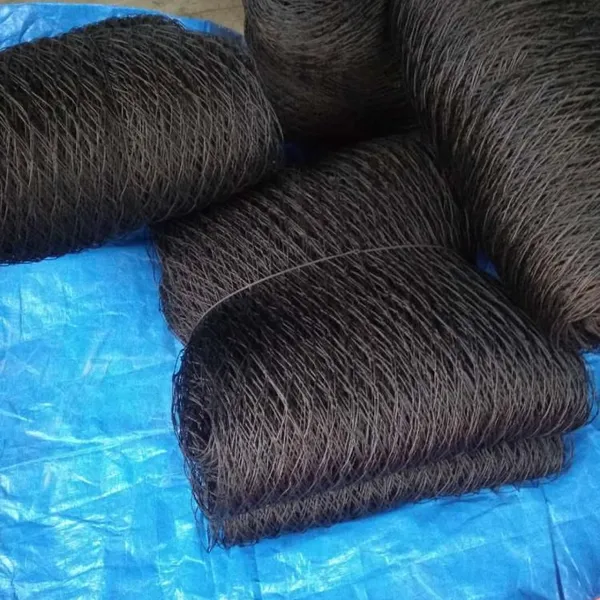 Read More
-
How the Black Oxide Layer Is Formed on Stainless Wire Rope
November 16, 2026Blackening a stainless rope is a surface chemistry problem wrapped in a mechanical one. The chemistry is a conversion of the alloy Read More
-
What Is Black Oxide Stainless Steel Wire Rope Mesh?
November 13, 2026A black oxide rope mesh is a stainless steel rope net whose wire has been chemically darkened before the mesh is assembled. The ro
Read More

Contact Us

Recommended Products
-
 Slope Protection System Rockfall Netting 2.0mm 3.0mm 4.0mm High Tensile Steel Wire Mesh Netting Rockfall BarriersUS$ 2 - 15MOQ: 1 Square Meter
-
Flexible Debris Flow Barrier Steel Rope Rockfall Barrier With Ring Diameter 350 mm China SupplierUS$ 5.9 - 40MOQ: 1 Square Meter
-
Custom Hexsteel Mesh for Refractory Linings Stainless Steel Wire Plain Weave Welded Cutting Welding Offered Made ChinaUS$ 9.20 - 45.00MOQ: 50 Square Meters
-
Double Twist Hexagonal Mesh Rockfall Netting Drapery System for for Rockfall Mitigation Slope Consolidation WorksUS$ 0.45MOQ: 100 Square Meters
-
China Factory Galvanized Steel Railway Side Slope Stabilization Net Woven Wire Mesh for Slope Protection Include Bending WeldingUS$ 15.00 - 20.00MOQ: 999 Square Meters


-
Galvanized Gabion Baskets for Retaining Wall Plain Weave Cutting Processing Service for Slope Stabilization-Free Sample OfferedUS$ 1.5 - 1.7MOQ: 1 Square Meter
-
Children's Playground Stainless Steel Rope Mesh Balcony Fence Inox Cable Net Build Guardrail Black Oxide Rope NettingUS$ 118.00MOQ: 100 Square Meters
-
Factory Direct Modern High Transparency Anti-Slip Stainless Steel Rope Mesh Stair Railing Woven Cable Netting Custom ProjectsUS$ 9.9 - 14.9MOQ: 1 Square Meter
-
Stainless Steel Rope Mesh for Backpack and Bag Anti Falling Dropring Mesh Inox Cable Net Anti-theft Black Oxide Rope NettingUS$ 118.00MOQ: 100 Square Meters
-
Heavy-Duty 4ftx5ft Drag Mat Factory With Chain Galvanized Steel Drag Mat for Tractor AttachmentUS$ 9.1 - 45MOQ: 1 Square Meter


-
High Altitude Anti Fall Woven Stainless Steel Wire Rope Net SS 304 316 316L Plain Weave Invisible Protective NetUS$ 9.9 - 14.9MOQ: 1 Square Meter
-
China Rope Mesh Manufacturer Customized SS316 Black Oxided Ferrule Type Rope MeshUS$ 5 - 20MOQ: 1 Square Meter
-
Baseball Field Dragging Lawn LevelingUS$ 59.00 - 66.00MOQ: 5 Pieces
-
316L Grade Stainless Steel Wire Mesh Sieves 200mm 300mm Screen Factory Price Sand Testing ScreenUS$ 4.7 - 15MOQ: 1 Piece
-
Outdoor Stainless Steel Cable Railing / Wire Rope Mesh / Wire Mesh Railings for BalconyUS$ 15.00 - 20.00MOQ: 100 Square Meters


-
Slope Protection System 65/3, High-tensile Steel Wire Mesh, Spike Plate, Rock Nail, Connection Clips T3 for Slope StabilityUS$ 1.80 - 3.00MOQ: 1 Square Meter
-
Pool Mesh Steeltex Paper-Backed Welded Wire Mesh Factory Price 12ga 16gaUS$ 40 - 70MOQ: 30 Rolls
-
G65 3 Rockfall Netting Rust Free Coated Slope Protection Net Galvanized High Tensile Wire Mesh Control Shallow LandslideUS$ 5.40 - 5.60MOQ: 1 Meter
-
Anti‑Drone Protection Steel Rope Net UAV Security Protection Fence Mesh Galvanized /Stainless Steel Customized ProductionUS$ 1.1 - 1.2MOQ: 100 Square Meters
-
Anti-Drone Netting, Galvanized High Tensile Steel Wire Rope Mesh, UVA Protection Net, CE Factory Customized ProductionUS$ 1.00 - 2.00MOQ: 999 Square Meters