Business License
Bridge Protection Mesh: Maintenance Access and Inspection
A bridge net inspection is easy to describe and hard to carry out, because the panel that needs looking at is usually the one that cannot be reached.
That is a design problem rather than a maintenance problem. A net detailed for access costs slightly more at the works and saves a closure every time it is checked, and a net detailed without it is inspected less often than the specification assumes.
This article covers what a bridge net inspection looks for, the three rhythms at which it happens, maintenance access mesh and how to reach a panel, what fails first, bridge net repair against replacement, access without a lane closure, records, and two bridges where access drove the panel size.
1. What a Bridge Net Inspection Is Looking For
A bridge net inspection looks for five things, and four of them are at the edges.
| Item | What to look for |
|---|---|
| Fixings | Rust bleed, loose nuts, coating damage at the clamp |
| Terminations | Broken wire at the ferrule, slipped swage, distorted thimble |
| Tension | Sag between fixings, a panel that moves when touched |
| Wire condition | Rubbing marks, section loss, coating blisters |
| Aperture | Distorted mesh, closed gaps from repair coating |
The middle of a panel is the least likely place to find a fault, and it is also the easiest place to look. An inspection that starts in the middle and stops there will report a sound bridge every time.
A bridge net inspection that is written down as five items takes about fifteen minutes per span at close quarters, which is short enough to be done properly. One written as a general condition report takes the same time and produces nothing that can be compared with last year.
Aperture is worth measuring rather than judging, because a panel that has been repaired in service can have its gaps closed by coating while the wire is sound. A closed aperture is a ventilation and drainage fault rather than a structural one, and it is invisible from a distance.
2. Three Rhythms of Bridge Net Inspection
Bridge net inspection happens on three rhythms, and they need different access.
The first is a walk-by from the deck, which needs no access at all and catches anything visible at the parapet. It is done monthly and it takes minutes.
The second is a close inspection at the panel edges, which needs a means of reaching the fascia and the under-deck edges. It is done annually and it needs a plan.
The third is a full inspection after an event, such as a storm, an impact or a repair. It is done when needed and it is the one that is most often skipped, because the access has to be arranged at short notice.
A scheme that budgets for the second and not the third will find itself inspecting a damaged panel from the deck and guessing.
The third rhythm is also the one that finds a failure caused by something other than age. A panel that has been hit by a thrown object or damaged by a vehicle strike looks sound from above and is held together by one wire at the bottom edge.
3. Maintenance Access Mesh and How To Reach a Panel
Maintenance access mesh is a specification decision, and it comes down to how a person will get to the panel for the next twenty years.
The first route is from below, using a mobile elevating platform on the road or a underbridge unit from the bank. It needs a lane closure or a possession, and it reaches everything.
The second is rope access from the deck, which needs anchor points above the work and a trained team. It needs no closure and it is slower per panel.
The third is designed-in access, which means a walkway, a gantry or a demountable panel that can be removed from the deck to give a view. It is the most expensive at construction and the least expensive over a life.
Hebei Longen Wire Mesh Products asks how the net will be inspected before fixing the panel size, because a panel that is too large to handle from the deck forces every future inspection onto a closure. Hebei Longen Wire Mesh Products Co Ltd will split a panel at a post where the access route suggests it, even where the drawing shows one piece.
4. What Fails First and Where To Look
In service, a bridge net fails in a predictable order, and knowing the order shortens an inspection.
The fixings go first. A clamp holds water, the coating is cut when it is installed, and the corrosion starts under the head where nothing is visible from outside.
The terminations go second. A swage that was set at the low end of its tolerance walks along the rope under cyclic load, and the sign is a ferrule that has moved from its painted mark.
The wire goes third, and it goes at the point where it bends over a fixing rather than in the span. Rubbing between a panel and a post is the fourth, and it shows as a polished band with the coating gone.
The mesh itself is the last to fail, and a panel found with broken wires in the middle has usually been overloaded rather than worn out.
5. Bridge Net Repair or Replace
Bridge net repair is worth doing in three cases and not in the rest, and the decision is usually made on access cost rather than on the panel.
A coating repair is worth doing where the wire is sound, and it has to be done with a thinned coating at a controlled thickness. A patch panel is worth doing where the damage is local and the surrounding panel is sound, and it is laced to the existing mesh rather than clamped over it.
A re-tension is worth doing where the panel has sagged but the wire and terminations are intact. It restores the geometry without touching the material.
Replacement is the answer where a termination has slipped, where a fixing has pulled out of the structure, or where the wire has lost more than about a tenth of its diameter. A repair at any of those points moves the failure along the panel rather than removing it.
6. Maintenance Access Mesh Without a Lane Closure
Access without a closure is worth designing for, because a closure costs more than the inspection and often more than the repair.
The detail that enables it is a panel that can be released from the deck side and swung or lifted clear. That means the bottom fixing is reachable from above, which means the panel is either short enough to reach over or split at a post.
The second detail is a hinge or a hook at the top edge, so that a released panel hangs rather than falls. A panel on a hinge can be inspected on its inner face without being removed.
A third detail is a small inspection hatch in a large panel, which gives a view of the under-deck condition without releasing anything. It is a compromise and it is a good one on a bridge where nothing else is possible.
A hatch also gives access for a bridge net repair on a small area, which is where most repairs happen. A hatch of three hundred by three hundred millimetres is enough to reach a fixing and to pass a patch panel through, and it costs a fraction of a full demountable bay.
7. Bridge Net Inspection Records
A bridge net inspection produces a record or it produces an opinion, and the difference shows at the next inspection.
The record that works is one page per span, with a sketch of the panel layout, the date, and a mark against each fixing rather than a description of the panel as a whole. Photographs are taken from the same position each time, with a fixed reference in the frame.
The figure worth recording is the sag at mid-span, measured from a string line between the fixings. A sag that grows between inspections is telling you the terminations are moving, which is a different finding from a sag that has been constant since installation.
Longen Wire Mesh Products supplies a record sheet with each bridge order, laid out in the same five items as the inspection. Longen does not require it to be returned, though a returned sheet is read and answered with a comment on whatever it shows.
8. Two Bridges Where Bridge Net Repair Access Drove the Panel Size
On a river bridge, the panels were made in one piece across each span and could be reached from a boat or a closure and nowhere else. After the first inspection needed a three-week booking, the panels were remade in three sections per span with bolted joints, and every later inspection was done from the deck in a morning.
On a rail overbridge, a hatch was added to each panel at the design stage at a small cost per panel. The hatch was used at every inspection for the life of the net, and the alternative would have been a possession each time.
Hebei Longen Wire Mesh Products now asks for the inspection method on the enquiry sheet, and Longen will propose a split panel where the answer is a closure. The cost of the extra joints is quoted against the closure it avoids, which is usually a short conversation.
9. Frequently Asked Questions
9.1 How often should a bridge net inspection be done?
Monthly from the deck, annually at close quarters, and after any storm or impact. The monthly walk catches the obvious faults and needs no access, while the annual close inspection is the one that finds fixing corrosion and termination slip. The post-event inspection is the one most often missed, because it needs access at short notice and nobody has booked it. A bridge in a coastal or salted environment should shorten the annual interval rather than the monthly one.
9.2 Can a bridge net be inspected from the deck alone?
The upper part of a parapet panel and the fixings at the top edge, and very little else. The under-deck panels, the bottom edges and the fascia returns cannot be seen from above, and those are where the faults are. A scheme that relies on deck inspection alone is inspecting the part of the net that is least likely to fail. A hatch in the panel or a split panel is a design answer to a maintenance problem and it costs little at the works.
9.3 What is maintenance access mesh?
A net detailed so that it can be reached, released or partly removed for inspection without scaffolding or a closure. In practice it means panels split at posts, hatches at a usable size, and top hinges so that a released panel hangs rather than falls. It is a set of details rather than a product, and it is decided at the drawing stage. Adding it later means remaking panels, which is why it is worth raising before the order rather than after.
9.4 When is a bridge net repair acceptable?
Where the wire is sound and the damage is to the coating, where the damage is local and the surrounding mesh is intact, or where the panel has sagged and the terminations have not moved. A patch laced to the existing mesh is acceptable in the second case. Repair is not acceptable where a ferrule has slipped or a fixing has pulled out, because the load path has changed and a local repair will not restore it, however neat it looks on the day.
9.5 How much sag is acceptable in a bridge net?
A few millimetres between fixings on a short panel and up to about twenty on a long one, provided the sag has been constant since installation. The absolute figure matters less than the change, because a net that sags on the first day and stays there is behaving as designed. A net that gains sag between inspections has a termination problem, and that is the finding to act on rather than the sag itself, so the measurement should be repeated at the same point.
Recently Posted
-
Black Oxide Stainless Steel Wire Rope Mesh for Zoo and Aviary Exhibits
November 16, 2026An exhibit is judged by what a visitor can see through it, and a net is the one element that stands between the visitor and everyt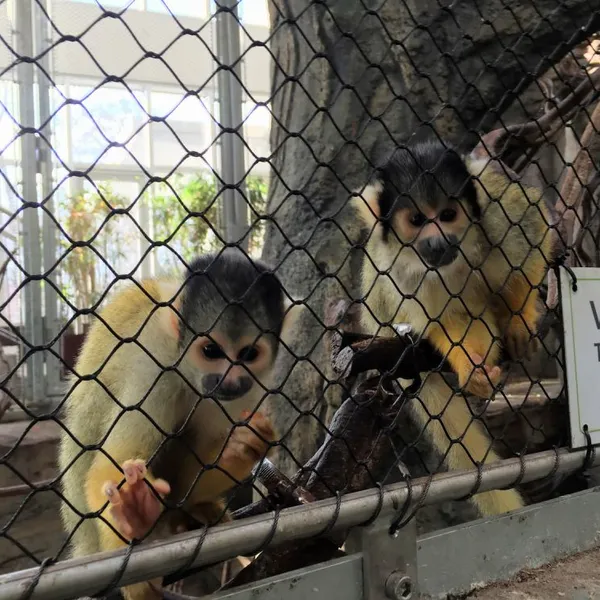 Read More
-
Black Oxide Stainless Steel Wire Rope Mesh vs Painted or Coated Mesh
November 16, 2026Three products are sold as a black rope net, and they differ in a way that a photograph cannot show. One is chemically darkened st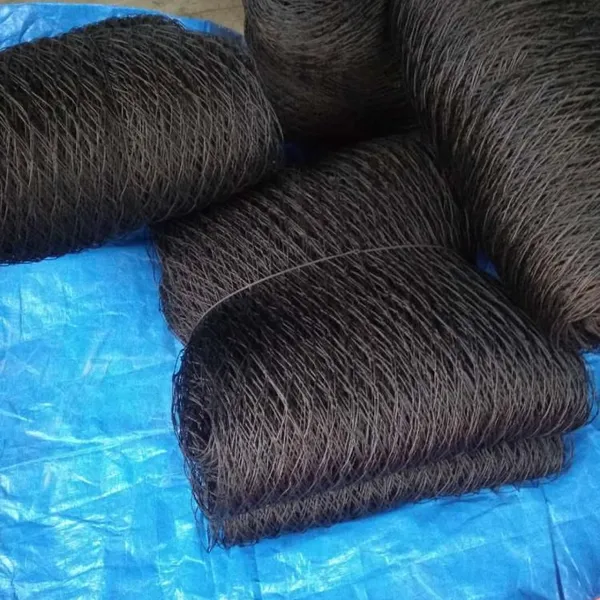 Read More
-
How the Black Oxide Layer Is Formed on Stainless Wire Rope
November 16, 2026Blackening a stainless rope is a surface chemistry problem wrapped in a mechanical one. The chemistry is a conversion of the alloy Read More
-
What Is Black Oxide Stainless Steel Wire Rope Mesh?
November 13, 2026A black oxide rope mesh is a stainless steel rope net whose wire has been chemically darkened before the mesh is assembled. The ro
Read More

Contact Us

Recommended Products
-
 Slope Protection System Rockfall Netting 2.0mm 3.0mm 4.0mm High Tensile Steel Wire Mesh Netting Rockfall BarriersUS$ 2 - 15MOQ: 1 Square Meter
-
Flexible Debris Flow Barrier Steel Rope Rockfall Barrier With Ring Diameter 350 mm China SupplierUS$ 5.9 - 40MOQ: 1 Square Meter
-
Custom Hexsteel Mesh for Refractory Linings Stainless Steel Wire Plain Weave Welded Cutting Welding Offered Made ChinaUS$ 9.20 - 45.00MOQ: 50 Square Meters
-
Double Twist Hexagonal Mesh Rockfall Netting Drapery System for for Rockfall Mitigation Slope Consolidation WorksUS$ 0.45MOQ: 100 Square Meters
-
China Factory Galvanized Steel Railway Side Slope Stabilization Net Woven Wire Mesh for Slope Protection Include Bending WeldingUS$ 15.00 - 20.00MOQ: 999 Square Meters


-
Galvanized Gabion Baskets for Retaining Wall Plain Weave Cutting Processing Service for Slope Stabilization-Free Sample OfferedUS$ 1.5 - 1.7MOQ: 1 Square Meter
-
Children's Playground Stainless Steel Rope Mesh Balcony Fence Inox Cable Net Build Guardrail Black Oxide Rope NettingUS$ 118.00MOQ: 100 Square Meters
-
Factory Direct Modern High Transparency Anti-Slip Stainless Steel Rope Mesh Stair Railing Woven Cable Netting Custom ProjectsUS$ 9.9 - 14.9MOQ: 1 Square Meter
-
Stainless Steel Rope Mesh for Backpack and Bag Anti Falling Dropring Mesh Inox Cable Net Anti-theft Black Oxide Rope NettingUS$ 118.00MOQ: 100 Square Meters
-
Heavy-Duty 4ftx5ft Drag Mat Factory With Chain Galvanized Steel Drag Mat for Tractor AttachmentUS$ 9.1 - 45MOQ: 1 Square Meter


-
High Altitude Anti Fall Woven Stainless Steel Wire Rope Net SS 304 316 316L Plain Weave Invisible Protective NetUS$ 9.9 - 14.9MOQ: 1 Square Meter
-
China Rope Mesh Manufacturer Customized SS316 Black Oxided Ferrule Type Rope MeshUS$ 5 - 20MOQ: 1 Square Meter
-
Baseball Field Dragging Lawn LevelingUS$ 59.00 - 66.00MOQ: 5 Pieces
-
316L Grade Stainless Steel Wire Mesh Sieves 200mm 300mm Screen Factory Price Sand Testing ScreenUS$ 4.7 - 15MOQ: 1 Piece
-
Outdoor Stainless Steel Cable Railing / Wire Rope Mesh / Wire Mesh Railings for BalconyUS$ 15.00 - 20.00MOQ: 100 Square Meters


-
Slope Protection System 65/3, High-tensile Steel Wire Mesh, Spike Plate, Rock Nail, Connection Clips T3 for Slope StabilityUS$ 1.80 - 3.00MOQ: 1 Square Meter
-
Pool Mesh Steeltex Paper-Backed Welded Wire Mesh Factory Price 12ga 16gaUS$ 40 - 70MOQ: 30 Rolls
-
G65 3 Rockfall Netting Rust Free Coated Slope Protection Net Galvanized High Tensile Wire Mesh Control Shallow LandslideUS$ 5.40 - 5.60MOQ: 1 Meter
-
Anti‑Drone Protection Steel Rope Net UAV Security Protection Fence Mesh Galvanized /Stainless Steel Customized ProductionUS$ 1.1 - 1.2MOQ: 100 Square Meters
-
Anti-Drone Netting, Galvanized High Tensile Steel Wire Rope Mesh, UVA Protection Net, CE Factory Customized ProductionUS$ 1.00 - 2.00MOQ: 999 Square Meters