Business License
How to Write a Stainless Steel Wire Rope Net Specification Sheet
A procurement team in Southeast Asia sent three suppliers a two line enquiry for 600 square metres of rope net at 60 mm. Three quotations came back spanning a factor of four, and none of them described the same product. One priced 1.5 mm rope in type 304, one priced 3 mm rope in 316, and the third had assumed a knotted panel with a galvanized frame.
The gap was not a pricing problem. It was a specification problem, and it cost the buyer three weeks of re-quotation plus a delayed shipment. A rope net specification sheet removes that ambiguity by fixing the six variables that drive both cost and performance.
This guide sets out what belongs on the sheet, what to leave to the supplier, how to measure for a rope net order quantity, and the errors that reappear in enquiries month after month.
1. What a Rope Net Specification Sheet Has to Fix
A workable rope net specification sheet answers six questions: which alloy, which rope, which aperture, which pattern, which panel sizes and which edge detail. Everything else, including packing and documentation, sits around those six and can be settled later.
The sheet should describe the finished product rather than the process. Writing "ferruled at every crossing" is useful, while writing "pressed on a 60 tonne tool" belongs to the factory and not to the buyer, because it narrows the field without improving the outcome.
A drawing helps more than a paragraph. A simple elevation with the aperture noted, the panel joints marked and the fixing points dimensioned removes most of the ambiguity that prose creates, and it gives both sides the same reference when a dispute arises.
Who signs the sheet matters as much as what it says. Where a designer, a contractor and an end client all have an opinion, the sheet should name the party who approves the final specification. Without that line the factory receives three sets of comments and the order stalls for a fortnight.
2. The Six Fields That Decide Price on a Rope Net Specification Sheet
Price moves with four of the six fields and holds steady with the other two. Rope diameter, aperture, alloy and pattern drive the material and labour content, while panel size and edge detail drive packing and handling.
Aperture is the field buyers underestimate. Halving the aperture from 120 mm to 60 mm roughly quadruples the number of crossings in a panel, and the pressing hours rise with them, so the cost per square metre climbs by 60 to 80 percent rather than doubling.
Rope diameter moves cost in the other direction. Going from 1.5 mm to 3.0 mm roughly triples the steel weight per square metre, yet the price per square metre typically rises by 40 to 55 percent because the labour content stays similar.
| Field | Effect on price | Effect on performance | Typical mistake |
|---|---|---|---|
| Alloy 304 to 316 | plus 15–25 percent | Coastal corrosion resistance | Specifying 316 indoors where 304 is enough |
| Rope 1.5 to 3.0 mm | plus 40–55 percent | Load capacity and cut resistance | Oversizing rope to look robust |
| Aperture 120 to 60 mm | plus 60–80 percent | Object retention, visual density | Quoting aperture between rope edges instead of centres |
| Pattern | plus 5–35 percent | Stiffness, curvature tolerance | Choosing knotted for a flat frame |
Reading the table left to right shows why a buyer who changes three fields at once loses control of the budget. Change one field at a time, re-price, and keep a written record of what moved.
Tooling sits behind those ranges and rarely appears on a quotation. An aperture outside the standard jig sizes of 40, 50, 60, 80 and 100 mm needs a new tool, which adds 10 to 15 days to the lead time and a one-off charge that a small order feels disproportionately.
3. Stainless Rope Mesh Buyer Checklist: Geometry and Fixings
The geometry part of a stainless rope mesh buyer checklist starts with the opening, measured in three places for width and height. Older buildings are rarely square, and a 20 mm taper across a 3 m opening becomes a visible wedge gap once a rigid panel is fitted.
Next come the fixing points. Note whether the substrate is concrete, steel, brick or timber, because the anchor type follows from it, and a panel quoted with stainless anchors for a timber frame will need a redesign on site.
Finally, record the access. A panel that fits through a service lift at 2 m by 2.5 m is a different shipment from one that has to be craned to a roof, and the packing method changes with it.
Write the tolerance into the sheet while the geometry is being recorded. A pressed panel is normally held to plus or minus 2 mm on aperture and plus or minus 5 mm on panel size, and a frame built to a tighter tolerance than that will fight the net on installation.
4. Stainless Rope Mesh Buyer Checklist: Rope, Grade and Ferrules
The material section of the stainless rope mesh buyer checklist carries the detail that determines service life. Specify the alloy, the rope construction such as 7x7, the rope diameter in millimetres, and the ferrule material, which should match the rope grade.
Surface finish deserves its own line. Mill finish, pickled or passivated all look similar in a photograph and behave differently within two years in coastal air, so the purchase order should state which one is being bought.
Ask for the mill certificate to travel with the delivery, and name it on the sheet. A supplier who knows the certificate is expected produces it as routine, while one who is never asked quietly omits it.
5. Rope Net Order Quantity: Measuring Every Opening
Order quantity starts as a measured area and ends as a panel schedule. Measure each opening separately, record width and height in millimetres, and number the openings so the factory and the site use the same reference.
Curved openings need a different routine. Measure the chord and the rise rather than the arc length, then let the factory develop the panel, because an arc measured on site with a tape usually runs 3 to 5 percent long and inflates the rope net order quantity.
Add the edge allowance to every panel. A panel that is to be framed needs 30 mm to 50 mm of extra rope beyond the finished opening on each side, and a tensioned panel needs 100 mm to 150 mm for the end fittings.
Longen checks the panel schedule against the elevation before quoting, because a mismatch between the two is the most common reason a rope net order quantity comes out 8 to 12 percent short of what the site actually needs.
6. Rope Net Order Quantity, Waste Allowance and Spares
Waste on a rope net order quantity is lower than on sheet goods but not zero. Allow 5 to 8 percent on panels cut to irregular shapes, and 3 percent on a simple run of identical rectangles where the factory can nest the cuts.
Spare material is a separate line and worth its cost. Two to three percent of the total area in spare panels gives the maintenance team something to fit when a single panel is damaged, without a second production run and a second freight charge.
Longen Wire Mesh Products quotes spares as a visible line on the order rather than burying them in the total, so a client can see what the buffer actually costs. On a 600 square metre order that line is usually small enough to accept without discussion.
7. Errors That Reappear in a Rope Net Specification Sheet
Mixing aperture conventions is the first and most expensive error. Some suppliers quote the distance between rope centres and others quote the clear opening, and the difference of one rope diameter becomes significant at 20 mm apertures.
Leaving the pattern open is the second. A quotation that does not say ferruled, knotted or woven cannot be compared with another that does, and the buyer usually discovers the difference when the crate is opened rather than before.
Omitting the fixing package is the third. Net, frame, anchors and tensioners are four separate cost lines, and a quotation that covers the net alone will look 20 to 30 percent cheaper than a complete one without being cheaper at all.
Unit confusion is the fourth and the quietest. A sheet in millimetres sent to a factory that quotes in inches, or the reverse, produces a product that is wrong by a factor of 25 and a refund argument that nobody wins. State the unit on every dimension rather than in a note at the top.
8. Comparing Quotes With One Stainless Rope Mesh Buyer Checklist
Comparison works when every quotation is scored against the same stainless rope mesh buyer checklist rather than read as a price. Put the six fields in a column, fill one row per supplier, and mark any field that was left vague.
A vague field is a risk rather than a saving. Where one supplier writes "stainless steel" and another writes "type 316, 7x7, 2.0 mm, pickled", the second quotation is the one that can be checked on delivery.
Commercial terms belong in the same table. Delivery point, packing standard and the currency of the quotation change the landed cost by 10 to 20 percent, and a comparison that stops at the unit price hides that difference. Longen quotes both a unit rate and a landed estimate so the two figures sit side by side.
Hebei Longen Wire Mesh Products Co Ltd returns a filled specification sheet with every quotation, including the fields the client left blank, so the assumptions are visible before the order rather than after.
9. Frequently Asked Questions
9.1 What must a rope net specification sheet state about aperture?
State the nominal aperture in millimetres and say explicitly whether it is measured between rope centres or as a clear opening. The two conventions differ by one rope diameter, which is minor at 100 mm and significant at 25 mm. A clear statement of the convention removes a whole class of disputes, and it lets two suppliers price the same geometry. Add the tolerance as well, since plus or minus 2 mm is realistic on a pressed panel and plus or minus 5 mm is not.
9.2 How detailed should a stainless rope mesh buyer checklist be for a small order?
Detail pays off even on 20 square metres, because the material is made to order and cannot be returned into stock. Six lines are enough: alloy, rope diameter and construction, aperture and convention, pattern, panel size with quantity, and edge or fixing detail. A buyer who fills those six lines gets comparable quotations, and a buyer who sends a one line enquiry gets four different products at four different prices. The sheet takes about ten minutes to complete and saves a week of re-quoting.
9.3 How much spare material should a rope net order quantity include?
Two to three percent of the total area is the usual allowance for maintenance spares, held as finished panels rather than as loose rope. On a 600 square metre project that is 12 to 18 square metres, which covers damage from a single incident without a new production run. Irregular shapes justify a higher waste allowance of 5 to 8 percent, while a run of identical rectangles can be nested and needs about 3 percent. Ask the supplier to show waste and spares as separate lines on the quotation.
9.4 Can a rope net specification sheet be written from a photograph?
It can start from a photograph, but it cannot finish there. A photograph shows the pattern and the apparent density, and it says nothing reliable about rope diameter, alloy or aperture, because scale is lost. Use the photograph to choose a look, then confirm the three technical fields with a sample. A 300 mm sample square at the proposed aperture and rope settles the appearance question faster than any number of images, and it costs the price of a courier label.
Recently Posted
-
Stainless Steel Wire Rope Net Mesh Opening and Wire Diameter Sizing
October 22, 2026An atrium net in a northern office building was specified at 80 mm aperture in 1.5 mm rope, chosen because the sample looked light Read More
-
Sourcing Drone Protection Netting: A Buyer Checklist for Custom Projects
October 22, 2026A logistics operator in the Middle East ordered drone protection netting for two warehouse roofs on the strength of a single photo Read More
-
Drone Protection Netting vs Radio Frequency Jamming: Physical and Electronic Options
October 21, 2026A chemical storage terminal reviewed its site protection after three drone flights were reported in a single month. The first prop Read More
-
Rope Mesh vs Welded Mesh vs Chain Link: Choosing a Safety Screen
October 21, 2026A school refurbishment in a windy coastal town replaced 400 square metres of chain link with welded mesh panels to improve the loo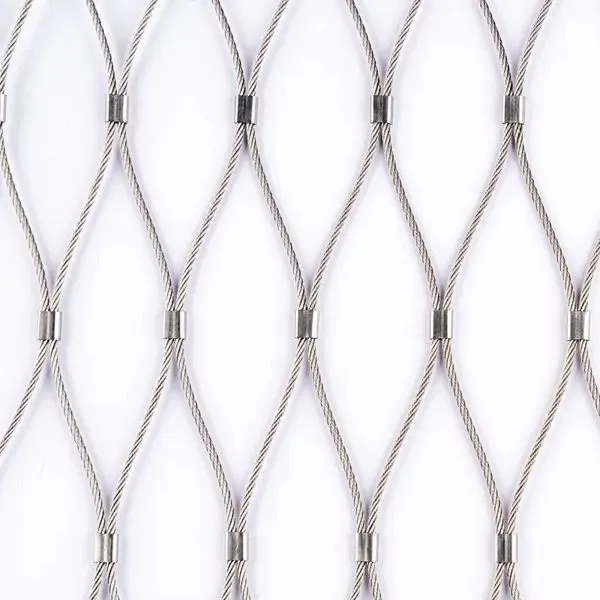 Read More

Contact Us

Recommended Products
-
 Slope Protection System Rockfall Netting 2.0mm 3.0mm 4.0mm High Tensile Steel Wire Mesh Netting Rockfall BarriersUS$ 2 - 15MOQ: 1 Square Meter
-
Flexible Debris Flow Barrier Steel Rope Rockfall Barrier With Ring Diameter 350 mm China SupplierUS$ 5.9 - 40MOQ: 1 Square Meter
-
Custom Hexsteel Mesh for Refractory Linings Stainless Steel Wire Plain Weave Welded Cutting Welding Offered Made ChinaUS$ 9.20 - 45.00MOQ: 50 Square Meters
-
Double Twist Hexagonal Mesh Rockfall Netting Drapery System for for Rockfall Mitigation Slope Consolidation WorksUS$ 0.45MOQ: 100 Square Meters
-
China Factory Galvanized Steel Railway Side Slope Stabilization Net Woven Wire Mesh for Slope Protection Include Bending WeldingUS$ 15.00 - 20.00MOQ: 999 Square Meters


-
Galvanized Gabion Baskets for Retaining Wall Plain Weave Cutting Processing Service for Slope Stabilization-Free Sample OfferedUS$ 1.5 - 1.7MOQ: 1 Square Meter
-
Children's Playground Stainless Steel Rope Mesh Balcony Fence Inox Cable Net Build Guardrail Black Oxide Rope NettingUS$ 118.00MOQ: 100 Square Meters
-
Factory Direct Modern High Transparency Anti-Slip Stainless Steel Rope Mesh Stair Railing Woven Cable Netting Custom ProjectsUS$ 9.9 - 14.9MOQ: 1 Square Meter
-
Stainless Steel Rope Mesh for Backpack and Bag Anti Falling Dropring Mesh Inox Cable Net Anti-theft Black Oxide Rope NettingUS$ 118.00MOQ: 100 Square Meters
-
Heavy-Duty 4ftx5ft Drag Mat Factory With Chain Galvanized Steel Drag Mat for Tractor AttachmentUS$ 9.1 - 45MOQ: 1 Square Meter


-
High Altitude Anti Fall Woven Stainless Steel Wire Rope Net SS 304 316 316L Plain Weave Invisible Protective NetUS$ 9.9 - 14.9MOQ: 1 Square Meter
-
China Rope Mesh Manufacturer Customized SS316 Black Oxided Ferrule Type Rope MeshUS$ 5 - 20MOQ: 1 Square Meter
-
Baseball Field Dragging Lawn LevelingUS$ 59.00 - 66.00MOQ: 5 Pieces
-
316L Grade Stainless Steel Wire Mesh Sieves 200mm 300mm Screen Factory Price Sand Testing ScreenUS$ 4.7 - 15MOQ: 1 Piece
-
Outdoor Stainless Steel Cable Railing / Wire Rope Mesh / Wire Mesh Railings for BalconyUS$ 15.00 - 20.00MOQ: 100 Square Meters


-
Slope Protection System 65/3, High-tensile Steel Wire Mesh, Spike Plate, Rock Nail, Connection Clips T3 for Slope StabilityUS$ 1.80 - 3.00MOQ: 1 Square Meter
-
Pool Mesh Steeltex Paper-Backed Welded Wire Mesh Factory Price 12ga 16gaUS$ 40 - 70MOQ: 30 Rolls
-
G65 3 Rockfall Netting Rust Free Coated Slope Protection Net Galvanized High Tensile Wire Mesh Control Shallow LandslideUS$ 5.40 - 5.60MOQ: 1 Meter
-
Anti‑Drone Protection Steel Rope Net UAV Security Protection Fence Mesh Galvanized /Stainless Steel Customized ProductionUS$ 1.1 - 1.2MOQ: 100 Square Meters
-
Anti-Drone Netting High Tensile Strength Stainless Steel Woven Wire Rope Mesh Active Rockfall Barrier Systemn Factory SupplyUS$ 15.00 - 20.00MOQ: 999 Square Meters