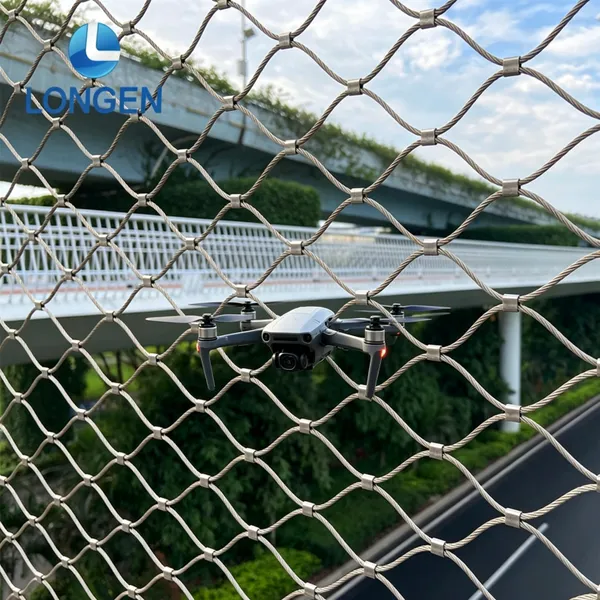
Business License
Drone Protection Netting vs Radio Frequency Jamming: Physical and Electronic Options
A chemical storage terminal reviewed its site protection after three drone flights were reported in a single month. The first proposal was an electronic one: a detection array with a radio frequency disruption unit at the gatehouse. The second was a net over the tank farm. The site chose the electronics, then discovered that two of the three flights had been autonomous, flying a pre-programmed route with no radio link to interrupt.
The drone netting versus signal jammer question is not a matter of which technology is better. It is a matter of which failure modes each option leaves open, and how much of the site each one actually covers on a drawing that includes the approach corridors.
This comparison sets out what a physical drone barrier method does, what electronic disruption does, where each one fails, and how a site that needs both would combine them without paying twice for the same coverage.
1. Drone Netting Versus Signal Jammer: Two Different Jobs
A drone netting versus signal jammer decision starts by separating two functions that are often sold together. Detection tells a site that an aircraft is present. Disruption attempts to interrupt the link between that aircraft and its operator. Neither of them places anything in the flight path.
A jammer therefore depends on a link existing. Aircraft flown on a pre-programmed waypoint route, or on a purely inertial flight, continue on their path while the electronics report a clean spectrum. That is the gap the terminal in the opening example fell into.
A net works in the opposite direction. It has no electronics, no antenna and no dependence on the aircraft's control method, and it catches whatever arrives within the geometry it encloses. What it cannot do is tell anyone that something is coming.
Reading the two as competitors leads sites to buy one and then discover the other gap six months later. Reading them as layers leads to a design where detection covers awareness and the net covers the approach corridor that a pilot would actually use.
2. Physical Drone Barrier Method: What It Stops and What It Does Not
A physical drone barrier method stops an aircraft by contact. The rotors meet the mesh, the strands wrap the propeller assembly, and the machine loses thrust and falls into the net rather than onto the asset beneath it.
What it does not do is scale to every site. A net covering 2,000 square metres of roof is a practical structure, while a net covering 40 hectares of open ground is not, and a supplier who quotes the second without discussion is not designing anything.
It also does not stop a determined operator who knows the geometry. A net leaves a low edge for recovery, and that edge is a route in for anyone who has watched the site for a week. Good designs put the recovery point on the building side rather than the road side for that reason.
The barrier is easier to understand as geometry control. It removes the approach that an opportunist would take, which in most incident reports is a low pass over a boundary wall rather than a coordinated approach from four directions.
3. A Counter UAV Netting Comparison Against Electronic Options
A counter uav netting comparison is worth making when both options are scored against the same questions. The table below sets the physical and electronic approaches against the questions a facility manager asks during a tender, without ranking them, because the right answer depends on the site.
| Question | Physical net | Electronic disruption |
|---|---|---|
| Works on an autonomous aircraft | Yes | Often no |
| Works with no power supply | Yes | No |
| Needs an authorised operator | No | Usually yes |
| Provides an alert record | No | Yes |
| Coverage limited by geometry | Yes | Partly |
| Affected by national radio rules | No | Yes |
| Annual running cost | Inspection visits | Licence, staffing, spares |
Two rows in that table decide most projects. The first row decides sites that have already seen autonomous flights, and the last row decides sites that cannot fund a permanent operator roster for the next decade.
4. Drone Netting Versus Signal Jammer: Coverage and Blind Spots
Coverage is where a drone netting versus signal jammer comparison usually goes wrong, because the two are drawn on different plans. A jammer is drawn as a radius from an antenna, while a net is drawn as a surface, and the radius rarely matches the surface.
A single disruption unit covers a sector rather than a sphere. Terrain, buildings and the tank farm itself create shadow areas where the signal is weak, and those shadows are exactly where a low flying aircraft can pass.
Net coverage has geometric blind spots of its own. An installation that covers the roof but leaves the gap between two buildings open protects the roof and nothing else, which is why the site survey should trace approach corridors rather than outline the asset.
Both options also share one blind spot: the insider. Neither a net nor a jammer prevents someone launching from inside the perimeter, and that case belongs to procedural controls rather than to hardware.
5. Physical Drone Barrier Method on Roofs and Plant Areas
Roofs are where the physical drone barrier method fits most naturally. The area is defined, the structure is already there, and the net can span between parapets or between purpose built posts at 8 m to 10 m centres.
Plant areas inside a site are the second good fit. A net over a diesel store, a switch room or a generator yard covers the assets that matter without trying to enclose the whole property, and it costs a fraction of a site wide solution.
Open storage yards are workable up to a point. A cable truss across a 40 m span is straightforward, while a 200 m span needs intermediate supports that change the visual character of the site and often trigger a planning discussion.
Where the site has listed buildings or a public frontage, the net can be set behind the parapet so it is invisible from the street. That detail costs little at design stage and a great deal if it is added after the posts are up.
6. A Counter UAV Netting Comparison of Running Costs
Running cost separates the two options more clearly than capital cost does. A net needs two inspections a year and a wash down where the atmosphere demands it, and it has no consumables beyond the occasional replacement panel.
An electronic system carries licensing, training, software updates, detector calibration and spares. Those lines are modest individually and substantial over a decade, and they continue whether or not an aircraft ever appears.
A counter uav netting comparison over ten years therefore tends to favour the net on perimeter duty and the electronics on wide area awareness. Sites that price the first year alone usually reach the opposite conclusion, because the net has a larger capital figure and the electronics defer their costs.
Longen quotes a net package with a ten year inspection schedule attached, so the comparison can be made on the same basis. Longen Wire Mesh Products also states which panels are expected to need replacement first, usually the lower ones exposed to spray and debris.
7. Radio Rules, Site Neighbours and Permissions
Radio frequency transmission and interference are regulated at national level, and in most jurisdictions equipment that disrupts a radio link requires specific authorisation. A site should confirm what is permitted with its national telecommunications authority before ordering any disruption equipment.
The rules vary widely, and they change. A system purchased on the basis of one year's understanding may sit unused two years later, which is a capital risk that a net does not carry.
Neighbours matter as well. A disruption unit operating near a port, an airport or a residential area raises questions that a passive net never raises, because a net emits nothing and interferes with nothing.
Insurance is the quieter part of the same question. Underwriters increasingly ask what physical measures protect a roof mounted asset, and a net drawing is straightforward to describe in a risk submission. An electronic system is harder to evidence, because its performance depends on a trained operator being present at the moment of an incursion.
A physical barrier is therefore the simpler approval path in most countries. It is a structure, and structures are reviewed by building authorities rather than by spectrum regulators, which shortens the programme considerably on sites with a fixed opening date.
8. Combining a Jammer With a Physical Drone Barrier Method
The layered arrangement that works on most industrial sites puts detection on the perimeter, the net over the asset, and the disruption decision with a trained operator who has authority to act on the alert.
Design the layers so each covers the other's gap. Detection gives the net time to matter, because an alert two minutes before arrival lets a site close a gate or move people, while the net provides the physical stop when the alert comes too late.
Keep the interfaces simple. A net that needs no power should not be wired into the same panel as the detection system, or a power fault takes both offline at once. Physical separation of the two systems is worth more than any integration feature.
Hebei Longen Wire Mesh Products Co Ltd supplies the net and structure package on sites that already run detection, and the two are delivered as separate scopes. Longen keeps the net independent of the electronics on purpose, so a site can maintain one without touching the other.
9. Frequently Asked Questions
9.1 Is drone netting versus signal jammer a legal question as well as a technical one?
It is, and the legal side is often decisive. A net is a structure and falls under building approval, while equipment that transmits or disrupts radio signals falls under national telecommunications rules and usually requires specific authorisation. Those rules differ between countries and change over time. A site should confirm its position before committing capital, because equipment bought on an assumption can end up unused, while a passive barrier carries no spectrum risk at all, and that difference often decides the programme.
9.2 How large an area can a physical drone barrier method protect?
Between 500 and 5,000 square metres is the practical band for a single structure, with cost per square metre rising once spans pass 30 m. Smaller areas are usually covered by posts, larger ones by cable trusses between existing structures. Above about 5,000 square metres the structure becomes a building project rather than a piece of equipment, with foundations and approvals to match, and the design should be reviewed by a structural engineer at concept stage rather than after tender, when the layout is already fixed.
9.3 What should a counter uav netting comparison include besides price?
It should include the aircraft types each option handles, the coverage geometry, the approval route, the running cost over ten years and the recovery plan after an interception. Those five lines expose the differences that a price column hides, and they are the lines that later become disputes. A quotation that cannot state how a captured aircraft is removed from the net has not thought through the operating cost, and that gap tends to surface in the first month after commissioning, usually as a maintenance complaint.
9.4 Can a net and a jammer share the same support structure?
They can, and usually should not. Sharing posts saves 10 to 15 percent of the steel, while it also puts antennas inside a steel cage that shadows their coverage and creates a maintenance conflict every time a panel is replaced. The better arrangement keeps the net on its own posts and mounts the electronics on the building wall or a short mast, so each can be serviced without closing the other down for a day, which on an operating site is the difference between a routine job and a shutdown.
Recently Posted
-
Rope Mesh vs Welded Mesh vs Chain Link: Choosing a Safety Screen
October 21, 2026A school refurbishment in a windy coastal town replaced 400 square metres of chain link with welded mesh panels to improve the loo Read More
-
SS 304 vs 316 vs 316L in Stainless Steel Wire Rope Net: A Corrosion Comparison
October 21, 2026A resort on a Mediterranean island replaced its balcony infill with type 304 rope net to hold the budget, and the specification lo Read More
-
What Is Drone Protection Netting? How a Physical Airspace Barrier Works
October 20, 2026A data hall operator in Southeast Asia installed a camera and sensor package across two rooftops after a series of unauthorised dr Read More
-
Stainless Steel Rope Mesh Patterns Compared: Ferruled, Knotted and Woven Panels
October 20, 2026An aviary project in a northern zoo ordered three identical panels from three suppliers. One came ferruled, one knotted and one wo Read More

Contact Us

Recommended Products
-
 Slope Protection System Rockfall Netting 2.0mm 3.0mm 4.0mm High Tensile Steel Wire Mesh Netting Rockfall BarriersUS$ 2 - 15MOQ: 1 Square Meter
-
Flexible Debris Flow Barrier Steel Rope Rockfall Barrier With Ring Diameter 350 mm China SupplierUS$ 5.9 - 40MOQ: 1 Square Meter
-
Custom Hexsteel Mesh for Refractory Linings Stainless Steel Wire Plain Weave Welded Cutting Welding Offered Made ChinaUS$ 9.20 - 45.00MOQ: 50 Square Meters
-
Double Twist Hexagonal Mesh Rockfall Netting Drapery System for for Rockfall Mitigation Slope Consolidation WorksUS$ 0.45MOQ: 100 Square Meters
-
China Factory Galvanized Steel Railway Side Slope Stabilization Net Woven Wire Mesh for Slope Protection Include Bending WeldingUS$ 15.00 - 20.00MOQ: 999 Square Meters


-
Galvanized Gabion Baskets for Retaining Wall Plain Weave Cutting Processing Service for Slope Stabilization-Free Sample OfferedUS$ 1.5 - 1.7MOQ: 1 Square Meter
-
Children's Playground Stainless Steel Rope Mesh Balcony Fence Inox Cable Net Build Guardrail Black Oxide Rope NettingUS$ 118.00MOQ: 100 Square Meters
-
Factory Direct Modern High Transparency Anti-Slip Stainless Steel Rope Mesh Stair Railing Woven Cable Netting Custom ProjectsUS$ 9.9 - 14.9MOQ: 1 Square Meter
-
Stainless Steel Rope Mesh for Backpack and Bag Anti Falling Dropring Mesh Inox Cable Net Anti-theft Black Oxide Rope NettingUS$ 118.00MOQ: 100 Square Meters
-
Heavy-Duty 4ftx5ft Drag Mat Factory With Chain Galvanized Steel Drag Mat for Tractor AttachmentUS$ 9.1 - 45MOQ: 1 Square Meter


-
High Altitude Anti Fall Woven Stainless Steel Wire Rope Net SS 304 316 316L Plain Weave Invisible Protective NetUS$ 9.9 - 14.9MOQ: 1 Square Meter
-
China Rope Mesh Manufacturer Customized SS316 Black Oxided Ferrule Type Rope MeshUS$ 5 - 20MOQ: 1 Square Meter
-
Baseball Field Dragging Lawn LevelingUS$ 59.00 - 66.00MOQ: 5 Pieces
-
316L Grade Stainless Steel Wire Mesh Sieves 200mm 300mm Screen Factory Price Sand Testing ScreenUS$ 4.7 - 15MOQ: 1 Piece
-
Outdoor Stainless Steel Cable Railing / Wire Rope Mesh / Wire Mesh Railings for BalconyUS$ 15.00 - 20.00MOQ: 100 Square Meters


-
Slope Protection System 65/3, High-tensile Steel Wire Mesh, Spike Plate, Rock Nail, Connection Clips T3 for Slope StabilityUS$ 1.80 - 3.00MOQ: 1 Square Meter
-
Pool Mesh Steeltex Paper-Backed Welded Wire Mesh Factory Price 12ga 16gaUS$ 40 - 70MOQ: 30 Rolls
-
G65 3 Rockfall Netting Rust Free Coated Slope Protection Net Galvanized High Tensile Wire Mesh Control Shallow LandslideUS$ 5.40 - 5.60MOQ: 1 Meter
-
Anti‑Drone Protection Steel Rope Net UAV Security Protection Fence Mesh Galvanized /Stainless Steel Customized ProductionUS$ 1.1 - 1.2MOQ: 100 Square Meters
-
Anti-Drone Netting High Tensile Strength Stainless Steel Woven Wire Rope Mesh Active Rockfall Barrier Systemn Factory SupplyUS$ 15.00 - 20.00MOQ: 999 Square Meters