Business License
Rope Mesh vs Welded Mesh vs Chain Link: Choosing a Safety Screen
A school refurbishment in a windy coastal town replaced 400 square metres of chain link with welded mesh panels to improve the look of the courtyard. The new panels were stronger and cheaper per square metre than the specification the architect had in mind. They also turned the courtyard into a wind tunnel, because a welded grid at 88 percent openness still catches enough air to funnel it through the entrance.
Three products do the same nominal job and behave nothing alike. Chain link is cheap, flexible and visually open. Welded mesh is rigid, tidy and easy to fix. Rope mesh is the most transparent and the most forgiving of geometry, and it costs the most per square metre.
This comparison puts the three side by side on load path, sight line, cost and maintenance, and sets out the site conditions that push a project from one to another. Anyone comparing rope mesh versus welded mesh needs those conditions before the price is meaningful.
1. Rope Mesh Versus Welded Mesh: Two Ways to Carry a Load
The rope mesh versus welded mesh difference starts at the node. A welded panel carries load through rigid joints, so a point load spreads across the whole sheet and the sheet stays flat until it buckles. A rope net carries load along the strands, so the surface deflects and then recovers.
That behaviour changes the fixing design. A welded panel needs a frame at 1.5 m to 2.0 m centres to keep the sheet flat, while a rope net can span 3 m between anchors because the load travels to the perimeter rope rather than through the middle of the sheet.
Impact tells the same story in reverse. A welded joint that takes a hard knock develops a crack that propagates along the weld line, while a rope net absorbs the same impact by local deflection and returns to shape.
Deflection is where the difference shows in numbers. A 3 m by 3 m welded panel at 50 mm aperture moves 4 to 6 mm at mid span under a 0.6 kN per square metre wind load, while a rope net of the same size at 60 mm aperture moves 25 to 40 mm. The rope net feels softer under hand pressure and still delivers the load to the same anchors with less stress at the frame.
2. Chain Link Fence Alternative: What It Replaces and What It Does Not
As a chain link fence alternative, rope mesh wins on appearance and loses on price. Chain link at 50 mm mesh in 2.5 mm galvanized wire costs a fraction of a stainless rope panel, and it installs with tension bands and a line post every 3 m.
Chain link also tolerates abuse that would ruin a rope net. A ball kicked into a chain link panel deforms the wire and springs back, while the same impact on a 2 mm rope panel at 60 mm aperture can distort two or three apertures permanently.
Where a chain link fence alternative is being considered for a public space, the deciding factor is usually visual. A rope net reads as a design element, a chain link fence reads as a boundary, and that difference justifies the premium on projects where the boundary is on show.
3. Transparent Safety Screen Mesh and the Sight Line Test
Transparency is a measurable property, not an impression. The open area of a chain link panel at 50 mm mesh with 2.5 mm wire sits near 82 percent, a welded panel at 50 mm with 3 mm wire near 88 percent, and a rope net at 60 mm with 2 mm rope near 94 percent.
Those percentages look close, yet the eye reads them very differently. Wire ends, weld burrs and galvanized spangle catch light and make a chain link panel visible from 50 m, while a rope net at 94 percent openness disappears against a dark interior beyond about 20 m.
A transparent safety screen mesh is therefore specified by the view behind it. Where the screen sits in front of a glazed facade or a garden, the highest openness matters. Where it sits in front of a plant room, a cheaper mesh with lower openness does the job without argument.
Colour changes the arithmetic again. A dark rope net against a dark interior reads as almost invisible at 94 percent openness, while the same panel against a bright sky stays visible at 100 m. Anyone assessing a transparent safety screen mesh should photograph it in both conditions before signing the order.
4. Rope Mesh Versus Welded Mesh on Cost per Square Metre
Material cost is the easiest comparison and the least decisive. The table below gives indicative ranges for architectural grades, and installation is excluded because it varies more than the material does.
| System | Material cost per m² | Open area | Typical panel size | Service life, coastal |
|---|---|---|---|---|
| Chain link, galvanized | US$6–12 | 80–84 percent | Roll, 3 m high | 8–12 years |
| Welded mesh, galvanized | US$10–25 | 85–90 percent | 2.0 x 3.0 m | 10–15 years |
| Welded mesh, stainless | US$30–55 | 85–90 percent | 2.0 x 3.0 m | 18–25 years |
| Rope mesh, type 304 | US$25–45 | 92–96 percent | 3.0 x 3.0 m | 15–20 years |
| Rope mesh, type 316 | US$35–65 | 92–96 percent | 3.0 x 3.0 m | 18–25 years |
Read across the last column before choosing on the second. Over 20 years a galvanized chain link fence is usually replaced twice, and the second replacement arrives with access costs that dwarf the material saving.
Labour narrows the gap on small jobs and widens it on tall ones. A rope net needs two people and no plant at 3 m height, while a welded panel at 6 m needs a platform either way, so fixing time per square metre differs by 15 to 25 percent rather than by a factor.
5. A Chain Link Fence Alternative for Schools and Parks
School boundaries are the hardest case for any mesh. They take ball impact, climbing attempts and vandalism, and they have to look acceptable to parents walking past every morning.
A 3.0 mm welded panel at 50 mm aperture takes that abuse better than either alternative, and it can be supplied with a powder coat that matches the building. Where the boundary faces a street, a rope net at 40 mm aperture in 2.5 mm rope lifts the appearance considerably and resists climbing because there is no toe hold.
Park fencing usually stops at 2.4 m height and takes a lighter duty. Longen suggests a 60 mm aperture rope net in type 304 for inland parks, because the panels can be lifted out by two people when a maintenance vehicle needs access.
Where a chain link fence alternative is being weighed for a school, check the insurance requirement before the budget. Some policies ask for a boundary that resists climbing to 2.4 m, and a rope net at 40 mm aperture meets that test with a lighter visual footprint than a weld mesh panel.
6. Transparent Safety Screen Mesh on Balconies and Atriums
Balcony infill is the application where a transparent safety screen mesh earns its cost most clearly. Building owners want an uninterrupted view, safety officers want a barrier that resists a 100 mm sphere, and neither wants a visible grid across the elevation.
A 40 mm aperture at 2 mm rope satisfies all three conditions and adds roughly 3 kg per square metre, which most balcony slabs accept without a structural review. A welded panel at the same duty adds 8 to 12 kg per square metre and needs a heavier frame.
Atriums are the other common case. A rope net across a six storey void can be installed as a single 8 m high panel with tensioners at the slab edges, while a welded alternative needs horizontal rails every 2 m and a scaffold to fit them.
Where an atrium net doubles as a bird barrier, the aperture drops to 30 mm and the rope to 1.5 mm. That combination weighs about 2.2 kg per square metre and still reads as a haze rather than a grid from the floor ten metres below.
7. Corrosion and Maintenance Across the Three Systems
Galvanized chain link carries a zinc coating of 60 to 120 grams per square metre, and that coating decides the life. In coastal air the zinc is consumed within 8 to 12 years, and the wire underneath rusts quickly once the coating is gone.
Hot dip galvanizing after welding adds 10 to 15 years to a welded panel in coastal air, and it roughly doubles the material cost. That trade is usually worth taking on a public boundary where access for replacement is expensive. Longen quotes both finishes on the same drawing so the difference is visible before the order.
Welded stainless panels avoid the coating question but introduce weld decay, because the joints are resistance welded and the heat affected zone can sensitise. A stainless welded panel that shows rust at the welds after three years in a pool hall is usually showing that problem rather than a grade error.
Rope mesh has neither coating nor weld on the surface. Its maintenance is a wash down twice a year with fresh water, plus a passivation step if site dust has contaminated the surface during installation.
8. Specifying Rope Mesh Versus Welded Mesh on a Live Project
The practical test is a mock up. Fix a 1 m square of each candidate at the real location, look at it from the viewing distance the project cares about, and photograph both at the same time of day.
That exercise settles more arguments than a cost comparison, because most of the disagreement between a client and a designer is about appearance rather than performance. A mock up also exposes fixing problems before 400 square metres are ordered.
Hebei Longen Wire Mesh Products Co Ltd supplies 300 mm sample squares of rope mesh at the specified aperture and grade for this stage. Longen Wire Mesh Products also quotes the same opening in welded mesh when the budget points that way, so the client compares like with like.
9. Frequently Asked Questions
9.1 Is rope mesh versus welded mesh a fair cost comparison?
That comparison is honest when it covers a full service life and the fixing package, because a material price on its own flatters welded mesh. A rope net at US$35 per square metre over 20 years costs less per year than a galvanized welded panel replaced twice, once access and disposal are counted. The gap narrows on short leases and small areas where the access cost is trivial. Compare cost per year in service across the whole life, not per square metre at the gate where the invoice is issued.
9.2 When is a chain link fence alternative the wrong choice?
It is the wrong choice wherever the boundary is on show or the view matters. Chain link at 82 percent openness still reads as a visible grid, and the galvanized finish dulls within three years in most climates. It also fails visually on listed buildings and in landscape settings where the design intent is a light touch. Where the fence sits behind a hedge or screens a service yard, chain link remains the economical answer and the saving is real on a short lease as well.
9.3 How do I test a transparent safety screen mesh before ordering?
Look through it at a dark object from the distance the occupants will use, and take a photograph at the same time of day as the worst case. A photograph flatters a mesh that looks obvious to the eye, so check both. A 1 m square sample fixed at the real opening also shows how the frame and fixings read, which no catalogue image conveys. Most suppliers will ship a sample square of each candidate for the cost of the freight alone.
9.4 Which of the three resists cutting for the longest time?
Welded stainless mesh resists cutting longest, because a bolt cutter has to sever a 3 mm wire and the welded grid offers no slack to work with. Chain link cuts quickly once one wire is severed, since the whole panel unravels from that point. Rope mesh sits between the two, and a 3 mm rope at 40 mm aperture takes roughly twice as long to open as a 2 mm rope at 60 mm. None of the three is a security barrier under sustained attack.
Recently Posted
-
Drone Protection Netting vs Radio Frequency Jamming: Physical and Electronic Options
October 21, 2026A chemical storage terminal reviewed its site protection after three drone flights were reported in a single month. The first prop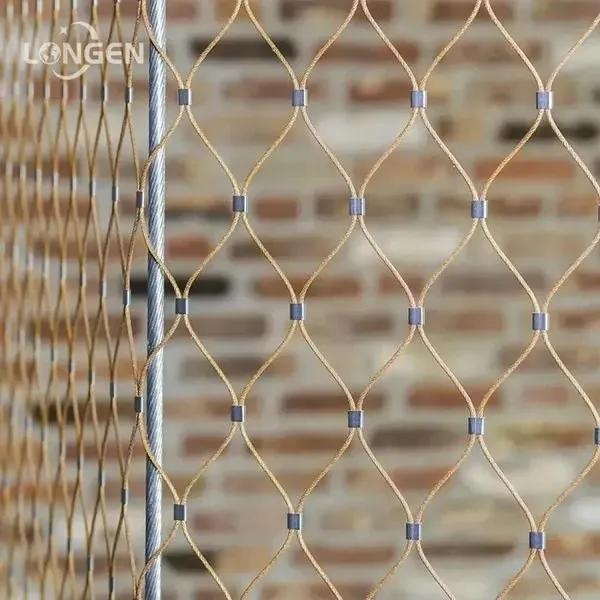 Read More
-
SS 304 vs 316 vs 316L in Stainless Steel Wire Rope Net: A Corrosion Comparison
October 21, 2026A resort on a Mediterranean island replaced its balcony infill with type 304 rope net to hold the budget, and the specification lo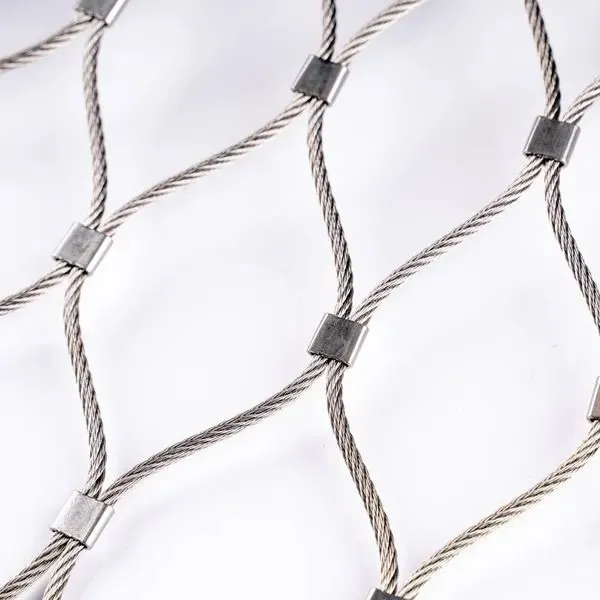 Read More
-
What Is Drone Protection Netting? How a Physical Airspace Barrier Works
October 20, 2026A data hall operator in Southeast Asia installed a camera and sensor package across two rooftops after a series of unauthorised dr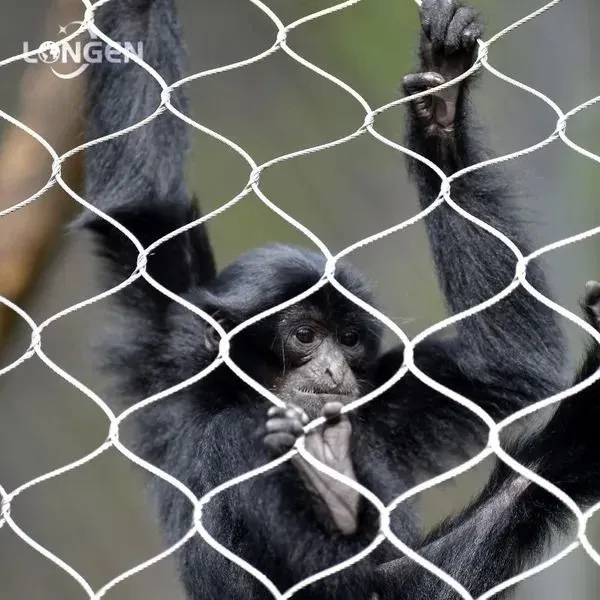 Read More
-
Stainless Steel Rope Mesh Patterns Compared: Ferruled, Knotted and Woven Panels
October 20, 2026An aviary project in a northern zoo ordered three identical panels from three suppliers. One came ferruled, one knotted and one wo Read More

Contact Us

Recommended Products
-
 Slope Protection System Rockfall Netting 2.0mm 3.0mm 4.0mm High Tensile Steel Wire Mesh Netting Rockfall BarriersUS$ 2 - 15MOQ: 1 Square Meter
-
Flexible Debris Flow Barrier Steel Rope Rockfall Barrier With Ring Diameter 350 mm China SupplierUS$ 5.9 - 40MOQ: 1 Square Meter
-
Custom Hexsteel Mesh for Refractory Linings Stainless Steel Wire Plain Weave Welded Cutting Welding Offered Made ChinaUS$ 9.20 - 45.00MOQ: 50 Square Meters
-
Double Twist Hexagonal Mesh Rockfall Netting Drapery System for for Rockfall Mitigation Slope Consolidation WorksUS$ 0.45MOQ: 100 Square Meters
-
China Factory Galvanized Steel Railway Side Slope Stabilization Net Woven Wire Mesh for Slope Protection Include Bending WeldingUS$ 15.00 - 20.00MOQ: 999 Square Meters


-
Galvanized Gabion Baskets for Retaining Wall Plain Weave Cutting Processing Service for Slope Stabilization-Free Sample OfferedUS$ 1.5 - 1.7MOQ: 1 Square Meter
-
Children's Playground Stainless Steel Rope Mesh Balcony Fence Inox Cable Net Build Guardrail Black Oxide Rope NettingUS$ 118.00MOQ: 100 Square Meters
-
Factory Direct Modern High Transparency Anti-Slip Stainless Steel Rope Mesh Stair Railing Woven Cable Netting Custom ProjectsUS$ 9.9 - 14.9MOQ: 1 Square Meter
-
Stainless Steel Rope Mesh for Backpack and Bag Anti Falling Dropring Mesh Inox Cable Net Anti-theft Black Oxide Rope NettingUS$ 118.00MOQ: 100 Square Meters
-
Heavy-Duty 4ftx5ft Drag Mat Factory With Chain Galvanized Steel Drag Mat for Tractor AttachmentUS$ 9.1 - 45MOQ: 1 Square Meter


-
High Altitude Anti Fall Woven Stainless Steel Wire Rope Net SS 304 316 316L Plain Weave Invisible Protective NetUS$ 9.9 - 14.9MOQ: 1 Square Meter
-
China Rope Mesh Manufacturer Customized SS316 Black Oxided Ferrule Type Rope MeshUS$ 5 - 20MOQ: 1 Square Meter
-
Baseball Field Dragging Lawn LevelingUS$ 59.00 - 66.00MOQ: 5 Pieces
-
316L Grade Stainless Steel Wire Mesh Sieves 200mm 300mm Screen Factory Price Sand Testing ScreenUS$ 4.7 - 15MOQ: 1 Piece
-
Outdoor Stainless Steel Cable Railing / Wire Rope Mesh / Wire Mesh Railings for BalconyUS$ 15.00 - 20.00MOQ: 100 Square Meters


-
Slope Protection System 65/3, High-tensile Steel Wire Mesh, Spike Plate, Rock Nail, Connection Clips T3 for Slope StabilityUS$ 1.80 - 3.00MOQ: 1 Square Meter
-
Pool Mesh Steeltex Paper-Backed Welded Wire Mesh Factory Price 12ga 16gaUS$ 40 - 70MOQ: 30 Rolls
-
G65 3 Rockfall Netting Rust Free Coated Slope Protection Net Galvanized High Tensile Wire Mesh Control Shallow LandslideUS$ 5.40 - 5.60MOQ: 1 Meter
-
Anti‑Drone Protection Steel Rope Net UAV Security Protection Fence Mesh Galvanized /Stainless Steel Customized ProductionUS$ 1.1 - 1.2MOQ: 100 Square Meters
-
Anti-Drone Netting High Tensile Strength Stainless Steel Woven Wire Rope Mesh Active Rockfall Barrier Systemn Factory SupplyUS$ 15.00 - 20.00MOQ: 999 Square Meters