
 Business License
What Is Drone Protection Netting? How a Physical Airspace Barrier Works
A data hall operator in Southeast Asia installed a camera and sensor package across two rooftops after a series of unauthorised drone flights over the site. The sensors logged eleven incursions in the first quarter. They also logged every one of them arriving through the same 30 m gap between the two buildings, which no amount of detection equipment was going to close.
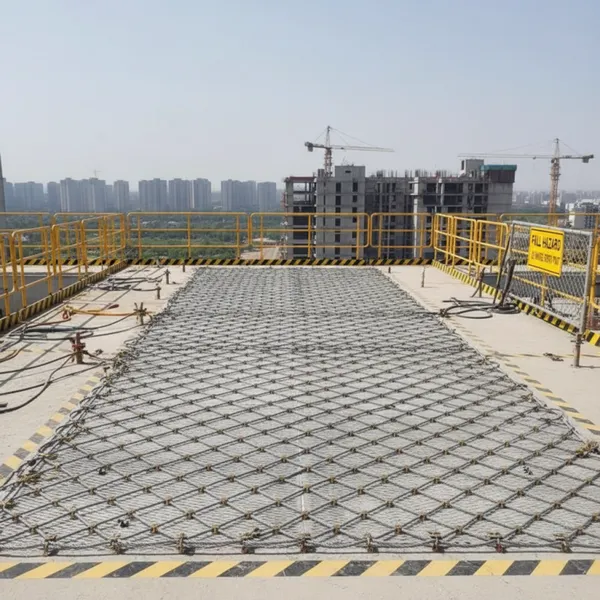
A drone protection netting system answers a different question from detection. It does not warn that an aircraft is coming. It places a physical barrier in the flight path so the aircraft is caught in a mesh before it reaches the roof, the cooling plant or the loading area beneath.
This guide explains what the system is made of, how an anti drone net barrier absorbs a strike, what low altitude airspace netting has to cover on a real site, and where the limits of a physical barrier sit.
1. What a Drone Protection Netting System Consists Of
A drone protection netting system has four parts: the mesh, the perimeter cable, the support structure and the anchorage. The mesh does the catching, the cable carries the load to the supports, and the supports deliver it into the building or the ground.
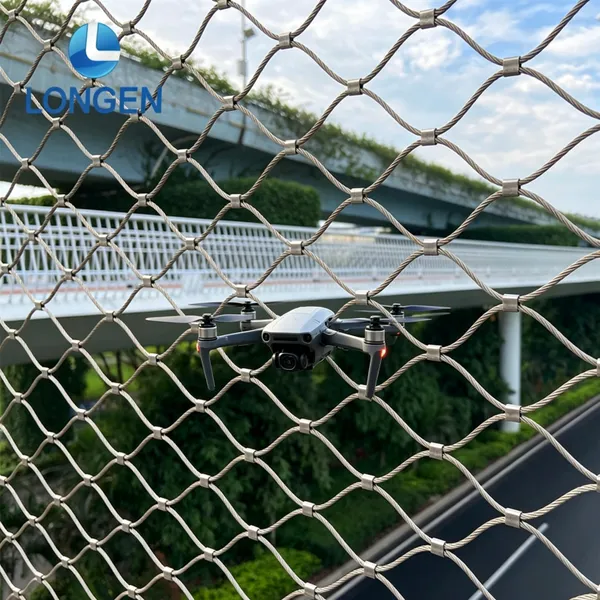
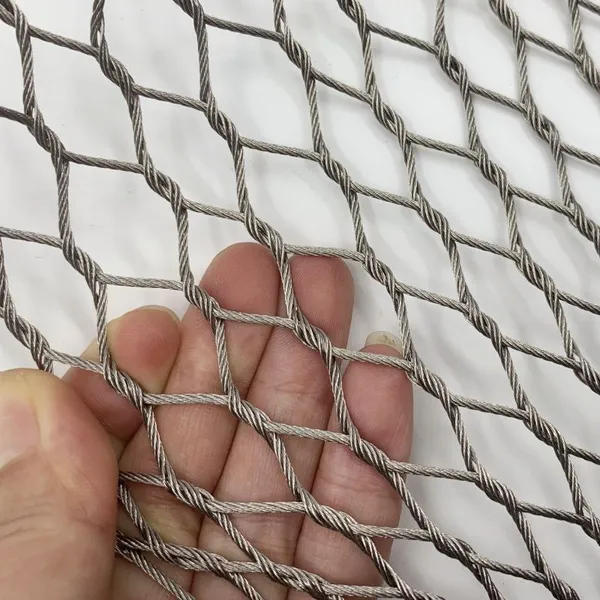
The mesh is normally woven from galvanised or stainless steel rope between 2.0 mm and 4.0 mm in diameter, at an aperture of 60 mm to 150 mm. Stainless suits coastal and industrial air, while galvanised with a heavy zinc coating is the common choice inland on cost grounds.
Support structures run from simple steel poles at 6 m to 10 m centres to cable trusses spanning 40 m between existing buildings. The choice depends on what the roof can accept rather than on the net, because the net itself is light.
The fixings are the part clients overlook. Every panel edge needs either a stainless rod laced through the end apertures or a sewn rope border, and the tensioning turnbuckle sits at the support rather than mid panel. A net held with cable ties alone will pull out of the first aperture in the first strong wind. Longen supplies the rod and the turnbuckle with the panel for that reason.
2. How an Anti Drone Net Barrier Stops an Aircraft
An anti drone net barrier works by entanglement rather than by resistance. The rotors strike the mesh, the strands wrap around the propeller assembly, and the aircraft loses thrust within a fraction of a second and falls into the net instead of past it.
The energy involved is modest. A 1 kg quadcopter travelling at 15 m per second carries about 113 joules, which a 2 mm rope mesh absorbs by local deflection over 100 mm to 200 mm without permanent damage.
Entanglement is not instantaneous on a heavier aircraft. A 5 kg machine tends to drag the mesh 300 mm to 500 mm before the propellers stall, which is why panels are set with a little slack rather than drum tight, and why support spacing matters more than rope diameter in that case.
What the barrier must not do is let the aircraft through and then drop it on the asset. That is why the net is pitched or draped rather than left flat, so a captured aircraft slides toward a low edge where it can be recovered safely.
3. Low Altitude Airspace Netting and the Site Survey
Low altitude airspace netting is worth no more than the survey behind it. The survey records the roof plan, the height of every obstruction, the approach corridors a pilot would naturally use, and the wind exposure at the proposed net height.
Approach corridors matter more than the plan area. An aircraft flown by someone who knows the site will come in low over a boundary wall or through a gap between buildings, and a net that covers the roof but leaves a 10 m slot open has protected nothing.
Wind exposure decides the support design. A net at 12 m above a roof sees a higher wind speed than the roof itself, and the supports are designed for that figure rather than for the ground level value in the local code.
Two drawings come out of the survey: a plan showing the covered footprint, and a section showing the net profile with the approach corridors marked. Both are useful when a site has to explain the barrier to an insurer or a neighbour, and both are quicker to produce before the order than after it.
4. Net Geometry in a Drone Protection Netting System
Capture height is the distance between the asset and the lowest point of the net. A 3 m clearance is workable for roofs with plant, while a flat roof with nothing to protect except the surface can accept a 1.5 m clearance.
Pitch is the slope of the net across the protected area. A pitch of 5 to 10 degrees encourages a captured aircraft to travel to the low edge, and it also helps the net shed water rather than holding a pond after rain.
Overlap is the margin by which the net extends beyond the protected footprint. A 10 to 15 percent overlap on every side covers the approach angles that a plan drawing rarely shows, and it costs far less than a second net added later.
5. An Anti Drone Net Barrier Compared With Electronic Measures
Electronic measures detect, identify and in some cases disrupt. A physical barrier does none of those things, and it works when the electronics are switched off, when the aircraft is flying autonomously without a radio link, and when the operator is inside the perimeter.
The table below sets the two approaches against the questions a facility manager actually asks. Most serious sites end up with both, because each covers a gap the other leaves open.
| Question | Physical net barrier | Electronic measures |
|---|---|---|
| Works without a radio link | Yes | Usually not |
| Needs a trained operator | No | Yes |
| Covers a known gap in the approach | Yes | Partly |
| Records evidence of an incursion | No | Yes |
| Affected by local radio rules | No | Often |
| Cost for 1,000 square metres | Material plus structure | Equipment plus staffing |
Reading the table as a contest misses the point. A net that catches an aircraft still leaves the question of who removes it, and a detection system that logs an incursion still leaves the gap open until someone closes it.
Cost comparison is rarely like for like. A net carries a capital cost and almost no running cost, while an electronic system brings licensing, training and replacement costs every few years. Facilities that price both over ten years usually find the net less expensive for perimeter work and the electronics cheaper for wide area awareness.
6. Low Altitude Airspace Netting for Roofs and Open Yards
Roof installations are the most common form of low altitude airspace netting. The net spans between perimeter posts or between existing structures, sits 2 m to 4 m above the roof surface, and leaves a walkway at the low edge for maintenance access.
Open yards are harder, because the net has to cover a volume rather than a plane. A yard 40 m by 60 m needs either a cable truss across the short span or a grid of poles, and the pole option usually wins on cost below about 2,500 square metres.
Loading areas and plant compounds often need just a partial cover. A net over the diesel store and the switch room, rather than over the whole yard, delivers most of the protection for a third of the cost.
Access has to be designed in rather than added later. A net over a working roof needs a hatch of at least 1 m by 1 m above each maintenance route, and the hatch needs a frame stiff enough that it does not sag into the opening once the surrounding panels are tensioned.
7. Limits of an Anti Drone Net Barrier: Mass and Speed
Mass is the first limit. A mesh designed for a 1 kg quadcopter will catch a 5 kg aircraft as well, but the deflection triples and the support loads rise with it, so the structure rather than the net becomes the constraint.
Speed is the second. A fixed wing aircraft at 25 m per second carries far more energy than a hovering quadcopter, and a mesh barrier is not the right product for that case at any rope diameter.
Multiple simultaneous approaches are the third. A net covers the geometry it was designed for, and two aircraft arriving from opposite sides test whether the net is closed on every elevation rather than on the obvious one.
8. Design Steps for a Drone Protection Netting System
Start with the asset list and the approach corridors, then draw the protected volume rather than the roof outline. The volume is what the net has to enclose, and drawing it first prevents the gap that the operator in the opening example lived with for a quarter.
Size the mesh for the largest aircraft expected at the site, not for the smallest. Then size the supports for wind on the full net plus the impact of that aircraft, and check the anchorage against the roof structure rather than against the net.
Hebei Longen Wire Mesh Products Co Ltd builds the panel schedule from that volume and quotes the supports as a separate line, so a client can see what the net costs and what the structure costs. Longen also marks the recovery points on the drawing, because a net without a plan for removing a captured aircraft becomes a maintenance problem within a month.
Scheduling matters as much as sizing on a live site. Panels should arrive in the order they will be lifted, with the longest span first, so the structure closes before the wind picks up. Longen Wire Mesh Products sequences the shipment that way and numbers every panel to match the drawing.
9. Frequently Asked Questions
9.1 Does a drone protection netting system need power or maintenance?
It needs no power at all, which is part of its appeal on remote sites. Maintenance is a visual inspection twice a year for slack ropes, damaged ferrules and loose anchors, plus a check after any storm with wind above the design figure. Tension should be re-checked in the first month after installation, because stainless rope settles by a few millimetres. A captured aircraft must be removed promptly, since a load left hanging distorts the mesh and shortens the life of the panels around it.
9.2 How high above a roof should an anti drone net barrier sit?
Between 2 m and 4 m above the surface for most flat roofs, measured to the lowest point of the net. The lower figure keeps the structure small and the cost down, but it leaves little room to walk the roof for maintenance. The higher figure gives access and a longer fall distance for a captured aircraft, which reduces the chance of damage on impact. Where plant equipment stands 3 m tall, the net clears the plant rather than the roof, which adds about 1 m to the support height.
9.3 What mesh size does low altitude airspace netting need for a 300 mm drone?
For a quadcopter with a 300 mm rotor span, an aperture of 80 mm to 100 mm in 2.5 mm rope is the working range. The mesh must be small enough that the rotor cannot pass through without contact, and large enough that wind passes freely and the net stays light. A 100 mm aperture at 2.5 mm rope blocks about 5 percent of the open area, which is why the wind load on the net itself stays modest and the supports carry most of the design load.
9.4 Is a physical net the right answer for every site?
No, and a supplier who says otherwise is selling rather than advising. A net suits a defined footprint with a limited number of approach corridors, which describes most industrial and commercial sites. It suits poorly where the protected area is larger than a few hectares, where the asset moves, or where the aircraft of concern is a fixed wing type. In those cases detection plus procedural controls usually do more per dollar than a structure, and the budget is better spent there.
Recently Posted
-
Stainless Steel Rope Mesh Patterns Compared: Ferruled, Knotted and Woven Panels
October 20, 2026An aviary project in a northern zoo ordered three identical panels from three suppliers. One came ferruled, one knotted and one wo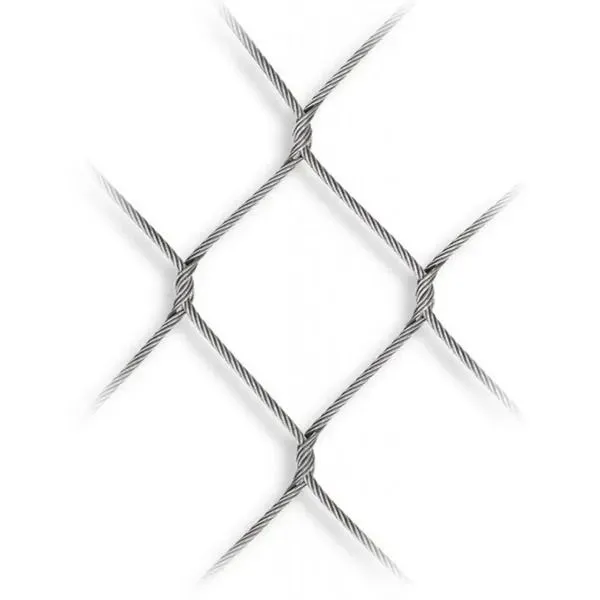 Read More
-
What Is a Stainless Steel Wire Rope Net? Construction, Mesh Types and Load Paths
October 20, 2026A coastal hotel refurbishment ordered a decorative stainless net with 60 mm apertures and 1.5 mm rope for a six storey atrium. The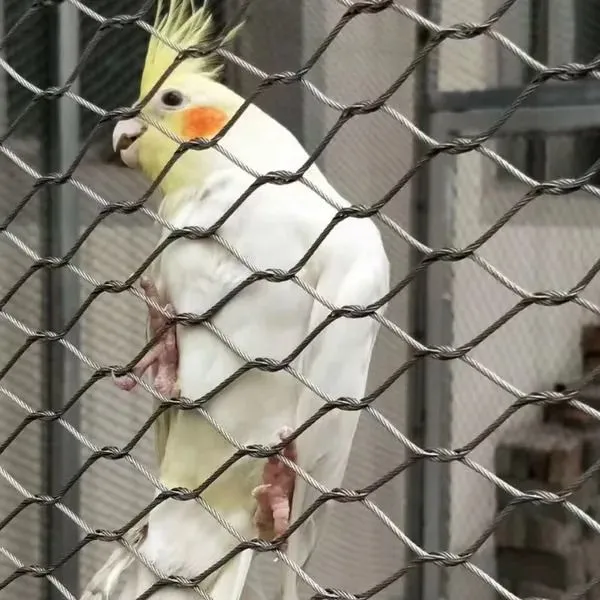 Read More
-
Application of stainless steel hexmesh (hexmetal)
April 26, 2026The stainless steel hexmesh(hexmetal)produced by Longen is mainly used in industrial lining reinforcement scenarios that require r Read More
-
What are the advantages of stainless steel zoo mesh compared to traditional fencing?
April 19, 2026FeaturesStainless steel zoo meshOrdinary wire mesh/galvanized meshNylon meshservice life30 years+3-5 years (susceptible to rust)2- Read More

Contact Us

Recommended Products
-
 Slope Protection System Rockfall Netting 2.0mm 3.0mm 4.0mm High Tensile Steel Wire Mesh Netting Rockfall BarriersUS$ 2 - 15MOQ: 1 Square Meter
-
Flexible Debris Flow Barrier Steel Rope Rockfall Barrier With Ring Diameter 350 mm China SupplierUS$ 5.9 - 40MOQ: 1 Square Meter
-
Custom Hexsteel Mesh for Refractory Linings Stainless Steel Wire Plain Weave Welded Cutting Welding Offered Made ChinaUS$ 9.20 - 45.00MOQ: 50 Square Meters
-
Double Twist Hexagonal Mesh Rockfall Netting Drapery System for for Rockfall Mitigation Slope Consolidation WorksUS$ 0.45MOQ: 100 Square Meters
-
China Factory Galvanized Steel Railway Side Slope Stabilization Net Woven Wire Mesh for Slope Protection Include Bending WeldingUS$ 15.00 - 20.00MOQ: 999 Square Meters
-
Galvanized Gabion Baskets for Retaining Wall Plain Weave Cutting Processing Service for Slope Stabilization-Free Sample OfferedUS$ 1.5 - 1.7MOQ: 1 Square Meter
-
Children's Playground Stainless Steel Rope Mesh Balcony Fence Inox Cable Net Build Guardrail Black Oxide Rope NettingUS$ 118.00MOQ: 100 Square Meters
-
Factory Direct Modern High Transparency Anti-Slip Stainless Steel Rope Mesh Stair Railing Woven Cable Netting Custom ProjectsUS$ 9.9 - 14.9MOQ: 1 Square Meter
-
Stainless Steel Rope Mesh for Backpack and Bag Anti Falling Dropring Mesh Inox Cable Net Anti-theft Black Oxide Rope NettingUS$ 118.00MOQ: 100 Square Meters
-
Heavy-Duty 4ftx5ft Drag Mat Factory With Chain Galvanized Steel Drag Mat for Tractor AttachmentUS$ 9.1 - 45MOQ: 1 Square Meter
-
High Altitude Anti Fall Woven Stainless Steel Wire Rope Net SS 304 316 316L Plain Weave Invisible Protective NetUS$ 9.9 - 14.9MOQ: 1 Square Meter
-
China Rope Mesh Manufacturer Customized SS316 Black Oxided Ferrule Type Rope MeshUS$ 5 - 20MOQ: 1 Square Meter
-
Baseball Field Dragging Lawn LevelingUS$ 59.00 - 66.00MOQ: 5 Pieces
-
316L Grade Stainless Steel Wire Mesh Sieves 200mm 300mm Screen Factory Price Sand Testing ScreenUS$ 4.7 - 15MOQ: 1 Piece
-
Outdoor Stainless Steel Cable Railing / Wire Rope Mesh / Wire Mesh Railings for BalconyUS$ 15.00 - 20.00MOQ: 100 Square Meters
-
Slope Protection System 65/3, High-tensile Steel Wire Mesh, Spike Plate, Rock Nail, Connection Clips T3 for Slope StabilityUS$ 1.80 - 3.00MOQ: 1 Square Meter
-
Pool Mesh Steeltex Paper-Backed Welded Wire Mesh Factory Price 12ga 16gaUS$ 40 - 70MOQ: 30 Rolls
-
G65 3 Rockfall Netting Rust Free Coated Slope Protection Net Galvanized High Tensile Wire Mesh Control Shallow LandslideUS$ 5.40 - 5.60MOQ: 1 Meter
-
Anti‑Drone Protection Steel Rope Net UAV Security Protection Fence Mesh Galvanized /Stainless Steel Customized ProductionUS$ 1.1 - 1.2MOQ: 100 Square Meters
-
Anti-Drone Netting High Tensile Strength Stainless Steel Woven Wire Rope Mesh Active Rockfall Barrier Systemn Factory SupplyUS$ 15.00 - 20.00MOQ: 999 Square Meters