
 Business License
Blog Categories
Inspecting and Re-tensioning a Fall Protection Safety Net
Six years after installation, a shopping centre in Southeast Asia booked an inspection because a facilities manager had noticed that one bay of the atrium net hung lower than the rest. The panel had been struck by a cleaning cradle two years earlier and never reported. The ropes at three crossings had broken wires, the panel had stretched locally, and the anchor at one corner had moved eight millimetres.
None of that would have been visible from the floor, and all of it would have been obvious at the first scheduled inspection. A safety net inspection schedule is not paperwork for its own sake; it is the mechanism that converts a hidden defect into a work order.
This article sets out what an inspection covers and how often, when fall arrest net re-tensioning is needed and how to measure it, how cable net damage repair is decided, and the records that make the whole system work across changes of staff.
1. Why a Safety Net Inspection Schedule Exists
A net has no moving parts and that is exactly the problem. Nothing wears visibly, nothing makes a noise, and the failure mode is a slow loss of tension followed by a local overload.
The schedule exists to catch three things: loss of tension, local damage and movement at the anchors. Each has a different inspection method and a different interval, which is why a one line annual check is not enough.
Most guidance settles on a visual check at three to six months after installation, then annually, with a detailed inspection every three to five years or after any event. A safety net inspection schedule should also include a check after any storm, any impact and any change of use above the net.
The first inspection matters most. Settlement, thermal movement and installation tolerance all show up in the first season, and a net that is adjusted then will hold its tension for years.
2. Fall Arrest Net Re-tensioning: When and How
Tension is measured as sag at mid span, with a tape from a datum to the lowest point of the panel at rest. Compare the reading with the handover figure rather than with a number invented on site.
A panel that has lost more than about ten percent of its design tension needs adjustment. Below that threshold the change is within seasonal movement and adjusting it makes the next reading meaningless.
Fall arrest net re-tensioning is done at the turnbuckle or the tensioner, a quarter turn at a time, with the sag re-measured after each adjustment. Pulling a panel up in one movement over-tensions the first ropes and leaves the rest slack.
Fall arrest net re-tensioning is also the moment to look at the tensioners themselves. A turnbuckle that is near the end of its thread has no adjustment left, and the next event will take it past the limit. Replace it while the crew is already on the platform.
Longen sizes the tensioner with a reserve of about a third of its travel for that reason, so that fall arrest net re-tensioning over the life of the panel never runs out of thread.
The sequence matters on a multi-panel run. Tension from the middle outward, because a run tightened from both ends traps slack in the centre where it is hardest to remove.
3. Cable Net Damage Repair: What Is Repairable
Three defects account for most repairs: broken wires at a crossing, a deformed panel after an impact, and a terminal that has slipped on its rope.
Broken wires at a crossing are the classic sign of fatigue. One or two broken wires in a 4 mm rope are repairable by cutting out the affected section and re-terminating, while a rope with broken wires along a length of one diameter should be replaced.
A deformed panel is judged by geometry rather than by appearance. If the aperture has opened by more than about twenty percent in the affected area, the panel has yielded and a cable net damage repair becomes a panel replacement.
A slipped terminal is the most serious finding, because it means the joint has moved under load and the panel is now carrying its load through fewer points. Replace the terminal, re-tension the panel and check the neighbours on the same cable.
4. Cable Net Damage Repair Clues in the Panel Itself
The panel tells you where to look before you touch anything. Rust staining at a crossing suggests water is sitting there, which usually means the panel is not shedding properly or the alloy is wrong for the environment.
Bright marks on the ropes indicate movement against a hard edge, and movement means the panel is working against a fixing that has shifted. Find the fixing before treating the rope.
A sag that appears in one bay rather than across a run points to a local cause: a slipped terminal, a stretched panel or a failed anchor. A sag across the whole run points to tension loss at the ends.
Photograph the panel at each inspection from the same position. A series of images taken over years shows creep and settlement in a way that a single measurement cannot.
5. Safety Net Inspection Schedule Records
A record is worth having when it can be compared. That means the same fields at every inspection, filled in the same way, by someone who knows what the numbers mean.
At minimum record the date, the inspector, the panel references, the sag readings, the anchor condition, any damage with a location and the action taken. Add a photograph of each defect rather than a description alone.
The record also has to survive staff changes. Store it with the building's maintenance file rather than in a contractor's van, and hand a copy over at every change of facilities provider.
| Check | Method | Interval | Pass condition |
|---|---|---|---|
| Tension and sag | Tape measure at mid span | First 3 months, then annual | Within 10% of handover figure |
| Rope condition | Visual, close range at crossings | Annual | No broken wires beyond one diameter |
| Terminals | Visual plus mark check | Annual | No slip, no cracking, no corrosion |
| Anchors | Torque check on a sample | Annual, full pull test every 5 years | Torque held, no movement marks |
| Post impact | Full inspection of affected bay | After any event | No deformation, tension restored |
The intervals above are a workable default for a temperate inland site. Coastal, industrial and high use installations shorten them, and a site with a history of impacts should inspect more often than the table suggests.
6. Terminals in a Cable Net Damage Repair
The terminal is where most net failures begin. A swaged ferrule that has slipped, an eye that has opened or a thimble that has worn through all reduce the capacity of the panel without changing its appearance.
Check terminals with a mark. Paint a line across the ferrule and the rope at installation, and any movement becomes visible at a glance rather than requiring a measurement.
Replacement follows the rope. Longen Wire Mesh Products supplies the swage and the cutting template together, because a ferrule set by eye on a site bench is the usual cause of a joint that slips within a season. A new ferrule on a used rope needs the rope end to be clean and square, and a rope that has been cut and re-terminated twice is shorter than the panel was designed for.
Hebei Longen Wire Mesh Products Co Ltd supplies spare ferrules and a short length of matching rope with each order, which makes a cable net damage repair a same day job rather than a three week wait for material.
7. Post Event Checks in the Safety Net Inspection Schedule
An event is any load the net was not designed to carry in normal service: a person, a heavy object, a vehicle, a storm with debris. After one, the schedule resets.
The check covers the whole bay rather than the impact point, because load travels along the ropes to the anchors and to the neighbouring panels. A panel that looks undamaged at the point of impact can have moved at its edges.
Record the event as well: date, cause if known, estimated energy, and the panels affected. That record is what an insurer or a client will ask for, and it is also the input to the next design.
Return the net to service after the tension is restored and the anchors are confirmed, and not before. A panel left slack after an event will work against its fixings and fail at the next load.
8. Safety Net Inspection Schedule: Replace or Repair
The decision to replace rather than repair is economic and structural at once. A single rope in a large panel can be replaced on site, while a panel with three affected areas is cheaper to remake.
Age is a factor but not the deciding one. A well maintained 316 panel at fifteen years can be in better condition than a neglected 304 panel at five, and the inspection record is what shows the difference.
Replace a panel when the rope has lost more than a tenth of its diameter to corrosion, when the geometry has yielded, or when a repair would need more than two new terminals in a single panel. Below those thresholds, repair is the better use of the budget.
Longen keeps the panel schedule for every order, so a replacement panel matches the original rather than being made to a measurement taken on site years later.
9. Frequently Asked Questions
9.1 How often should a fall protection net be inspected?
A visual check three to six months after installation, then annually, plus a detailed inspection every three to five years and after any impact or storm. Coastal and industrial sites shorten those intervals, and a net above a public space is usually inspected twice a year. The frequency matters less than the consistency: an inspection that records the same fields each time builds a history that shows change, while irregular checks produce numbers nobody can interpret. Keep the inspection sheets with the maintenance file and take a photograph of each panel at every visit, so that the history is visual as well as numeric.
9.2 Can a net be re-tensioned without dismantling it?
Yes, in most installations. Tension is adjusted at the turnbuckle or the tensioner on the perimeter cable, and the panels stay in place throughout. Any fall arrest net re-tensioning needs access to the tensioners, which should have been positioned where a person can reach them with a spanner. Where the tensioner is hidden behind a finished ceiling, that access is worth creating at the next inspection rather than living with a net that cannot be adjusted, and on a long run note which tensioners were adjusted and by how much, since a panel that needs a large correction twice is telling you something about the anchors.
9.3 What counts as damage that needs reporting?
Any broken wire, any visible deformation of the mesh, any mark suggesting movement at a terminal, and any change in sag beyond the tolerance. Report rather than judge: the person who finds a defect is rarely the person who decides whether it matters. A photograph with a panel reference and a location is enough to start, and the decision can be made by whoever holds the inspection record. Speed matters as well: a broken wire left for a month in a coastal atmosphere will corrode at the break and turn a small repair into a panel replacement.
9.4 Is a repair as strong as the original panel?
A repair made with the correct terminal and matching rope restores the local capacity, and it does not restore the original rope length. The repaired panel carries a slightly different tension from its neighbours, which is why the repair record should note the date and the method. On a critical edge, replace the panel instead of repairing it, because a patch introduces a discontinuity that a future inspector will have to assess. Where a repair is chosen, record the rope batch and the terminal type so that the next inspection can compare like with like.
Recently Posted
-
Fall Protection Safety Net for Atriums, Stairs and Lift Shafts
November 26, 2026A hotel in Eastern Europe had a six storey atrium with a glass roof, a cantilevered walkway on each level, and no protection betwe Read More
-
Fall Protection Safety Net on Construction Sites and Steel Erection
November 26, 2026On a steel frame in the Middle East, the erectors were clipping harnesses to a lifeline that ran along the top flange of a beam fi Read More
-
Installing a Fall Protection Safety Net Under a Roof or Canopy
November 25, 2026A factory in Southeast Asia had a canopy over a loading yard, four metres of clear height, and a maintenance crew that climbed ont Read More
-
Mesh Aperture and Rope Diameter for a Fall Protection Safety Net
November 25, 2026An enquiry from a South American contractor arrived with one line of specification: a net for a twelve metre high atrium, aperture Read More

Contact Us

Recommended Products
-
 Slope Protection System Rockfall Netting 2.0mm 3.0mm 4.0mm High Tensile Steel Wire Mesh Netting Rockfall BarriersUS$ 2 - 15MOQ: 1 Square Meter
-
Flexible Debris Flow Barrier Steel Rope Rockfall Barrier With Ring Diameter 350 mm China SupplierUS$ 5.9 - 40MOQ: 1 Square Meter
-
Custom Hexsteel Mesh for Refractory Linings Stainless Steel Wire Plain Weave Welded Cutting Welding Offered Made ChinaUS$ 9.20 - 45.00MOQ: 50 Square Meters
-
Double Twist Hexagonal Mesh Rockfall Netting Drapery System for for Rockfall Mitigation Slope Consolidation WorksUS$ 0.45MOQ: 100 Square Meters
-
China Factory Galvanized Steel Railway Side Slope Stabilization Net Woven Wire Mesh for Slope Protection Include Bending WeldingUS$ 15.00 - 20.00MOQ: 999 Square Meters
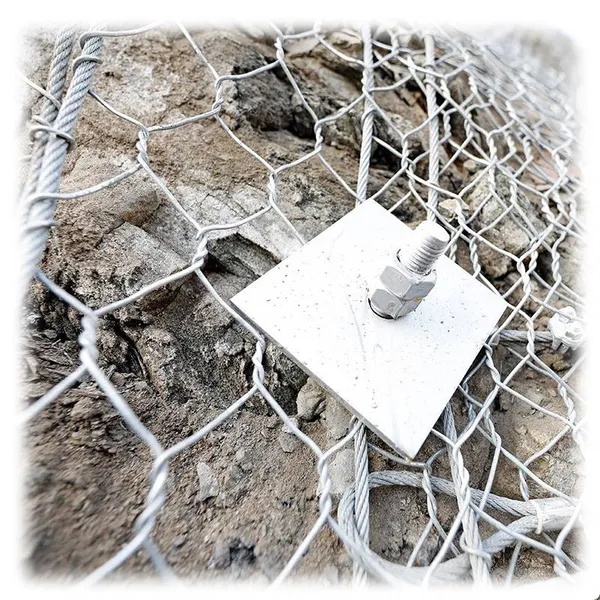
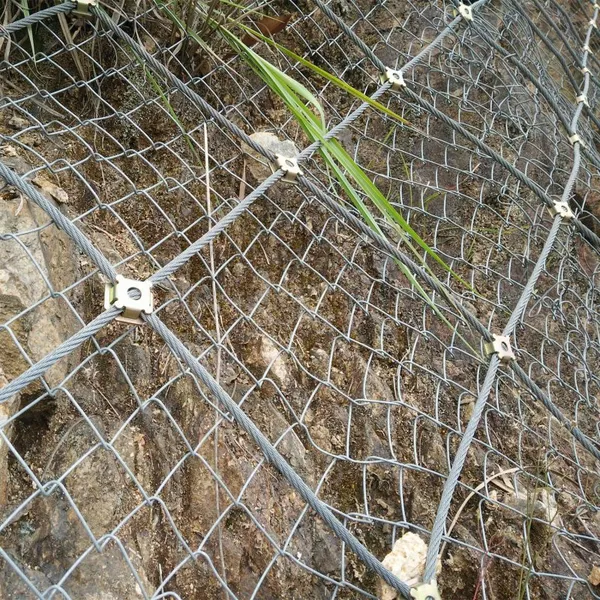
-
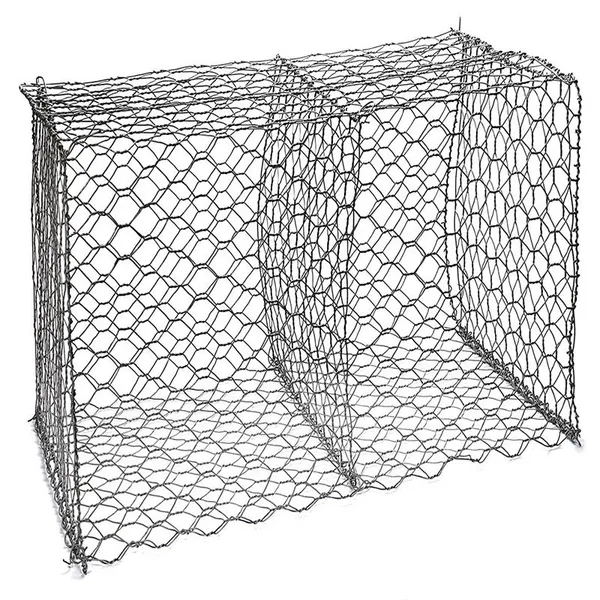
Galvanized Gabion Baskets for Retaining Wall Plain Weave Cutting Processing Service for Slope Stabilization-Free Sample OfferedUS$ 1.5 - 1.7MOQ: 1 Square Meter
-
Children's Playground Stainless Steel Rope Mesh Balcony Fence Inox Cable Net Build Guardrail Black Oxide Rope NettingUS$ 2.8MOQ: 1 Square Meter
-
Factory Direct Modern High Transparency Anti-Slip Stainless Steel Rope Mesh Stair Railing Woven Cable Netting Custom ProjectsUS$ 9.9 - 14.9MOQ: 1 Square Meter
-
Stainless Steel Rope Mesh for Backpack and Bag Anti Falling Dropring Mesh Inox Cable Net Anti-theft Black Oxide Rope NettingUS$ 118.00MOQ: 100 Square Meters
-
Heavy-Duty 4ftx5ft Drag Mat Factory With Chain Galvanized Steel Drag Mat for Tractor AttachmentUS$ 9.1 - 45MOQ: 1 Square Meter
-
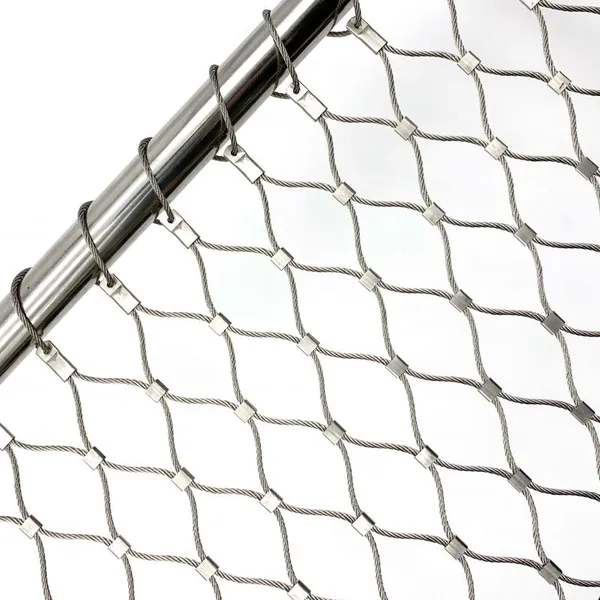
High Altitude Anti Fall Woven Stainless Steel Wire Rope Net SS 304 316 316L Plain Weave Invisible Protective NetUS$ 9.9 - 14.9MOQ: 1 Square Meter
-
China Rope Mesh Manufacturer Customized SS316 Black Oxided Ferrule Type Rope MeshUS$ 5 - 20MOQ: 1 Square Meter
-
Baseball Field Dragging Lawn LevelingUS$ 59.00 - 66.00MOQ: 5 Pieces
-
316L Grade Stainless Steel Wire Mesh Sieves 200mm 300mm Screen Factory Price Sand Testing ScreenUS$ 4.7 - 15MOQ: 1 Piece
-
Outdoor Stainless Steel Cable Railing / Wire Rope Mesh / Wire Mesh Railings for BalconyUS$ 15.00 - 20.00MOQ: 100 Square Meters
-
Slope Protection System 65/3, High-tensile Steel Wire Mesh, Spike Plate, Rock Nail, Connection Clips T3 for Slope StabilityUS$ 1.80 - 3.00MOQ: 1 Square Meter
-
Pool Mesh Steeltex Paper-Backed Welded Wire Mesh Factory Price 12ga 16gaUS$ 40 - 70MOQ: 30 Rolls
-
G65 3 Rockfall Netting Rust Free Coated Slope Protection Net Galvanized High Tensile Wire Mesh Control Shallow LandslideUS$ 5.40 - 5.60MOQ: 1 Meter
-
Anti‑Drone Protection Steel Rope Net UAV Security Protection Fence Mesh Galvanized /Stainless Steel Customized ProductionUS$ 1.1 - 1.2MOQ: 100 Square Meters
-
Anti-Drone Netting, Galvanized High Tensile Steel Wire Rope Mesh, UVA Protection Net, CE Factory Customized ProductionUS$ 1.00 - 2.00MOQ: 999 Square Meters