
 Business License
Corrosion and Colour Life of Black Oxide Stainless Wire Rope Mesh
Two different clocks run on a dark stainless net, and buyers usually conflate them. One is the clock on the metal, which decides when the net starts to stain or pit. The other is the clock on the colour, which decides when the panel stops looking like the sample.
They run at different speeds and for different reasons. A panel can hold its colour for a decade on a 304 alloy that is quietly staining at the ferrules, and a panel on a 316 alloy can lose its depth in three seasons because it is washed with the wrong chemical.
This article separates the two clocks. It sets out what black oxide corrosion life actually depends on, what colour fastness net suppliers can and cannot promise, and how oxide finish durability should be judged at handover rather than years later. It is written for buyers who have been offered a lifespan figure and want to know what is behind it.
1. Black Oxide Corrosion Life: What the Finish Does and Does Not Do
The first thing to settle is that the dark layer is not a barrier coating. It is a conversion of the surface itself, a fraction of a micron thick, and it offers no meaningful protection against chlorides.
That sounds like a weakness and is not, because the alloy underneath is doing the work. A stainless net resists corrosion through its passive film, which re-forms in air after a scratch. The oxide layer sits inside that film rather than on top of it, so a scratch on a dark panel exposes bright metal that will repassivate without the dark layer returning.
The practical consequence is that black oxide corrosion life is, in most installations, the corrosion life of the alloy. A 316 panel in a coastal city will outlast a 304 panel in the same place by a margin that has nothing to do with the finish, and choosing a dark finish does not change that margin in either direction.
Where the finish does matter is in what can be seen. A dark panel conceals the early staining that a bright panel shows, so a maintenance team that relies on visual inspection will find corrosion later on a dark net than on a bright one. That is a genuine disadvantage, and the answer is an inspection routine that looks at ferrules and cut ends rather than at the field of the panel.
2. Four Mechanisms That Decide Black Oxide Corrosion Life
When a dark stainless panel fails, it is almost always one of four mechanisms, and three of them have nothing to do with the oxide layer.
The first is chloride pitting, which begins in a crevice. On a rope mesh the crevices are the ferrule bores and the points where two ropes cross under tension. A dark finish does not create the crevice and does not fill it, so a panel that pits will pit in exactly the same places as a bright one.
The second is galvanic attack at a mixed-metal connection. A stainless ferrule on a galvanised bracket, or a stainless panel on an aluminium frame with no barrier, will corrode the less noble metal and stain the panel while doing it. On a dark panel the staining reads as a brown bloom and is often mistaken for a failure of the finish.
The third is mechanical wear that removes the colour without removing metal. A rope that rubs on a bracket, a panel that flaps in wind, a door that swings against an edge: all of them polish a bright stripe into the dark surface, and oxide finish durability is then being judged by an abrasion test nobody intended to run.
The fourth is chemical attack from cleaning. A chloride-based sanitiser, a hypochlorite wipe or an acid descaler will dull a dark panel and can leave a permanent mottle. This is the one mechanism that is entirely preventable and the one that most often ends a panel's appearance early.
| Mechanism | Visible sign | What it actually means |
|---|---|---|
| Chloride pitting | Dark pits at ferrules, brown trails below | Alloy or environment, not the finish |
| Galvanic attack | Brown bloom around a fixing | A barrier washer was omitted |
| Mechanical wear | Bright polished stripe | Movement or contact that was not detailed out |
| Chemical attack | Grey mottle, dull patches | A cleaning product that should not have been used |
3. Colour Fastness Net Suppliers Can Promise
Colour fastness net is a phrase borrowed from textiles, and it does not transfer cleanly to stainless. There is no dyestuff to fade, no pigment to chalk, and no standard test that reports a number of years.
What exists is a much narrower promise, and an honest supplier will state it in three parts.
The first part is that the colour is a surface conversion rather than a film, so it cannot peel, blister or flake. That promise is absolute and easy to verify with a knife.
The second part is that the depth is set by alloy and process, so panels from one production run will match each other closely and panels from different runs may not. That promise is conditional, and it is the reason a single-batch requirement belongs on the order.
The third part is that the colour will not survive abrasion, and will not survive strong chlorides. That promise is a limitation rather than a feature, and a supplier who omits it is describing a different product.
Anything beyond those three parts is marketing. A supplier who offers a ten-year colour warranty on a conversion finish is either warranting the alloy, which is a different subject, or hoping the claim is never tested.
4. Oxide Finish Durability in Real Exposure
Oxide finish durability is more usefully described by exposure class than by years, because the same panel behaves differently a hundred metres from the sea and a hundred kilometres inland.
In a dry interior, the finish is effectively permanent. A dark panel in an atrium, a lift lobby or a covered walkway will look the same after a decade as it did at handover, provided it is not abraded and not cleaned with chlorides.
In a sheltered exterior, the finish will hold for many years and will slowly even out in tone as the surface collects a thin film of atmospheric dust. That film is usually an improvement, because it removes the last of the batch-to-batch variation that was visible on the day of installation.
In a coastal exterior, the finish is stable but the alloy becomes the limiting factor. A 316 panel will show the first pitting at cut ends and ferrules rather than in the field, and a 304 panel will show it in both. Neither is a failure of the colour.
In an industrial or pool environment, the chemistry dominates everything else. A chlorinated indoor pool is the hardest common environment for any stainless net, and a dark finish there is a decision about appearance that should be taken with the maintenance regime already written.
5. What Actually Shortens Oxide Finish Durability
Five behaviours account for most of the early losses of oxide finish durability on dark stainless net, and none of them is a manufacturing defect.
The first is cleaning with hypochlorite. A dilute bleach solution is the standard answer to algae and to biological soiling, and on a dark panel it produces a grey mottle that cannot be polished out. The correct products are neutral detergents and, where disinfection is required, an alcohol-based wipe followed by a rinse.
The second is leaving swarf or construction dust on the panel. Iron particles from cutting nearby steel embed in the surface and rust, and on a dark panel the rust blooms are conspicuous. A panel installed before the façade is finished should be protected or cleaned, not left.
The third is fixing stainless directly to galvanised steel. The two will interact wherever moisture sits between them, and a barrier washer costs almost nothing.
The fourth is over-tensioning. A panel pulled tighter than its design tension loads the ferrules continuously and accelerates crevice corrosion at exactly the point that is hardest to inspect.
The fifth is deferred maintenance. A dark panel hides the early signs, so a regime that inspects once every three years will find problems that a yearly walk would have caught while they were still cosmetic.
6. Inspection That Reads Both Clocks: Black Oxide Corrosion Life and Colour
An inspection routine for a dark panel should separate the two questions, because they have different answers and different remedies.
For the metal, look at ferrules, cut ends, and any point where stainless meets another metal. These are the crevices and the galvanic couples, and they will show the first evidence. A small magnifier and a torch are enough, and a photograph of each ferrule at each inspection is a better record than a written description.
For the colour, look at the field of the panel under raking light rather than straight on. A polished stripe, a mottle or a bright patch shows at a low angle and is invisible face-on, which is why a colour complaint and a maintenance inspection often produce different conclusions about the same panel.
The two records should be kept together on one sheet per elevation or per room, with the date and the initials. A colour fastness net question three years later is answerable from that sheet and unanswerable from memory.
7. Repair, Replacement and Oxide Finish Durability Questions
A dark panel that has lost its colour in one area cannot be restored on site. There is no touch-up pen and no aerosol that matches, and a coating applied over a conversion finish will read as a different surface within a season.
That leaves three realistic options, and the choice between them is a matter of extent.
A localised bright patch on a large panel is usually accepted once it has been established that it is cosmetic. The panel is structurally sound, the alloy is intact, and the mark records where something is rubbing, which is useful information.
A panel with corrosion at the ferrules is a different case. Pitting in a ferrule bore reduces the grip on the rope, and the panel should be replaced rather than cleaned. This is the failure that matters, and it is the one a visual inspection of the field will miss.
A whole elevation that has gone mottled from cleaning is a maintenance failure rather than a product failure, and the honest answer to the client is that replacement will not stop it happening again unless the cleaning specification changes.
Hebei Longen Wire Mesh Products Co Ltd answers those questions from photographs and the original panel schedule, which is why Longen keeps the schedule against the order number. A replacement panel matched to a five-year-old batch is possible when the record exists and impossible when it does not. Longen Wire Mesh Products also states on the quotation which of the three cases above the finish is expected to fall into, so that the client's maintenance team knows what it is being asked to protect.
8. Writing Black Oxide Corrosion Life Into the Specification
A specification that asks for a life expectancy in years invites an answer that cannot be supported. A specification that asks for an exposure class and a maintenance regime invites an answer that can.
The useful form is three lines. The first names the environment, using a recognised category or a plain description such as splash zone, coastal within one kilometre, or dry interior. The second names the alloy for each element, including the ferrules. The third names the cleaning products that are permitted and the interval at which inspection will take place.
With those three lines, a supplier can state an expectation that means something, because the variables are fixed. Without them, every lifespan figure is an average of cases that range from a covered atrium to a pier.
It is also worth separating the two clocks in the specification itself. State the structural and corrosion expectation separately from the appearance expectation, and state them both as an inspection outcome rather than as a date. Longen writes a colour fastness net clause that way, and it is the clause a client reads again two years later.
9. Frequently Asked Questions
9.1 Does black oxide make stainless steel less corrosion resistant?
Not measurably, and the effect is smaller than the variation between alloys. The oxide layer is a conversion of the surface a fraction of a micron thick, and the passive film that resists corrosion re-forms underneath it after a scratch. What does change is that early staining is harder to see, because a dark surface conceals the brown trails that a bright one shows. That is an inspection problem rather than a metallurgical one, and it is solved by looking at ferrules and cut ends instead of at the field of the panel.
9.2 How long does the colour last?
In a dry interior, effectively indefinitely, because nothing in that environment attacks the layer, and Hebei Longen Wire Mesh Products quotes indoor and outdoor expectations as two separate lines. Sheltered exterior exposure holds for many years, with a slight evening out of tone. In a coastal or industrial environment the colour remains stable while the alloy ages, so the panel will show pitting before it shows fading. The one condition that shortens colour life dramatically is chloride cleaning, where a single season of hypochlorite wiping can leave a permanent mottle on a panel that would otherwise have lasted a decade.
9.3 Can a faded or marked panel be re-blackened on site?
No, and any product claiming to do so should be treated with suspicion. The conversion happens in a bath at the works, before the mesh is assembled, and there is no field-applied equivalent that matches the tone or penetrates the rope. A marked panel is either accepted as cosmetic, replaced, or covered by a different material. The practical answer on a large project is to hold two spare panels from the same batch, so that a damaged bay can be swapped rather than the whole elevation reviewed.
9.4 Does a darker finish show salt deposits more than a bright one?
Yes, and it is the most common appearance complaint on coastal projects. Salt dries to a pale film, and a pale film on a dark surface is conspicuous in a way that the same film on a bright surface is not. The remedy is a fresh water rinse at the frequency the exposure demands, which on a sea front may be monthly. A rain-washed elevation cleans itself, and a sheltered balcony does not, so the two faces of the same building can need different regimes.
Recently Posted
-
Black Oxide Stainless Steel Wire Rope Mesh in Facades and Railing
November 17, 2026A façade panel and a railing infill look like the same product on a drawing. They behave quite differently on a building, because Read More
-
Glare Control with Black Oxide Stainless Steel Wire Rope Mesh
November 17, 2026Glare is not brightness. It is a contrast that the eye cannot resolve comfortably, and it is produced by a small area of very high
Read More -
Black Oxide Stainless Steel Wire Rope Mesh for Zoo and Aviary Exhibits
November 16, 2026An exhibit is judged by what a visitor can see through it, and a net is the one element that stands between the visitor and everyt Read More
-
Black Oxide Stainless Steel Wire Rope Mesh vs Painted or Coated Mesh
November 16, 2026Three products are sold as a black rope net, and they differ in a way that a photograph cannot show. One is chemically darkened st
Read More

Contact Us

Recommended Products
-
 Slope Protection System Rockfall Netting 2.0mm 3.0mm 4.0mm High Tensile Steel Wire Mesh Netting Rockfall BarriersUS$ 2 - 15MOQ: 1 Square Meter
-
Flexible Debris Flow Barrier Steel Rope Rockfall Barrier With Ring Diameter 350 mm China SupplierUS$ 5.9 - 40MOQ: 1 Square Meter
-
Custom Hexsteel Mesh for Refractory Linings Stainless Steel Wire Plain Weave Welded Cutting Welding Offered Made ChinaUS$ 9.20 - 45.00MOQ: 50 Square Meters
-
Double Twist Hexagonal Mesh Rockfall Netting Drapery System for for Rockfall Mitigation Slope Consolidation WorksUS$ 0.45MOQ: 100 Square Meters
-
China Factory Galvanized Steel Railway Side Slope Stabilization Net Woven Wire Mesh for Slope Protection Include Bending WeldingUS$ 15.00 - 20.00MOQ: 999 Square Meters
-
Galvanized Gabion Baskets for Retaining Wall Plain Weave Cutting Processing Service for Slope Stabilization-Free Sample OfferedUS$ 1.5 - 1.7MOQ: 1 Square Meter
-
Children's Playground Stainless Steel Rope Mesh Balcony Fence Inox Cable Net Build Guardrail Black Oxide Rope NettingUS$ 118.00MOQ: 100 Square Meters
-
Factory Direct Modern High Transparency Anti-Slip Stainless Steel Rope Mesh Stair Railing Woven Cable Netting Custom ProjectsUS$ 9.9 - 14.9MOQ: 1 Square Meter
-
Stainless Steel Rope Mesh for Backpack and Bag Anti Falling Dropring Mesh Inox Cable Net Anti-theft Black Oxide Rope NettingUS$ 118.00MOQ: 100 Square Meters
-
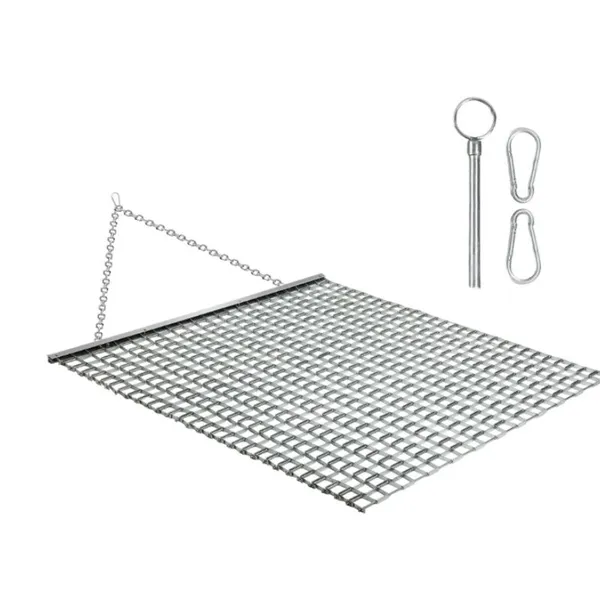
Heavy-Duty 4ftx5ft Drag Mat Factory With Chain Galvanized Steel Drag Mat for Tractor AttachmentUS$ 9.1 - 45MOQ: 1 Square Meter
-
High Altitude Anti Fall Woven Stainless Steel Wire Rope Net SS 304 316 316L Plain Weave Invisible Protective NetUS$ 9.9 - 14.9MOQ: 1 Square Meter
-
China Rope Mesh Manufacturer Customized SS316 Black Oxided Ferrule Type Rope MeshUS$ 5 - 20MOQ: 1 Square Meter
-
Baseball Field Dragging Lawn LevelingUS$ 59.00 - 66.00MOQ: 5 Pieces
-
316L Grade Stainless Steel Wire Mesh Sieves 200mm 300mm Screen Factory Price Sand Testing ScreenUS$ 4.7 - 15MOQ: 1 Piece
-
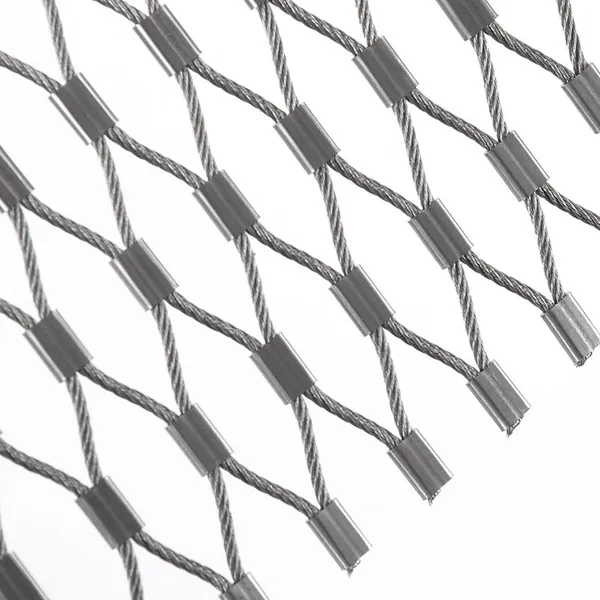
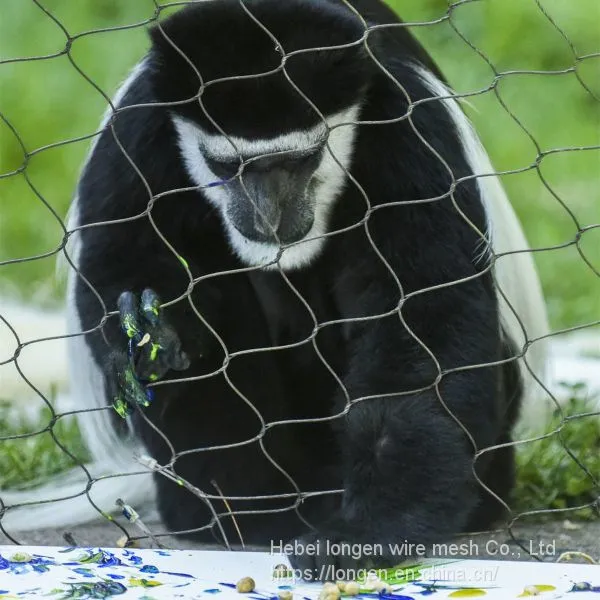
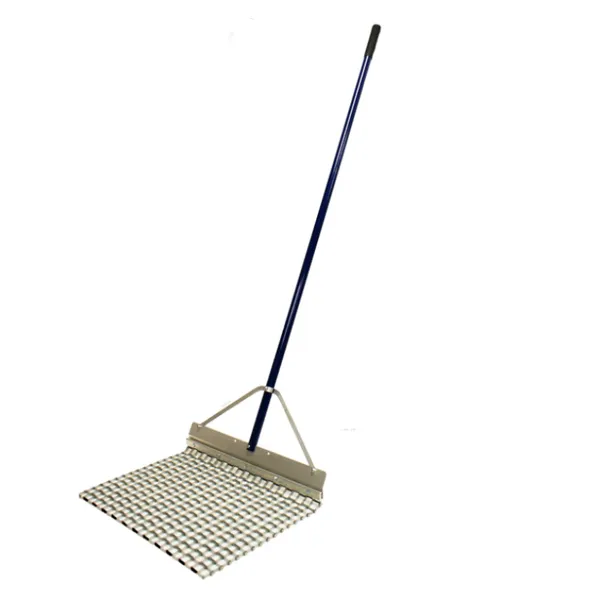
Outdoor Stainless Steel Cable Railing / Wire Rope Mesh / Wire Mesh Railings for BalconyUS$ 15.00 - 20.00MOQ: 100 Square Meters
-
Slope Protection System 65/3, High-tensile Steel Wire Mesh, Spike Plate, Rock Nail, Connection Clips T3 for Slope StabilityUS$ 1.80 - 3.00MOQ: 1 Square Meter
-
Pool Mesh Steeltex Paper-Backed Welded Wire Mesh Factory Price 12ga 16gaUS$ 40 - 70MOQ: 30 Rolls
-
G65 3 Rockfall Netting Rust Free Coated Slope Protection Net Galvanized High Tensile Wire Mesh Control Shallow LandslideUS$ 5.40 - 5.60MOQ: 1 Meter
-
Anti‑Drone Protection Steel Rope Net UAV Security Protection Fence Mesh Galvanized /Stainless Steel Customized ProductionUS$ 1.1 - 1.2MOQ: 100 Square Meters
-
Anti-Drone Netting, Galvanized High Tensile Steel Wire Rope Mesh, UVA Protection Net, CE Factory Customized ProductionUS$ 1.00 - 2.00MOQ: 999 Square Meters