Business License
Glare Control with Black Oxide Stainless Steel Wire Rope Mesh
Glare is not brightness. It is a contrast that the eye cannot resolve comfortably, and it is produced by a small area of very high luminance rather than by a large area of moderate light.
A stainless net is made of round wires, and a round wire reflects a narrow band of the sky at a particular angle. That band moves as the sun moves, and at the wrong moment it is the brightest thing in a façade.
This article explains why a glare reduction mesh is specified in dark finishes rather than bright ones, what a sunlight reflection net can and cannot do, and how black mesh daylight behaves inside a room. It is written for the point where a designer has to choose between two finishes that look almost identical in a sample book.
1. Glare Reduction Mesh: What Glare Actually Is
Two conditions produce glare, and a net can affect both of them.
The first is disability glare, where a bright source reduces the eye's ability to see anything else. A low sun reflecting off a façade into a road is the classic case, and the problem is not the amount of light but its concentration.
The second is discomfort glare, where the eye is not disabled but the viewer is uncomfortable. An office window facing a bright screen produces this, and so does a specular highlight moving across a wall as the sun crosses it.
A sunlight reflection net works on concentration rather than on quantity, which is why the size of the reflected element matters more than the total light. It breaks a bright surface into small elements and spreads the reflected light across many directions, which reduces the peak luminance that reaches the eye.
That distinction explains why a net does not darken a room in the way a blind does. It redistributes light, and the room may end up with almost the same total daylight while the peak brightness in the field of view falls sharply.
2. Glare Reduction Mesh: How a Round Wire Reflects
A wire is a cylinder, and a cylinder reflects a narrow strip of the environment along its length. On a flat panel of parallel wires, that strip is a line of high luminance that moves as the viewing angle changes.
With a woven mesh the wires run in two directions and the strips cross, producing a pattern of bright points at the crossings. Those points are the elements that a viewer perceives as sparkle, and sparkle is what most people mean when they say a net glares.
The size of each bright point depends on the wire diameter. A thicker wire reflects a wider strip, and its highlight is correspondingly larger and easier to see from a distance.
The angle of the sun relative to the panel decides whether the highlight lands in the viewer's eye. For a given orientation there is a period each day when the geometry lines up, and that period is what a shading study should identify rather than the average condition.
3. Sunlight Reflection Net: Geometry Instead of Colour
Before choosing a finish, three geometric decisions change the glare more than the colour does.
The first is the plane of the net relative to the glass or the occupied space. A net held at a distance from a window is seen against the room and its highlights fall on the wall; a net close to the glass is seen against the sky and its highlights fall on the viewer.
The second is the aperture and the wire diameter together. A coarse mesh with fine wire reflects less total light than a fine mesh with heavy wire, because there is less metal in the field of view.
The third is the orientation of the weave. A diamond pattern presents a different set of angles to a low sun than a square one, and the difference is visible in the late afternoon rather than at noon.
A sunlight reflection net specified on colour alone is therefore half specified. The finish decides how bright each highlight is, and the geometry decides whether the highlight reaches the eye at all.
4. Sunlight Reflection Net: The Low Sun Case
The worst glare almost always comes from a low sun, and it is the case most often missed in design because visualisations are made at midday.
A low sun rakes across a façade, and a raking angle is the condition in which a cylindrical wire reflects most efficiently toward a viewer standing to the side. The highlight is at its narrowest and its most intense.
A sunlight reflection net in a bright finish in that condition behaves like a field of small mirrors, and the effect can be more distracting than the bare surface it replaced, because the eye is drawn to movement.
The same net in a dark finish absorbs most of the raking light and returns a dull sheen. The geometry is unchanged and the highlights are still there, and their luminance is far lower.
| Condition | Bright finish | Black oxide finish |
|---|---|---|
| Midday, sun behind viewer | Even sheen | Dull, slightly warm |
| Low sun, raking | Intense moving highlights | Faint sheen |
| Overcast | Almost invisible | Dark silhouette |
| Wet surface | Sharp sparkle | Soft reflection |
The wet row matters more than it looks. Water fills the valleys between strands and turns a rope into a smoother cylinder, which sharpens the highlight whatever the finish. A site with frequent rain and a low sun will see more glare than a dry one at the same latitude.
5. Black Mesh Daylight: What Changes in a Room
Inside a room behind a black mesh, three things change and one does not.
The first change is the view out. A dark net in front of a bright sky reads as a fine silhouette, and the eye adapts to it within a minute; a bright net in the same place reads as a veil that never quite disappears.
The second is the distribution of light on the ceiling and the back wall. A dark net blocks a small fraction of the light and reflects very little, so the room loses a little illuminance and gains a more even distribution.
The third is the visibility of the net itself against the interior. Seen from outside on a dull day, a dark net is a visible grid; seen from inside on a bright day, it is almost absent.
What does not change is the total daylight factor to any meaningful degree. Black mesh daylight is not a shading strategy in the energy sense, and a project that needs to cut solar gain needs a different device.
6. Black Mesh Daylight: Where the Effect Is Small
Honesty about the limits of the finish is worth more than an optimistic specification, and there are four cases where it does little.
The first is a very fine mesh with heavy wire. The metal covers a large share of the area, and the panel behaves more like a perforated screen than like a net; the finish matters less than the openness.
The second is a panel seen against a dark background. A dark net against a dark wall has no contrast to manage, and the glare was never the issue.
The third is a fully overcast climate. Without a direct sun there is no specular highlight to control, and the choice between the two finishes becomes purely a matter of appearance.
The fourth is a view from directly below a horizontal roof panel. The geometry puts the viewer inside the reflection rather than beside it, and the highlight is diffused by the panel's own depth.
7. Testing a Glare Reduction Mesh Before You Buy
Glare is one of the few properties a buyer can assess without instruments, and a glare reduction mesh is worth an hour on site rather than a page of specification.
The useful test is a sample panel held in the real position at the real time. A one metre sample is enough, held at the height and angle of the intended panel, viewed from the position of the person who will be affected.
The second test is a photograph taken with the sun in the frame and the sample in the foreground. A phone camera exaggerates the highlight and therefore shows the worst case, which is exactly what the test is for.
The third is a comparison between the two finishes, side by side, at the same moment. Judgements made on separate days are judgements made in different weather, and the difference between the finishes is smaller than the difference between two skies.
Longen Wire Mesh Products sends both finishes as small panels for that comparison and asks for the photographs afterwards, because a glare complaint is usually a question about which finish was supplied rather than about the net. Hebei Longen Wire Mesh Products keeps both samples in stock, so a comparison can be arranged the same week as the enquiry. Longen also records which finish was supplied on each order, which is what makes a later glare question answerable.
8. Combining Black Mesh Daylight With Aperture and Distance
Black mesh daylight is one of four levers, and the finish is rarely the one that should be pulled hardest.
For a glare reduction mesh the aperture is the strongest lever of the four. Doubling the opening halves the metal in the field of view and roughly halves the reflected light, and it also changes the appearance of the façade more than a change of finish does.
Distance from the glass is the second. Moving a screen a metre away from a window changes what the highlights land on, and that is often more effective than darkening the wire.
Wire diameter is the third. A finer wire at the same aperture produces smaller and less conspicuous highlights, and it costs less than a change of pattern.
The finish is the fourth, and it is the one that can be applied last without redesigning anything. That is the practical argument for it: on a project where the geometry is already fixed, the finish is the remaining lever, and it works. Hebei Longen Wire Mesh Products Co Ltd quotes both finishes at the same stage of a project for that reason, rather than quoting the dark one as an upgrade after the frame is designed.
9. Frequently Asked Questions
9.1 Does a black net reduce the amount of daylight?
Marginally, and less than most people expect. A net with a coarse aperture covers a small fraction of the area, and a black surface reflects little of what it covers, so the loss in illuminance behind it is a few percent. What changes is the distribution and the peak brightness rather than the total. A room that needs a measurable reduction in daylight needs a denser screen or a shading device, and a net chosen for glare control should not be credited with an energy saving it will not deliver.
9.2 Is glare worse with a fine or a coarse mesh?
It depends on the wire rather than on the aperture alone. A fine mesh with light wire presents many small highlights that merge into a general sparkle, and a coarse mesh with heavy wire presents fewer but larger highlights that read as distinct points of light. The uncomfortable case is a coarse mesh with heavy wire, because each highlight is large enough to be resolved from a distance. A coarse mesh with fine wire is usually the most comfortable combination at the same openness.
9.3 Can the finish be chosen after the net is installed?
No, and that is why it belongs in the design rather than in the variations. The finish is applied to the rope before the mesh is assembled, and a panel cannot be blackened in place. A project that discovers a glare problem after installation has three options, which are to add planting or a screen, to accept the condition, or to replace the panels. The first of those is the affordable one, and it is worth considering at design stage as the fallback.
9.4 Does the effect work on an interior screen?
Yes, and it is often more noticeable indoors because the light source is closer and the background is darker. A screen in front of a window with a low afternoon sun will produce visible highlights on a bright net, and a dark one removes them. The same geometry rules apply, so the screen should be held away from the glass rather than fixed against it, and the aperture should be chosen against the viewing distance rather than against the structural span.
Recently Posted
-
Corrosion and Colour Life of Black Oxide Stainless Wire Rope Mesh
November 17, 2026Two different clocks run on a dark stainless net, and buyers usually conflate them. One is the clock on the metal, which decides w Read More
-
Black Oxide Stainless Steel Wire Rope Mesh in Facades and Railing
November 17, 2026A façade panel and a railing infill look like the same product on a drawing. They behave quite differently on a building, because Read More
-
Black Oxide Stainless Steel Wire Rope Mesh for Zoo and Aviary Exhibits
November 16, 2026An exhibit is judged by what a visitor can see through it, and a net is the one element that stands between the visitor and everyt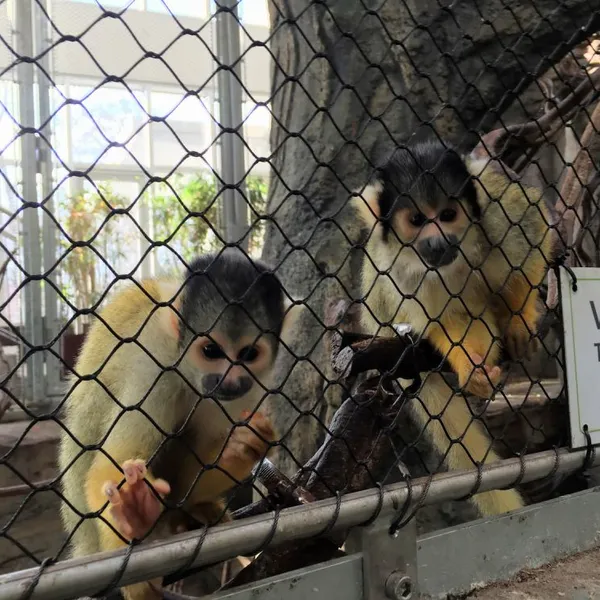 Read More
-
Black Oxide Stainless Steel Wire Rope Mesh vs Painted or Coated Mesh
November 16, 2026Three products are sold as a black rope net, and they differ in a way that a photograph cannot show. One is chemically darkened st
Read More

Contact Us

Recommended Products
-
 Slope Protection System Rockfall Netting 2.0mm 3.0mm 4.0mm High Tensile Steel Wire Mesh Netting Rockfall BarriersUS$ 2 - 15MOQ: 1 Square Meter
-
Flexible Debris Flow Barrier Steel Rope Rockfall Barrier With Ring Diameter 350 mm China SupplierUS$ 5.9 - 40MOQ: 1 Square Meter
-
Custom Hexsteel Mesh for Refractory Linings Stainless Steel Wire Plain Weave Welded Cutting Welding Offered Made ChinaUS$ 9.20 - 45.00MOQ: 50 Square Meters
-
Double Twist Hexagonal Mesh Rockfall Netting Drapery System for for Rockfall Mitigation Slope Consolidation WorksUS$ 0.45MOQ: 100 Square Meters
-
China Factory Galvanized Steel Railway Side Slope Stabilization Net Woven Wire Mesh for Slope Protection Include Bending WeldingUS$ 15.00 - 20.00MOQ: 999 Square Meters


-
Galvanized Gabion Baskets for Retaining Wall Plain Weave Cutting Processing Service for Slope Stabilization-Free Sample OfferedUS$ 1.5 - 1.7MOQ: 1 Square Meter
-
Children's Playground Stainless Steel Rope Mesh Balcony Fence Inox Cable Net Build Guardrail Black Oxide Rope NettingUS$ 118.00MOQ: 100 Square Meters
-
Factory Direct Modern High Transparency Anti-Slip Stainless Steel Rope Mesh Stair Railing Woven Cable Netting Custom ProjectsUS$ 9.9 - 14.9MOQ: 1 Square Meter
-
Stainless Steel Rope Mesh for Backpack and Bag Anti Falling Dropring Mesh Inox Cable Net Anti-theft Black Oxide Rope NettingUS$ 118.00MOQ: 100 Square Meters
-
Heavy-Duty 4ftx5ft Drag Mat Factory With Chain Galvanized Steel Drag Mat for Tractor AttachmentUS$ 9.1 - 45MOQ: 1 Square Meter


-
High Altitude Anti Fall Woven Stainless Steel Wire Rope Net SS 304 316 316L Plain Weave Invisible Protective NetUS$ 9.9 - 14.9MOQ: 1 Square Meter
-
China Rope Mesh Manufacturer Customized SS316 Black Oxided Ferrule Type Rope MeshUS$ 5 - 20MOQ: 1 Square Meter
-
Baseball Field Dragging Lawn LevelingUS$ 59.00 - 66.00MOQ: 5 Pieces
-
316L Grade Stainless Steel Wire Mesh Sieves 200mm 300mm Screen Factory Price Sand Testing ScreenUS$ 4.7 - 15MOQ: 1 Piece
-
Outdoor Stainless Steel Cable Railing / Wire Rope Mesh / Wire Mesh Railings for BalconyUS$ 15.00 - 20.00MOQ: 100 Square Meters


-
Slope Protection System 65/3, High-tensile Steel Wire Mesh, Spike Plate, Rock Nail, Connection Clips T3 for Slope StabilityUS$ 1.80 - 3.00MOQ: 1 Square Meter
-
Pool Mesh Steeltex Paper-Backed Welded Wire Mesh Factory Price 12ga 16gaUS$ 40 - 70MOQ: 30 Rolls
-
G65 3 Rockfall Netting Rust Free Coated Slope Protection Net Galvanized High Tensile Wire Mesh Control Shallow LandslideUS$ 5.40 - 5.60MOQ: 1 Meter
-
Anti‑Drone Protection Steel Rope Net UAV Security Protection Fence Mesh Galvanized /Stainless Steel Customized ProductionUS$ 1.1 - 1.2MOQ: 100 Square Meters
-
Anti-Drone Netting, Galvanized High Tensile Steel Wire Rope Mesh, UVA Protection Net, CE Factory Customized ProductionUS$ 1.00 - 2.00MOQ: 999 Square Meters