
 Business License
Building Safety Protection Mesh: Inspection After Handover
An installation is handed over on the day it looks its tidiest and is at its least settled. The slab has not finished moving, the anchors have not been loaded by a season of wind, and the panel tension recorded on the certificate is the tension that was set twenty minutes earlier.
That is the reason the first inspection matters more than the ones that follow it. A safety mesh inspection at handover records an intention. A post handover check six months later records what the building did to it.
This article sets out what to record, when to look again, how to read tension loss before it becomes visible, and how to build a net maintenance plan that a facilities team will actually follow.
1. Why Safety Mesh Inspection Starts With a Baseline
A safety mesh inspection without a baseline is an opinion. The inspector looks at a panel, decides it seems tight enough, and writes a line that says no defects observed. That line cannot be compared with anything, and it will be written in the same words for ten years.
The baseline is four numbers and one drawing: the tension at each panel, the anchor test results, the as-built panel sizes and the panel numbering plan. With those, a later inspection becomes a measurement against a record rather than a judgement against a memory.
The baseline is also the document that decides who pays for a repair. A panel that was installed loose and a panel that went loose are the same panel at the inspection and different claims at the meeting. Without a recorded starting tension, the argument is settled by whoever is more patient.
Longen Wire Mesh Products issues the baseline with the delivery: a panel plan, a tension sheet and a batch reference for the rope. The three documents take an afternoon to prepare and they are the difference between a maintenance regime and a series of visits.
2. What a Post Handover Check Should Record
A post handover check is a structured walk, and it should produce a record that can be compared with the next one. Six items cover the installation, and each one is quick to take.
| Item | How it is recorded | What a change means |
|---|---|---|
| Panel tension | Figure per panel, same instrument | Anchor movement, rope creep or a slack border |
| Anchor condition | Photograph per fixing group | Corrosion, cracking or a pulled washer |
| Border and corners | Note per corner, photograph of any change | Load concentration at the highest stressed point |
| Bottom edge | Gap measurement at three points | Settlement, impact damage or a missing kerb |
| Surface condition | Note on staining, dust or grease | Cleaning interval or a corrosion source above |
| Obstructions | List of objects now against the panel | A new foothold, or a load the panel was not designed for |
The last item is the one that surprises clients. A panel is often found with a planter, a bench, a stack of boxes or a bicycle rack against it, installed by someone who did not know what the panel was for. Each of those is a foothold, and a foothold converts a guard into a climbing frame.
A safety mesh inspection of this kind takes about an hour per elevation once the positions are marked. The record should be photographic as well as written, because a photograph taken from the same position each time shows a change that a description misses. A fixed camera position per elevation is worth writing into the plan.
3. The Net Maintenance Plan: Intervals and Triggers
A net maintenance plan has two parts: a fixed interval and a set of triggers. The interval keeps the regime running. The triggers make it respond to events that the calendar does not know about.
| Stage | When | Focus |
|---|---|---|
| Handover | On completion | Baseline tension, anchor record, as-built plan |
| First review | After one full season | Settlement, anchor movement, tension loss |
| Routine visual | Twice a year | Damage, obstruction, corrosion, bottom edge |
| Tension check | Annually | Figure per panel against the baseline |
| Detailed review | Every five years | Anchor condition, border wear, batch matching |
The triggers matter as much as the intervals. A storm, a vehicle impact, a change of use on the floor behind the panel, building work on the facade above, and any report of a child climbing the mesh should each produce an inspection outside the calendar.
A change of use is the trigger that is most often missed. A plant room becomes a store, a terrace becomes a smoking area, a quiet corridor becomes a queueing space, and the panel that was adequate for the first use is loaded differently by the second.
4. Ten Failure Modes a Safety Mesh Inspection Should Find
Most of what goes wrong in service appears in a small number of places, and an inspector who knows the list will find more in an hour than one who walks the elevation looking at the mesh.
The first is a slack panel, which shows as a wave along the border. The second is a pulled anchor, which shows as a washer standing proud of the substrate. The third is a cracked corner fitting, which appears at the point of highest load.
The fourth is a broken wire at a ferrule or a knot, which is usually a handling injury from installation rather than a service failure. The fifth is a bottom edge that has moved, leaving a gap or a contact point. The sixth is a border that has worn where it passes through a guide.
The seventh is corrosion at a fixing where dissimilar metals meet. The eighth is a panel that has been cut and tied by a third party to route a cable or a pipe. The ninth is a missing panel, usually removed for access and never replaced. The tenth is a panel that has been repainted or coated on site, which hides the surface condition and often damages the rope.
5. Tension Loss and What a Safety Mesh Inspection Can Measure
Tension loss is the slowest failure and the easiest to miss, because a panel that has lost a third of its tension still looks like a panel. It sags a little, the border is less straight, and the openings near the middle are marginally larger than the ones at the edge.
The cause is rarely the rope. Stainless rope is stable under a sustained load once it has been pre-stretched. The cause is usually the connection: a resin anchor that crept, a clamp that slipped on a painted member, a slotted detail that was set at the end of its travel, or a slab edge that has moved with the structure.
The measurement is a tension reading at a marked point, taken with the same instrument each time. A hand feel is not a measurement, and a deflection test with a straight edge is a rough substitute that is better than nothing and worse than a number.
A safety mesh inspection that records appearance alone will miss this entirely, because a panel at seventy per cent tension still reads as a sound panel from the floor.
Deciding what to do with a low reading is a matter of judgement rather than a rule. A panel at ninety per cent of its set tension needs nothing. A panel at seventy per cent needs re-tensioning. A panel that has lost tension twice in the same place needs the fixing investigated rather than adjusted again.
6. Corrosion and Cleaning in a Net Maintenance Plan
Stainless steel in a building is chosen for a reason, and that reason is defeated by contamination rather than by the material. A net near a coast, a chimney, a kitchen extract or a road carries deposits that hold chlorides against the rope, and a deposit that stays wet is where pitting starts.
Routine cleaning is therefore part of the net maintenance plan rather than a cosmetic task. Fresh water and a soft brush remove the deposit. A chlorine based cleaner left to dry on the rope is worse than the deposit it removed, and an abrasive pad leaves a scratch that collects the next layer.
A net maintenance plan should name the cleaning method as well as the interval, because a contractor who is told to clean a stainless net will reach for whatever is in the van. The places that need attention are the ones that do not get rain: the underside of a horizontal panel, the gap behind a border, the face of a fixing plate against a wall. A panel that is washed by every storm still has a dry side, and the dry side is where the contamination accumulates.
Staining that runs downward from a fixing is a message about the fixing rather than about the mesh. It usually means a carbon steel washer, a plated bolt or a galvanised bracket is in contact with the stainless, and the repair is a change of component rather than a change of cleaning routine.
7. Repair, Replacement and Matching a Batch
A damaged panel is replaced rather than repaired wherever the damage is in the mesh field, because a splice interrupts the tension path and creates a point that the next inspection has to watch. A damaged border or a failed ferrule at an edge can be re-terminated on site, which is a different operation from patching a hole.
Replacement depends on the batch record. A panel made two years later from a different coil can differ in colour and in the cast of the rope, and the difference is visible on a large elevation even when the size is correct. A batch reference on the border tag is what allows the right material to be ordered.
When a post handover check finds a missing panel, the replacement comes from that stock rather than from a new order, and the difference is a week against a production run. The practical stock position is one spare panel for every five of a given size, held on site in a dry store. A single spare is used in the first year and the second replacement then waits for a production run, which on a public building is a wait with a temporary barrier in front of it.
Hebei Longen Wire Mesh Products Co Ltd supplies spare panels from the same production batch as the main order, and records the batch on every tag so that a later order can be matched rather than approximated.
8. Writing a Post Handover Check Into the Contract
The inspection regime is decided at contract stage, and it is decided by three clauses that cost nothing to add and are expensive to add later.
The first requires an as-built package: numbered panel plan, tension sheet, anchor test record and the batch reference. The second names the first review as a contractual event with a report, rather than a goodwill visit. The third states who attends, which should include the party responsible for the structure and the party responsible for cleaning.
Hebei Longen Wire Mesh Products provides the as-built package as standard and attends the first review on request. The review is where the design assumptions meet the building, and a supplier who is present can tell the difference between a panel that was set low and a panel that has moved.
The contract should also state the interval that follows, because a building with a written interval is inspected and a building with a verbal one is inspected after an incident. Longen has seen both, and the difference is not the mesh.
9. Frequently Asked Questions
9.1 How soon after installation should the first check be done?
After one full season of weather, and after the building has been occupied long enough for the structure to take its working load. That is usually between three and six months, and it is early enough to catch movement while the installer is still responsible for it. A check in the first week records the installation, not the building. On a project handed over in autumn, the review should be set for the following spring, so that the panel has seen both a cold spell and a warm one.
9.2 Can the inspection be done from the floor?
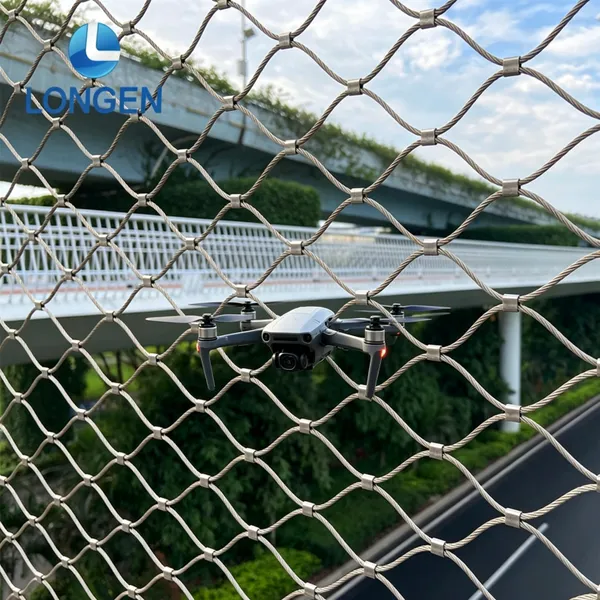
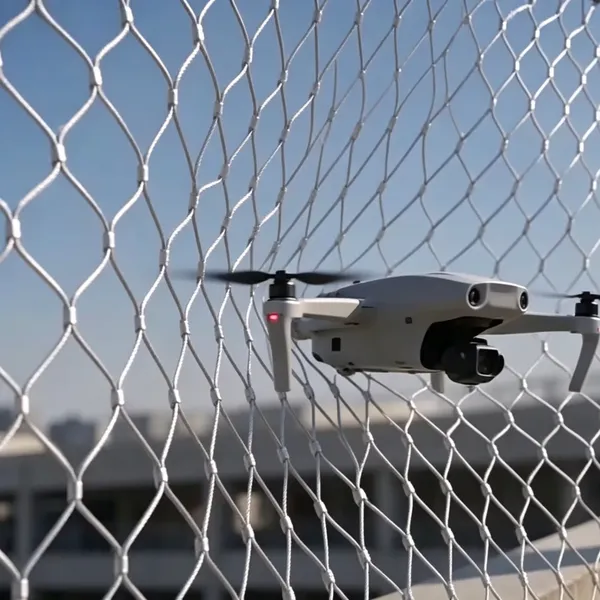
For the lower panels, yes, and for anything above reach it needs a platform, a cradle or a drone with a close inspection camera. The method should be agreed in advance, because an inspection that depends on equipment nobody booked does not happen. A drone is useful for a general view and poor for judging tension, which is a hand and instrument task. Where a panel can be reached from a window, a short pole with a hook and a gauge covers more of the elevation than a cradle booking does.
9.3 What counts as a defect that needs action?
A broken wire, a pulled anchor, a cracked fitting, a gap at the bottom edge over the stated limit, and a panel that has lost more than a stated proportion of its set tension. Each of those changes the performance of the system rather than its appearance, and each should be recorded with a photograph and a date. Cosmetic staining is logged and monitored rather than actioned. The list should be written into the maintenance plan so that two inspectors working in different years apply the same test.
9.4 Who is responsible for inspection after handover?
The building owner, in practice, because the panel is part of the building and the duty to keep it in condition travels with ownership. The supplier's role is to provide the baseline, the intervals and the spare stock, and to attend the first review. A regime that relies on the supplier returning every year is a regime that ends when the relationship does. Where the building is let, the obligation should be written into the lease as a service the tenant funds and the owner verifies.
Recently Posted
-
Black Oxide Stainless Steel Wire Rope Mesh for Zoo and Aviary Exhibits
November 16, 2026An exhibit is judged by what a visitor can see through it, and a net is the one element that stands between the visitor and everyt Read More
-
Black Oxide Stainless Steel Wire Rope Mesh vs Painted or Coated Mesh
November 16, 2026Three products are sold as a black rope net, and they differ in a way that a photograph cannot show. One is chemically darkened st Read More
-
How the Black Oxide Layer Is Formed on Stainless Wire Rope
November 16, 2026Blackening a stainless rope is a surface chemistry problem wrapped in a mechanical one. The chemistry is a conversion of the alloy Read More
-
What Is Black Oxide Stainless Steel Wire Rope Mesh?
November 13, 2026A black oxide rope mesh is a stainless steel rope net whose wire has been chemically darkened before the mesh is assembled. The ro
Read More

Contact Us

Recommended Products
-
 Slope Protection System Rockfall Netting 2.0mm 3.0mm 4.0mm High Tensile Steel Wire Mesh Netting Rockfall BarriersUS$ 2 - 15MOQ: 1 Square Meter
-
Flexible Debris Flow Barrier Steel Rope Rockfall Barrier With Ring Diameter 350 mm China SupplierUS$ 5.9 - 40MOQ: 1 Square Meter
-
Custom Hexsteel Mesh for Refractory Linings Stainless Steel Wire Plain Weave Welded Cutting Welding Offered Made ChinaUS$ 9.20 - 45.00MOQ: 50 Square Meters
-
Double Twist Hexagonal Mesh Rockfall Netting Drapery System for for Rockfall Mitigation Slope Consolidation WorksUS$ 0.45MOQ: 100 Square Meters
-
China Factory Galvanized Steel Railway Side Slope Stabilization Net Woven Wire Mesh for Slope Protection Include Bending WeldingUS$ 15.00 - 20.00MOQ: 999 Square Meters
-
Galvanized Gabion Baskets for Retaining Wall Plain Weave Cutting Processing Service for Slope Stabilization-Free Sample OfferedUS$ 1.5 - 1.7MOQ: 1 Square Meter
-
Children's Playground Stainless Steel Rope Mesh Balcony Fence Inox Cable Net Build Guardrail Black Oxide Rope NettingUS$ 118.00MOQ: 100 Square Meters
-
Factory Direct Modern High Transparency Anti-Slip Stainless Steel Rope Mesh Stair Railing Woven Cable Netting Custom ProjectsUS$ 9.9 - 14.9MOQ: 1 Square Meter
-
Stainless Steel Rope Mesh for Backpack and Bag Anti Falling Dropring Mesh Inox Cable Net Anti-theft Black Oxide Rope NettingUS$ 118.00MOQ: 100 Square Meters
-
Heavy-Duty 4ftx5ft Drag Mat Factory With Chain Galvanized Steel Drag Mat for Tractor AttachmentUS$ 9.1 - 45MOQ: 1 Square Meter
-
High Altitude Anti Fall Woven Stainless Steel Wire Rope Net SS 304 316 316L Plain Weave Invisible Protective NetUS$ 9.9 - 14.9MOQ: 1 Square Meter
-
China Rope Mesh Manufacturer Customized SS316 Black Oxided Ferrule Type Rope MeshUS$ 5 - 20MOQ: 1 Square Meter
-
Baseball Field Dragging Lawn LevelingUS$ 59.00 - 66.00MOQ: 5 Pieces
-
316L Grade Stainless Steel Wire Mesh Sieves 200mm 300mm Screen Factory Price Sand Testing ScreenUS$ 4.7 - 15MOQ: 1 Piece
-
Outdoor Stainless Steel Cable Railing / Wire Rope Mesh / Wire Mesh Railings for BalconyUS$ 15.00 - 20.00MOQ: 100 Square Meters
-
Slope Protection System 65/3, High-tensile Steel Wire Mesh, Spike Plate, Rock Nail, Connection Clips T3 for Slope StabilityUS$ 1.80 - 3.00MOQ: 1 Square Meter
-
Pool Mesh Steeltex Paper-Backed Welded Wire Mesh Factory Price 12ga 16gaUS$ 40 - 70MOQ: 30 Rolls
-
G65 3 Rockfall Netting Rust Free Coated Slope Protection Net Galvanized High Tensile Wire Mesh Control Shallow LandslideUS$ 5.40 - 5.60MOQ: 1 Meter
-
Anti‑Drone Protection Steel Rope Net UAV Security Protection Fence Mesh Galvanized /Stainless Steel Customized ProductionUS$ 1.1 - 1.2MOQ: 100 Square Meters
-
Anti-Drone Netting, Galvanized High Tensile Steel Wire Rope Mesh, UVA Protection Net, CE Factory Customized ProductionUS$ 1.00 - 2.00MOQ: 999 Square Meters